By The Common Man
Last year, The Common Man ranked the offseasons, and came down decidedly in the favor of the San Diego Padres doing the best job maximizing the resources they had on hand. It's hard to argue that their entire season was a big disappointment, but GM Jed Hoyer had put the club on solid footing. Conversely, TCM was incredibly down on the Minnesota Twins, whose refusal to improve their depth, and the Angels, who missed out on their free agent targets and decided to make a splash with Vernon Wells instead. Both clubs severely disappointed their fans. (Of course, in the interest of transparency, TCM was way down on the New York Yankees' moves last offseason, and the clubs' pitching acquisitions helped them win 97 games.)
Now that we finally know that Roy Oswalt isn't going anywhere for a while, and where Juan Rincon landed, it's time to do it all over again. TCM was surprised how few of the offseasons he was down on this year. Glaring mistakes not committed by Dan Duquette were hard to come by, and teams that did overspend for some players made excellent moves in others.
So where does your team rank?* Hit the jump to find out:

Wednesday, February 29, 2012


Happy Birthday...Leap Day Edition
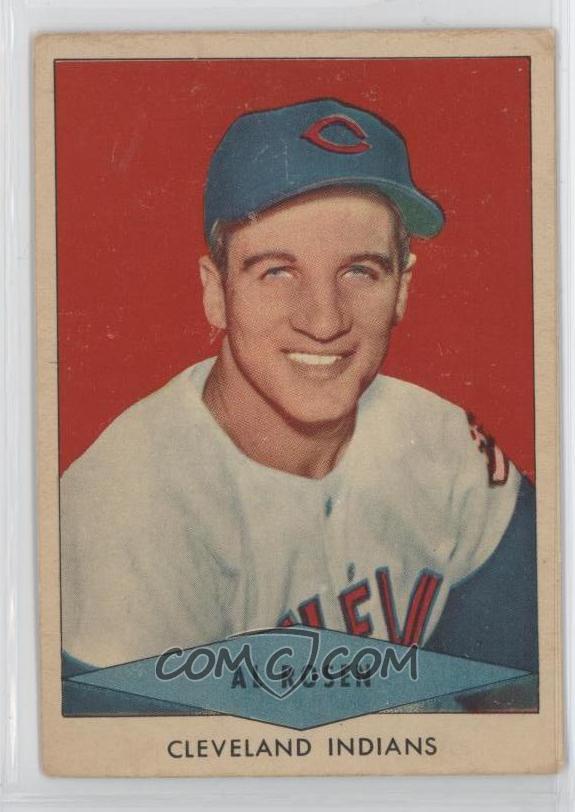
So, today is a month-and-day combination that hasn't happened since 2008, and won't happen again for four years. I started blogging in earnest in April of 2009, and four years from today, we could all be dead. So I thought we'd better celebrate all the players born on February 29 all at once. It could be our only chance!
I've never known anyone to have been born on February 29, and I'd be curious to know what their childhoods were like. I mean, I assume you just have a birthday party on three of every four February 28ths or March 1sts, but it has to be a bit different, right?
I digress. Counting down from least-good to best, here's a look at the six Leap Day-born players who compiled at least 1.0 career rWAR (apologies to Ed Appleton, Al Autry, Jerry Fry, Ralph Miller, and Roy Parker):
Monday, February 27, 2012
On Multiple Allegiances
By: Cee Angi
It was recently brought to
my attention that I may be committing one of the biggest faux pas in
sports fandom.
Of course, I've heard
rumblings all along that perhaps my ability to maintain multiple
allegiances for teams might be a little bit strange-- I never
realized that to some it was such a big deal.
When it recently came to
light on Twitter that I do, in fact, support two Major League
Baseball teams, you would be surprised the reactions I got.


After all, I assumed that
supporting more than one team was probably the norm. But when someone
realized that both of the teams I support are American League teams,
a discussion (or argument) ensued.
Is it possible to like more
than one team? Is it possible that those teams could play in the same
league? What was the reasoning behind liking more than one? And why
didn't I choose the Chicago Cubs?
I guess I should preface
this whole conversation by admitting that while I have two teams, I
also have other teams that when I hear their names mentioned I am
flooded with memories of childhood and I feel a kindred spirit with
those teams. It adds yet another level of complexity to the conundrum
to say the least.
Perhaps I am atypical and
the definition of a baseball polygamist, but before you condemn me,
at least hear me out.
Friday, February 24, 2012
Jose Canseco Math
by Jason Wojciechowski
Jose Canseco is tremendous.
home runs should not count if you lose and count doble if you win
— Jose Canseco (@JoseCanseco) February 25, 2012
You were surely silently asking for the career home-run list by Canseco Math. Here is the top 40 in real-lifers (just to choose a round number that includes Canseco).
How the Indians Lost the 1959 Pennant
By The Common Man

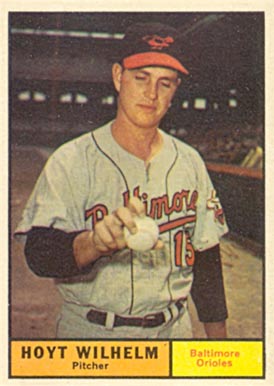
Some of you may have heard that The Common Man is going to be controlling the Cleveland Indians in friend of the blog Jeff Polman’s Strat-o-Matic replay of the 1958 season, in conjunction with his online mystery novel. It should be a lot of fun.
To get ready, The Common Man combed through as much info on the ’58 Tribe as he could and came to the realization that General Manager Frank Lane was an absolute idiot.
You remember Frank Lane, undoubtedly, as “Trader” Lane or “Frantic” Frank. He was an executive who simply couldn’t leave his roster alone, constantly tinkering with it, making huge trades, and generally getting in his own way. In 1958, as usual, he was active. He deal Chico Carrasquel to the A’s for light-hitting shortstop Billy Hunter. He also pulled off a five player deal, sending Roger Maris and some change to the A’s for Vic Power and Woodie Held. It was all largely window dressing, as the Indians were 7.5 games out on June 1 and never got much closer. But late in August, Lane made another change that, honestly, made no sense.
Some of you may have heard that The Common Man is going to be controlling the Cleveland Indians in friend of the blog Jeff Polman’s Strat-o-Matic replay of the 1958 season, in conjunction with his online mystery novel. It should be a lot of fun.
To get ready, The Common Man combed through as much info on the ’58 Tribe as he could and came to the realization that General Manager Frank Lane was an absolute idiot.
You remember Frank Lane, undoubtedly, as “Trader” Lane or “Frantic” Frank. He was an executive who simply couldn’t leave his roster alone, constantly tinkering with it, making huge trades, and generally getting in his own way. In 1958, as usual, he was active. He deal Chico Carrasquel to the A’s for light-hitting shortstop Billy Hunter. He also pulled off a five player deal, sending Roger Maris and some change to the A’s for Vic Power and Woodie Held. It was all largely window dressing, as the Indians were 7.5 games out on June 1 and never got much closer. But late in August, Lane made another change that, honestly, made no sense.
Braun Over Brains: On "Technicalities," Precedent, and Confidentiality
by Jason Wojciechowski
Just in case TPA is the only site you read from under your rock in Siberia: Ryan Braun won his appeal from a 50-game suspension that would have been imposed for failing a "PE"D test. From what I understand, his argument hinged on mishandling of his urine sample, including the rather salacious fact that the collector of said sample stored it in his refrigerator for a few days because the FedEx store was closed.
About all of this, I have a few things to say.
First: I had a conversation with someone on Twitter today who told me that he still believes Braun used "PE"Ds, even though his case came out in his favor. This is exactly why confidentiality is supposed to be part of the testing program. Appeals happen in the dark and if the player wins, no member of the public is ever the wiser, thus preserving that player's reputation.
 |
| This picture is a stupid joke but I think it’s funny |
About all of this, I have a few things to say.
First: I had a conversation with someone on Twitter today who told me that he still believes Braun used "PE"Ds, even though his case came out in his favor. This is exactly why confidentiality is supposed to be part of the testing program. Appeals happen in the dark and if the player wins, no member of the public is ever the wiser, thus preserving that player's reputation.
Thursday, February 23, 2012
What Do Minor League Walk and Strikeout Rates Tell Us About Prospects? Single A Edition
By Chris St. John
Introduction
A few months ago, I created a database that includes all of the prospect rankings from Baseball America, Keith Law and Kevin Goldstein. I didn't have a direct purpose for it, I'm just the type of person who likes to accumulate as much data as possible. So it sat around on my computer until I found a good use for it. Well, thanks to fantasy baseball and Starling Marte's horrible 3.8% walk rate in AA last season, I have. Marte is a possible target in my dynasty minor league draft and I wanted to see what other prospects had poor walk rates and how successful they were in their careers.
Method
In interest of saving digital space (and your scrolling finger), I will only post the full method on the Rookie and Low-A edition of this series.
I have added a new feature, which includes 2007-2012 prospects. I followed exactly the same procedure as before in determining the very low to very high categories for current prospects or younger players. I listed only the top 10 or so for each category, instead of all players who fit that description.
History
Rookie and Low-A
Single-A
285 of the 480 prospects in this dataset accumulated at least 150 plate appearances in Single-A. This is quite a leap from the 111 number in Low-A, so the overall numbers here are a bit more interesting. 19% were successful, 20% were average and 61% were busts. This is much closer to the overall 21/21/58 trend for all prospects.
Walks

Subscribe to:
Posts (Atom)