Showing posts with label Boston Red Sox. Show all posts

Monday, February 27, 2012

On Multiple Allegiances


By: Cee Angi 

It was recently brought to my attention that I may be committing one of the biggest faux pas in sports fandom.

Of course, I've heard rumblings all along that perhaps my ability to maintain multiple allegiances for teams might be a little bit strange-- I never realized that to some it was such a big deal.

When it recently came to light on Twitter that I do, in fact, support two Major League Baseball teams, you would be surprised the reactions I got.

After all, I assumed that supporting more than one team was probably the norm. But when someone realized that both of the teams I support are American League teams, a discussion (or argument) ensued.

Is it possible to like more than one team? Is it possible that those teams could play in the same league? What was the reasoning behind liking more than one? And why didn't I choose the Chicago Cubs?

I guess I should preface this whole conversation by admitting that while I have two teams, I also have other teams that when I hear their names mentioned I am flooded with memories of childhood and I feel a kindred spirit with those teams. It adds yet another level of complexity to the conundrum to say the least.

Perhaps I am atypical and the definition of a baseball polygamist, but before you condemn me, at least hear me out.

Tuesday, November 1, 2011

Catching Up

By The Common Man

A lot has happened over the last three week while The Common Man was trapped under a squishy and adorable baby, and TCM hasn’t had a chance to organize a real response to the news. So let’s just get through it all quickly so we can get back on track with our offseason, shall we?


---------------------------------------------------------------------

The Common Man has been fortunate to get to know a lot of Cardinals fans and writers over the last couple years, and he remains happy for them. Despite that, he takes no real joy in the Cardinals’ win. TCM just doesn’t think the team is terribly likable, between Albert Pujols’ silly refusal to talk to the media, Tony LaRussa’s paranoia and whining, Chris Carpenter’s yelling, Ryan Theriot’s healthy ego, and the way the club ran Colby Rasmus out of town. That said, what a great World Series. Congratulations are due to David Freese and Lance Berkman for their huge performances, and to Mike Napoli for proving what idiots the Angels were last offseason.

Wednesday, September 21, 2011

Blaming Theo

By The Common Man

It’s become favorable in the last 48 hours to lay the blame for the Red Sox’ ongoing collapse at the feet of Sox General Manager and general wunderkind Theo Epstein. Jeff Passan started it, and his thoughts were echoed by Jim Donaldson and Buck Showalter in the Providence Journal, as well as Jon Morosi.  After all, Epstein has fallen dangerously short on pitchers here in September, forcing the Sox to reach down and use the ineffective Andrew Miller and Kyle Weiland, and the gassed Tim Wakefield. They also continue to inflict John Lackey on an unsuspecting populace every fifth game. If Epstein had done a better job of assembling a staff in the offseason, the narrative goes, the Sox would not be trying to fight off the surging Rays with a BB Gun and a Swiss Army knife. That narrative, however, is a conveniently shaped specifically to fit over the Sox season.


In reality, the Sox went into Spring Training with the following pitchers penciled into their rotation:

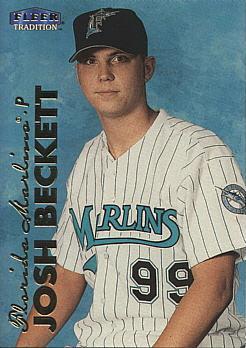
Josh Beckett (6-6, 5.78, 127.2 IP)

Jon Lester (19-9, 3.25, 208 IP)

Clay Buchholz (17-7, 2.33, 173.2 IP)

John Lackey (14-11, 4.40, 215 IP)

Daisuke Matsuzaka (9-6, 4.69, 153.2 IP)

Tuesday, July 5, 2011

Are Yankees and Red Sox Disproportionately Represented in the All-Star Game?

By Bill


The All-Star rosters were announced yesterday, and were met as always with plenty of ire from all corners. Fans on pretty much every team think their team got the shaft, to the point that a pretty innocuous David Schoenfield post over on the SweetSpot blog has gotten thousands upon thousands of comments, almost all of them angry about something or other. A lot of complaints are justified, and maybe that’s a separate post (mostly, way too many relief pitchers and manager favoritism).


The most common complaints, though, revolve around the Yankees and Red Sox having too many representatives. Six of the nine fan-elected starters for the AL play for one of those two teams, and the player vote and Ron Washington added four more, meaning that 10 of the 33 players on the AL roster play for one of those two teams, about twice as many as you’d expect given even distribution (30% of the roster plays for teams comprising 15% of the league).


In the past, I've tended to have the same complaint, at least about the fan voting. The Yankees and Red Sox have a huge and obvious advantage, and in the past we’ve seen atrocities like Jason Varitek being voted in in 2005, or Mark Loretta in 2006. It can be really, really maddening.


This year, though? Of all the nits to be picked with both rosters, this one just falls flat. The sad truth (sad for those like me who despise both teams, that is) is that the Yankees and Red Sox, at least at the top end, are just that good. They’ve got 10 All-Stars between them, and I think that you could argue that in a pure meritocracy, they could make a case to have 14 or 15. Let’s consider them in turn:

Monday, June 20, 2011

Happy Birthday...

Billy Werber!

Primarily a third baseman (and a good one), Werber put up a .271/.362/.394 line (97 OPS+) in the 1930s and early 1940s, and amassed a very respectable 25.6 WAR, comparable to the careers of more familiar names like Mo Vaughn, Tino Martinez and Marquis Grissom.

But there are things about Werber that are a lot more interesting than that stuff. Rather than give you a biography (I can't tell you anything Wikipedia or Baseball-Reference's bullpen can't, and there's this 2001 book by him and C. Paul Rogers III that I'll have to check out sometime soon), here's a more or less chronological list of those interesting things:

Friday, January 14, 2011

History and Josh Beckett are Totally Cool with Each Other, Actually

Yesterday, Craig Calcaterra pointed to a story by the Boston Herald's John Tomase in which he claimed that pitchers who have seasons like Josh Beckett's 2010 historically have had a really difficult time coming back:

So what are we talking about? Thanks to the magic of baseball-reference.com, it was easy to sort for pitchers in their 30s who posted ERAs above 5.75 while pitching at least 125 innings.
The search returned 69 such seasons by 66 different pitchers....
Of those 66 pitchers, only three managed to regain something even remotely approximating their form, at least as starters.
Here's that list. And he's right, it sure does look ugly. But while Tomase himself notes that these results "have no bearing on whether Beckett will bounce back in 2011," he does say that they "should at least give Red Sox fans pause," and that "the game's entire history is working against him." But should it, and is it?

Wednesday, November 17, 2010

Guest Post: My First Game, Annotated

Due to The Common Man's continued absence, posting around here was going to be lighter than usual.  But as usual, some of the best friends of the blog we have stepped up and offered their services in filling in.  Today is the first of those guest writers, the terrific Jeff Polman of Play That Funky Baseball, where, with the help of some of the best writers on the internet, Jeff is replaying the 1977 season using the addictive game Strat-o-Matic Baseball. Here, Jeff recounts the first Major League game he attended, and recreates the wonder and excitement that we all felt as little boys and girls when we initially saw the greatest game in the world played live by giants and titans.  Take it away, Jeff!


The opening memory was the Sign: Welcome to the Mass Pike, forest green, bigger than any road marker in town, adorned with a pilgrim's hat and an arrow sticking through it. Springfield, Massachusetts may have been ninety miles west of Boston, but to me and my older brother, it felt like nine thousand. It was a Thursday, May 30, 1963, I was eight years old, and our dad was taking us to Fenway Park for the first time.

Why are we not in school on a Thursday? It must be the official Memorial Day. Actually, retrosheet.org informs me that nearly all the games played that day are day games, and that doubleheaders occur at the Polo Grounds (Cubs-Mets), Forbes Field (Phillies-Pirates), and Comiskey Park (Indians-White Sox), so it’s fair to assume this is the case.

Until then, any live baseball experience we enjoyed had been at Pynchon Park, a rickety wooden yard perched on the east side of the Connecticut River, watching the Springfield Giants of the double-A Eastern League grapple with the Elmira Pioneers, Charleston Indians and Binghamton Triplets. Following a departure pattern set by Matty Alou, Juan Marichal and Tom Haller, 21-year-old third baseman Jim Ray Hart was a big Springfield star a year ago*, but had moved on to Tacoma in the Pacific Coast League. where he would slug his way down to San Francisco, and there had been scant excitement that season at Pynchon Park. Box seats at Fenway to see the surprising fourth place Sox play the World Champion Yankees? We couldn't even get to sleep the night before.

*.929 OPS

Going into the day's action, the Orioles are the actual league surprise. At 30-16, the Birds of Brooks Robinson, Powell, Aparicio, Gentile and a staff of Barber, Roberts and Pappas, have a three-game lead on the Yanks and four and a half on Chicago, with Boston tied at 22-18, five games back and tied with the Kansas City A's. Through the first two months Baltimore has a +33 run differential, but the Yanks and White Sox are at +43 and the race is sure to get tighter.

We picked up my dad's business friend who got us the tickets in some nameless suburb of Boston. He climbed into our car with his two sons. Their name was Porter. I never saw these people again in my life or even knew what became of them, but because it was on This Day, I remembered their name being Porter.

Ralph Terry is scheduled to face Earl Wilson. Terry has won his last two starts easily, a 10-4 romp against the L.A. Angels on the 19th and a 5-1 victory in Washington on the 25th, throwing complete games each time, and after the previous night's rainout, here he is again after four days of rest. Wilson was hammered for Killebrew, Allison, and Battey homers back on the 20th and lost a 6-5 game, then went only four and a third at Tiger Stadium on the 25th in a 5-2 loss. Both pitchers will surely be aided here by the era's ignorance of on-base percentage. Ralph Houk puts Clete Boyer and Bobby Richardson (.295 and .294 OBP for the year) at the top of the Yankee lineup while Johnny Pesky features Chuck Schilling and Gary Geiger (.291 and .327) atop his.

We parked our Catalina in a pig pile of cars, a small, hopelessly clogged lot in a seemingly industrial part of the city. "Where's Fenway?" I chirped, because all I could see through the droves of baseball fan pedestrians was a couple of low brick buildings that looked like tool factories.

The tool factory right in front of us with a crop of leafy trees was Fenway Park. My heart pounded. We inched through the gate, dropped down a concrete ramp and straight into a gloomy grotto of food stands, program hawkers and cigar smoke. Slogged our way to another, narrower ramp moving up...

...and stopped in our tracks to behold our first flash of major league green. Our Magnavox TV and standings page in the Springfield Republican had offered us nothing but black-and-white baseball, so the sight of the lush grass and monstrous left field edifice under a blue, early summer sky, the navy caps and red trim on Boston's home whites, were a true revelation.

Our seats were amazing, lower first base boxes behind the Red Sox on-deck circle, and it struck me how shockingly close the stands were to the field, certainly a lot closer than at Pynchon Park. We all got Fenway Franks but Porter's kids were never satisfied, and their father was out of his seat constantly to fetch them popcorn, ice cream and god knows what else throughout the game. Our dad, never one to spend a dime needlessly, still talks about this today.

Clete Boyer, the first major leaguer we ever saw bat, then grounded out to third, Malzone to Stuart, and the game began…

Mickey Mantle, coming off a very productive, injury-marred season in 1962, leads baseball with a 1.117 OPS on this day in 1963. After a scoreless first, Wilson fools him with a called third strike to begin the second.

They booed the Mick and Roger Maris pretty equally, but after Mantle whiffed, Maris bashed one over the bullpens in right-center, the first homer we ever saw. I guess we could’ve done worse.

And then we went to work on Terry. Dick Stuart bombed one over the Monster after a Lu Clinton single. Russ Nixon got plunked and Eddie Bressoud hit one out. 4-1 Sox! Was it always this easy?

Terry is undoubtedly talked to, because after Bressoud's homer he retires the next 14 Red Sox until Clinton singles with two outs in the 6th. New York, meanwhile, battles back, a single run on a force play in the 4th, before a walk and three singles in the 6th tie the game and finish Wilson for the day. Jack Lamabe replaces him, but has troubles of his own in the 7th. Dick Radatz, Boston's best reliever, is summoned for the high-leverage situation, something rarely seen today, and summarily walks Maris to force in the go-ahead run. By contrast, Ralph Terry never leaves the mound for the Yankees.

We were down 5-4 in the last of the 9th. Terry had already gotten Stuart and Nixon out, and it was up to Eddie Bressoud. We were out of our seats screaming. The Porter kids were finishing their second boxes of popcorn. Terry looked in, wound, and Bressoud smacked one high and deep toward the Monster...

...and it was GONE! Tie game! No wonder I became a baseball addict!

Arnold Earley had taken over for Radatz in the 8th, and bats for himself after Bressoud's homer. Pesky's plan doesn’t work. Elston Howard doubles and Phil Linz singles to start the 10th, before Boyer hits a one-out sac fly to make it 6-5. If pitch counts are being used by anyone, they certainly aren't being published, and I imagine Terry is well over 100 by this point, but he still takes the ball for the last of the 10th. (Houk burned through four relievers in their last game, an 11-6 loss at Fenway two days ago, so I'm sure that’s a factor here.)

Schilling flew out to left and Geiger grounded to Pepitone, so Carl Yastrzemski was our last hope. Their best hitter was 0-for-4 so far, not looking good at all, and my dad had us up and walking toward the exit tunnel as he stepped into the box. My brother and I came down with mild polio at that moment, slowed to a near-crawl, and managed to be right behind the backstop screen when Yaz took a mighty cut and missed a Terry fastball for strike three.

The ride home was much faster, as it always seemed to be. Maybe we leafed through our Street and Smith’s baseball annual or Classics Illustrated comic books. We probably stopped at one of the many Mass Pike Howard Johnsons for dinner, but I don't remember what I ate. Forevermore, my strongest memory was the fresh air and color of a major league game.

I have occasional discussions with various friends about our favorite moments from Peter Jackson’s Lord of the Rings trilogy. Usually it’s a battle scene or Gollum’s schizophrenic soliloquy, but for me it’s always a different one. The Two Towers opens with a harrowing plummet down a mountain shaft between Gandalf and the Balrog, the creature’s fiery whip and Gandalf’s staff and sword snapping and clanging at each other in an adrenalin rush. Suddenly Jackson pulls the camera way back, and all we see is the distant flame of their battle as they drop into a humongous, water-filled cave. It is this perfect balance between intense detail and the broader, epic view that makes Jackson’s film so marvelous. Similarly, it is the perfect balance between baseball’s statistical minutiae and its unforgettable vividness that makes it the best game on this planet. If I’ve learned one thing, it’s that baseball stats and wonder go together like a hot dog and mustard.

Jeff Polman’s eccentric historical replay blogs can be found at http://1924andyouarethere.blogspot.com/ and http://funkyball.wordpress.com/. Snarky quips can be found at https://twitter.com/funkyball77


Tuesday, April 20, 2010

Beer Leaguers: Four Peaks Hefeweizen and Jonathan Papelbon

First, a programming note: The Common Man is on vacation this week in Scottsdale. From work, not from blogging. But that may mean that some of the blogging may be erratic, as he tries to schedule writing around family-type activities. Also, tonight TCM will be attending the Diamondbacks-Cardinals game at Chase Field in Phoenix. If you’re going to be there, drop TCM a line at the email address on the right and let’s grab a beer. Also, if you have suggestions of things to do or eat at the park, let TCM know.

Speaking of things you ingest, The Common Man and The Boy (The Uncommon Wife doesn’t join this vacation until Wednesday) were treated to dinner by The Boy’s grandmother last night at Oregano’s, a terrific pizza joint in Scottsdale (although there are 8 locations in Arizona. While it’s set up for adults, complete with an outdoor bar and patio, it’s a terrific place for kids as well, as The Boy got his own pizza dough to play with. The beer was also terrific.

Four Peaks Hefe-weizen is brewed locally, in Tempe and is terrific. It’s a springtime or summertime beer, which is perfect since it’s always spring or summer in Arizona. The flavor is smooth and light, but very flavorful, especially when accompanied by a lemon wedge. The citrus is a perfect complement to its maltiness. It presents as a cloudy yellow, as a result of being unfiltered. The yeast mellows the bitterness of the hops and makes this beer eminently drinkable. It’s not overly complicated, but it is a crowd-pleaser.


It’s a lot like Jonathan Papelbon, actually. As discerning baseball fans know, Jonathan Papelbon may actually be insane. He is loud and goofy, and prone to say ridiculous things. For instance, why does he wear his undershirt? “It’s a free shirt. You can’t beat it with a stick. I don’t have any reason behind wearing it. It’s just a free shirt.” What’s his entrance music? “'Let the bodies hit the floor,' something like that. I think the fans were more worried about my entrance song than I was. They can send in suggestions if they have some.” How’s married life? “I'm all good. I'm married now, man. All I've got is one person to answer to.” What’s his favorite board game? “Don’t make me bring the Scrabble board to the locker room. I will bring it." Why did he name his son Gunner Roberts? “Just a badass name, so we went with it.” What should be done about long game times? “Bundle up and drink beer . . . If you don't want to be there, don't be there. Go home. Why are you complaining." What does he think of Manny Ramirez? “For him not to be on the same page as the rest of the team was a killer, man! It just takes one guy to bring an entire team down, and that’s exactly what was happening. Once we saw that, we weren’t afraid to get rid of him. It’s like cancer. That’s what he was. Cancer. He had to go. It sucked, but that was the only scenario that was going to work.” How do you handle clubhouse disputes? “Even a guy like me, just heading into my fourth year in the big leagues — if David Ortiz gets a little, you know — I’ll tell him what’s up! I’m not afraid to do that. I’m not afraid to put him in his place, because I think everybody needs that. And if somebody does it to me, I understand that. I most certainly understand that. Varitek tells me all the time, 'Just shut up. Do what you’re supposed to do.'” Now why would Jason Varitek say that?

Plus, nobody dances a jig quite like Jonathan Papelbon:


But as unbalanced as Papelbon can seem, there is no doubt that he’s a fantastic pitcher. In his first four full seasons, Paps garnered 151 saves across 264 innings, with 312 strikeouts. He had a 5.20 K/BB ratio and just a .917 WHIP. He had a 1.74 ERA. He converted his save opportunities 90% of the time, and was asked to go more than three outs in 17% of his appearances. By contrast, Joe Natan had 159 saves and more innings and Ks, but a lower K/BB and went more than 3 outs in just 7% of his outings. He has a devastating fastball that averages 94-95 MPH. And despite an overreliance on his fastball last year, it was still one of the most 25 effective fastballs in baseball for anyone with more than 50 innings. Like the Hefeweizen, Papelbon may be unfiltered, but he’s crazy good.

Thursday, September 10, 2009

Random Thursday: June 11, 1960, Chicago vs. Boston

When baseball’s elder statesmen square off, doesn’t it seem like something special always happens? Fortune smiles again on The Common Man, as his browser, with eyes closed, leapt from Scott Sullivan’s page to this June 11, 1960 contest between the Chicago White Sox and Boston Red Sox. The game was the first of two that day between the Soxes, and was certainly the more memorable.

The Sox lineup featured Hall of Famers Nellie Fox (in his final decent year; raise your hand if you knew he was basically done at age 32) and Luis Aparicio, and was bolstered by Hall of Very Good members Minnie Minoso and Roy Sievers. The Sox in 1960 were a good club, in the middle of a good run. For 17 straight seasons, the Sox finished above .500 (1951-1967), though they managed just one pennant (1959, when they lost in the World Series to the Dodgers). In 1960, they finished in the 8-team American League, with an 87-67 record. They couldn’t get close to the Yankees, however, who (as usual) finished 10 games better thanks to Mantle, Maris, and Big Bill Skowron.


Minoso, Jim Landis, Aparicio, and Fox receive their Gold Gloves from 1959.

The Red Sox were on the opposite end of the spectrum. In 1960, they would finish in 7th place, losing 89 games. Poor personnel decisions, including the team’s famous refusal to pursue and sign African-American talent, had caught up with Boston, and they were unable to compensate for an aging core and bad pitching staff. The Sox’s starter that day was Ike Delock, a former swingman pressed into the rotation who would finish the year with a 4.73 ERA (84 ERA+) in 23 starts. The lineup featured Hall of Very Good hitters Pete Runnels and Vic Wertz (whose greatest historical comp is Roy Sievers, actually).

But what made the game stand out was the battle between two legends near the end of their respective careers. 40-year old Early Wynn started for Chicago, sitting on 273 career victories, a year removed from going 22-10 and winning the ML Cy Young Award (the Cy Young award was only given to one pitcher a year through 1966). Though pitching well, Gus had lost four straight in which his team had scored just seven runs behind him. For the Red Sox, Ted Williams started and played in LF. Williams, had missed most of April and May, totaling just 27 plate appearances. But in June, Williams was on fire. In 96 PAs, The Splinter would hit 11 homeruns, bat .329/.458/.803), and drive in 24 runs. He had hit a solo homerun the day before and was just starting to round into playing shape.

Wynn allowed a leadoff homerun to Don Buddin, but settled down to retire the next 8 and keeping the Sox off the board through five. On the strength of a Gene Freese homer and a Nellie Fox double in the 2nd, the Sox scored two. Wynn himself had gone 2-2 with two singles, one of which moved Jim Landis into scoring position for Fox’s double, and the other of which drove in Freese in the 4th. At the end of the 5th, Chicago led the Red Sox 3-1. Williams had underwhelmed in two at bats, fouling out once to third base and once to catcher. In the bottom of the 5th, Wynn allowed a leadoff single to Pete Runnels to bring up The Kid. Williams hit a long fly to right field that cleared the fence for his 5th homer of the year, and 497th of his career.


Wynn got out of the 6th without allowing another run, and in the top of the 7th Delock ran into more trouble for Boston. Chicago loaded the bases on two singles and an error, bringing up Sievers, who struck out. But when Delock hit Sherm Lollar, he forced in Nellie Fox, giving the White Sox a 4-3 lead.

Wynn was removed from the game with one-out in the 7th after giving up a single to Bobby Thomson. He was relieved by Gerry Staley, the Sox’s relief ace, who escaped with no damage. Delock got into trouble in the top of the 9In the bottom of the 8th, however, Williams led off. The Kid worked out a walk and was replaced by a pinch runner. Vic Wertz hit a big opposite field home run that gave the Red Sox the 5-4 lead, which they would hold on to. Staley was hung with the loss, and Mike Fornieles, Boston’s relief ace, ended up with the win after pitching the last two frames.

Williams would have an excellent season (.316/.451/.645, 29 homers) despite getting just 390 PAs, and would, of course, retire at the end of the season after hitting a home run (#521) in his final at bat. Wynn would make the All Star team that year, and go 13-12 with a 3.49 ERA, and lead the league in shutouts. He hung on for three more years after that. Gus pitched well in the first half of 1961 before injuries forced him to the shelf for the rest of the year. He struggled in 1962, and finished with an even 300 wins as a pitcher-coach for the ’63 Indians.