Showing posts with label Chicago Cubs. Show all posts

Tuesday, November 1, 2011

Catching Up

By The Common Man

A lot has happened over the last three week while The Common Man was trapped under a squishy and adorable baby, and TCM hasn’t had a chance to organize a real response to the news. So let’s just get through it all quickly so we can get back on track with our offseason, shall we?


---------------------------------------------------------------------

The Common Man has been fortunate to get to know a lot of Cardinals fans and writers over the last couple years, and he remains happy for them. Despite that, he takes no real joy in the Cardinals’ win. TCM just doesn’t think the team is terribly likable, between Albert Pujols’ silly refusal to talk to the media, Tony LaRussa’s paranoia and whining, Chris Carpenter’s yelling, Ryan Theriot’s healthy ego, and the way the club ran Colby Rasmus out of town. That said, what a great World Series. Congratulations are due to David Freese and Lance Berkman for their huge performances, and to Mike Napoli for proving what idiots the Angels were last offseason.

Thursday, October 13, 2011

Can the Cubs Fans Stay Realistic About Theo?

By Bill


I love Theo Epstein, which I'm sure isn't terribly surprising. Always have. I probably wouldn't have given John Lackey either five years or $82.5 million, but otherwise, I think pretty much everything he's done has been great. I also like the Cubs, God save me, and so I'm pretty excited that apparently, my favorite GM and my second- or third-favorite team are about to be joined in holy contractimony.

I do buy, to some extent, Dave Cameron's point that spending tens of millions on any GM is a mistake, given the wealth of brilliant minds out there who would do the job for less. But then, there's a lot more to GMing than knowing which stats are important and how to apply them (and in fact I'd say that's a pretty tiny part of the job, as long as you're smart enough to hire people who do understand those things). There's knowing what to look for in scouts, analysts, etc., there's managing personnel and maintaining good relationships with your manager and coaches, the art of negotiation with other GMs, and so on and so forth. And from everything I can tell (which of course is very much the tip of the iceberg), Epstein has been very good at pretty much all those things. Add on a couple million for the extra season tickets you'll sell (or rather, won't lose) based on excitement about getting THEO, and I think this is a great, great move for the Cubs.

But.

Monday, June 6, 2011

Tuesday Trade Tree: Draft Day Edition

By The Common Man

Last night was the 1st round of the Amateur Draft, which is where teams chart their courses and pin their destinies on talented young men from states like Oklahoma, Arkansas, Florida, Texas, and California. Indeed, teams can truly alter the course of their destinies in the first round of the Amateur Draft, for good or for ill, as a wasted pick can really set a franchise back (especially given that teams often have to wait until picks in the 60-90 range to get their second player). This is the story of one team that did hit in the very first Major League Draft, held in 1965, and that benefited from one of its first pick for more than thirty years. Ironically, this team is perhaps the most star-crossed franchise of all time, the Chicago Cubs.

Wednesday, January 19, 2011

3 Questions: Chicago Cubs

By The Common Man

TCM had a big back yard perfect for playing “baseball” one-on-one in the late 1980s and early 1990s. Given that his friends always wanted to be the Twins, TCM was forced to have a fallback option, and so he chose the Cubs. And he grew to love the Cubbies for a short time. TCM spent the summer of 1990 hitting like Jerome Walton in Little League. He thought he had the cannon arm of Shawon Dunston. And he felt certain that Mike Bielecki was just as good a pitcher as Greg Maddux.

Oh, how the times have changed. Walton hit .269/.333/.376 for his career in just 1760 plate appearances. Dunston had a career OBP of .296 and was actually a pretty terrible defensive shortstop. Bielecki would go 40-47 over the next 8 years, while Maddux would go 310-189 over the next 19. And the Cubs would go on to be one of the most frustrating free spenders in Major League Baseball, losing almost all of their charm in the process.

So now, disillusioned, what questions could The Common Man possibly want to ask the Cubs? Here are three of them.  (Reminder, to see a list of our other entries in the 3 Questions series, click here)

Question 1: How good is Starlin Castro?

Castro started 121 games last year as a 20 year old, and hit .300/.347/.408, good for a 97 OPS+. Since 1950, only eight players have gotten more than 400 plate appearances as a SS at 20 years old. Here’s the list:

NameYearOPS+Runs Created
Alex Rodriguez1996160157
Edgar Renteria199610363
Starlin Castro20109762
Robin Yount19759064
Alan Trammell19788952
Elvis Andrus20098265
Gary Sheffield19898239
Edgar Renteria19978069
Robin Yount19767655
Jack Heidemann19705135

As you can see, Castro’s in some pretty elite company, and has outperformed Hall of Fame caliber players in Alan Trammell, Robin Yount, and Gary Sheffield, which bodes extremely well for Castro’s potential offensive development. Even Edgar Renteria has had a fantastic career.

The only hesitation Cubs fans should have about Castro’s future is regarding his defense, about which Fangraphs and Baseball Reference disagree vehemently. BR.com claims that Castro was 1.2 wins below replacement in the field, and the worst fielding shortstop in the National League according to Total Zone. Meanwhile Fangraphs rates Castro in the middle of the pack defensively, according to Ultimate Zone Rating, probably due to his high error total (27 errors in 1073 innings). It made a huge difference in the final analysis, as BR.com calculated that Castro was worth just 0.4 WAR because of his alleged awful defense. Fangraphs, meanwhile, rated him at 2.0 Wins Above Replacement.

But even if you accept BR.com’s poor rankings, prospect mavens have been bullish on his defensive potential as well. In 2010, Baseball America wrote that Castro “excels defensively…with range to both sides, body control and arm strength to make any play. Managers rated him the best defensive shortstop in the Florida State League. The Cubs also like his instincts, charisma, and work ethic. Castro just needs to time to fill out and polish his game. He made 39 errors last season, which isn't a high number for a young shortstop, but shows that he needs to play more under control.” Kevin Goldstein was also high on him, writing “His defensive fundamentals are outstanding for both his level and his age, with smooth actions, soft hands, a quick transfer, and a plus arm.” Either way, Castro looks to be a strong building block for the Cubs going forward, perhaps a future MVP candidate, and easily a championship-caliber player.  At any rate, he's not going the way of Jerome Walton and Dwight Smith.

Question 2: Is Mike Quade the right man to lead this team?

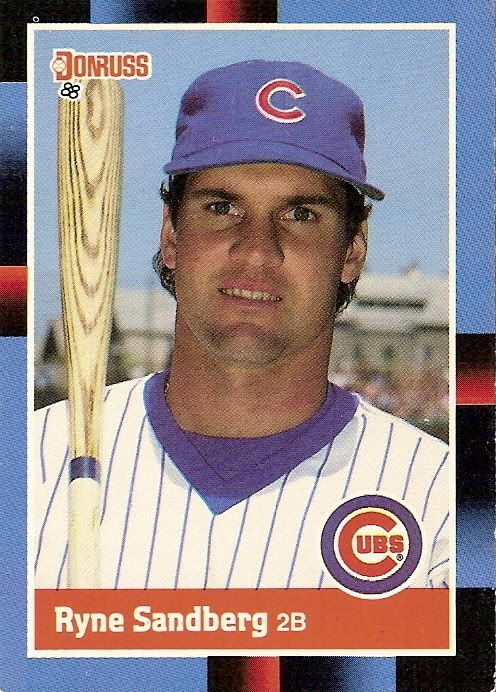
When Mike Quade took over for the distracted and uninspired Lou Piniella last year, the Cubs were 51-74. Under Quade, for the last month and a half of the season, the club played strong and finished 24-13. Since then, Quade has survived the official hiring process and gotten the “interim” label removed from his job title, at the expense of Cubs legend Ryne Sandberg. But was that 24-13 a fluke? Or was Quade really the inspiration the Bear Cubs needed?

Of managers who took over in midseason (and managed at least 20 games), Quade finishes tied in winning percentage with Phil Garner of the 2004 Astros for 10th all time with a .649 mark. Here’s the list of those managers, and how they did in subsequent seasons:

YearTeamManagerWinning PercentageOverall year 1 WPYear 2 WP
1912IndiansJoe Birmingham.750.490.566
1924GiantsHughie Jennings.727.608DNM
1927GiantsRogers Hornsby.688.597DNM
1932CubsCharlie Grimm.673.584.558
1950Red SoxSteve O’Neill.663.610.565
1938TigersDel Baker.661.545.526
1925GiantsHughie Jennings.656.566DNM
1919IndiansTris Speaker.656.604636
1999AngelsJoe Maddon.655.432DNM
2004AstrosPhil Garner.649.568.549


First, the good news: Every manager on the above list finished the following season with a record above .500, which bodes well for the Cubs in a weak NL Central. But here’s the bad news: First, none of them actually improved on their performance under these managers in year one. It’s pretty easy to understand why, as few teams could actually sustain a winning percentage of around .650 over the course of a season, as that’s the equivalent of a 105 win team. However, it’s also worth noting that four of the six managers saw their club’s overall winning percentage fall in year two, with only Joe Birmingham in 1913 and Tris Speaker in 1920 heading teams that were better than the previous year’s overall performance. The historical upshot for Quade is that there is little evidence that the enthusiasm factor for a new manager carries over into a second year at the helm. So while the Cubs players may have been lobbying for their interim skipper in 2010, they may change their tune if Quade can’t pilot the club to a better mark in 2011.

Question 3: So can the Cubs compete for the NL Central in 2011?

Sure, why not? They’ve upgraded their pitching (a very strong move in acquiring Matt Garza, and a good cheap pickup in Kerry Wood), and picked up a good buy-low candidate to man 1B. Zambrano looked like he was back on track at the end of 2010. They’ll have Castro for a full season. Aramis Ramirez can’t put up another .294 OBP again, can he? He had a .245 BABIP last year, but looked to still have his power, so he’s a decent candidate to rebound. Alfonso Soriano is never going to play to his contract, but he seems to have recovered at least some of his productivity (particularly on defense, if Fangraphs is to be believed).

The Brewers are still poised to be the favorite in 2011, and the Reds are the defending champs. But Milwaukee has absolutely no depth in case of injury and Cincinnati’s young pitching is suspect. The Cubs could easily sneak in, assuming they aren’t bit by the injury bug themselves.

Friday, October 22, 2010

It's a Quade Pahty!

By Bill

It's been a couple days now, but it's worth noting that Mike Quade, not Hall of Famer Ryne Sandberg, was named the new Cubs manager. A lot of people here in Chicago are pretty upset about this. Phil Rogers was upset. Gene Wojciechowski was really freaking upset. Sandberg was a hero, obviously, and it was clear that he really wanted the job. Instead, they named some guy nobody had ever heard of before he was named interim manager (except the Cubs fans who noticed he was their third base coach), somebody who never made it out of the minors as a player.

Here's the thing, though: I don't think anybody has a clue whether Sandberg would be a better manager than Quade, or vice-versa. Not you, not me, not Gene or Phil, maybe not even Jim Hendry. Managing is a hugely opaque thing; there's no WAR or wOBA or FIP that's going to tell you if a guy is or will be a good manager. Winning percentage certainly doesn't do it. What you'd need to do, really, is watch the games as closely as possible to evaluate their decisions. And then interview their players, hang around the clubhouse, really get an idea of how they do at leading a team. If anyone did that, it's a lot more likely to have been the Cubs than, say, Wojciechowski or Rogers or the enraged fans next door.

Let's break down the fans' (and nostalgic hometown writers') arguments, as I see them, for Sandberg:

Friday, August 13, 2010

Everything's Comin' Up Starlin

By Bill

Starlin Castro is the first Major League Baseball player in history to be born during the decade of Seinfeld, Nirvana, and the Macarena. And more than half a season after his debut, he remains the only player born in 1990 or later. (Think of that: he was born the day after Pretty Woman was released and a few months before Home Alone and Back to the Future Part III. Wow, I feel old.) He won't legally buy his first drink in the U.S. until at least the end of next season's Spring Training (look out, downtown Mesa!), but he's already played in 84 big league games.

That's usually a good sign for a guy's future.

A few weeks ago, in an article with probably the oddest of the dozens of Starlin-pun-based headlines to be used to date, FanGraphs' R.J. Anderson looked at the start to Castro's career as compared to other 20 year old shortstops, and found that he was in some awfully good company. At .295/.350/.418 and a 95 OPS+, once you remove the unreal should-have-been-MVP year by the young Alex Rodriguez in 1996, Castro was falling right in line with the best 20 year old shortstops in history.

That was sometime during the day on July 21. Since that night -- including a 4-for-5 yesterday afternoon (his fourth straight multi-hit game) -- Castro has hit .386/.409/.528. His line for the year stands at .320/.366/.450. He started too late to qualify for the batting title, but if he did, he'd be first among all shortstops in batting average (by almost thirty points), a pretty close third in OBP, and a less-close third in SLG. Baseball-Reference hasn't updated yet as I write this, but Castro's OPS+, the metric Anderson used, is around 110 (edit: close, 111), which would put him just behind inner-circle Hall of Famer Arky Vaughan for the best non-A-Rod twenty year old shortstop of all time.

Of course, Castro also has a .362 average on balls in play (BABIP). That's a number that's somewhere between really hard and impossible to sustain, and would be fifth in the Majors if Castro had enough plate appearances. Think of the best line-drive hitters in the league (e.g. Cabrera, Mauer, Hamilton), and their career BABIPs are probably no higher than .345 or so, and I don't have to tell you that Castro doesn't quite sting the ball the way Miggy and Hamilton do. But then, Castro's BABIP isn't absurdly high (like some other rookies I know); even if you adjust him down to, say, the .320 range (more in line with what you'd expect given his minor league numbers) and take off a couple extra base hits proportionately, Castro's line ends up looking something like .286/.332/.388 -- a lot less sexy than his current real line, but right around the current MLB average for shortstops (.264/.322/.372).

What that suggests to me is that in Starlin Castro, there's a very good chance that the Cubs have at least an average-hitting shortstop. And in being at least an average-hitting shortstop at age 20, there's at least a pretty good chance that Castro has a really, really stellar career ahead of him.

That assumes he can play shortstop -- the various advanced metrics are crazily divergent on him right now, to the point that he's a star by FanGraphs WAR and barely usable by Baseball-Reference WAR. But he's certainly athletic enough to handle it, and he's got a lot of time to cut down on his huge number of mistakes. Your friendly neighborhood Cubs fan has precious little to look forward to right now, but s/he ought to be awfully excited about watching Castro develop.

Wednesday, August 12, 2009

A Different Kind of Rifle-armed

The Common Man was surprised to find out, when he got home last night, that his Tivo has been making some strange suggestions. For instance, The Common Man has little use for telenovelas like El Corazon Prohibido, or for something called Degrassi: The Next Generation. However, Tivo was right in its guess that its owner would appreciate a look at the iconic Western The Rifleman. The Rifleman, which aired on ABC from 1958 to 1963, ran for 168 episodes and starred Chuck Connors. It was the story of Lucas McCain, a widower who moves with his son to New Mexico, and uses his modified Winchester rifle (which allows him to fire a bullet in .3 seconds) to help the local Marshall.

The Common Man was excited because Connors, who got his big break playing the original owner of Old Yeller in the Disney classic and led to his role in The Rifleman, also was a bit of ballplayer. Connors was originally signed by his hometown Dodgers in 1940, but enrolled in Holy Cross soon after. After being drafted by the Yankees in 1942, he was drafted by the Army and served as a tank maintenance instructor until 1945. In 1946, he convinced Branch Rickey to sign him again to a minor league contract, and played four years in the Dodgers’ minor league system (and playing in the NBA during the offseason before getting a one at-bat tryout in 1949 (he grounded into a double play).


While Connors had significant success for the Dodgers’ farm clubs through 1949, he took a significant step backward in 1950. In 1951, Connors was shipped with Dee Fondy to the Cubs, where he was assigned to the Los Angeles Angels of the PCL. Connors had great success in LA in the spring of ’51 and was called up by the Cubs to take over for a faltering Fondy at 1B. He was given a disastrous extended trial as a 30 year old rookie, hitting .239/.282/.303 and 2 HR in 215 plate appearances. The next year, Connors was sent back to LA, where he struggled with injuries and eventually retired.

Before he did, Connors’ square jaw, on-field antics, and wavy hair were noticed by a fan in the entertainment industry. The unnamed fan inspired Connors to try acting after his baseball career was over. His success in the late ‘50s and early ‘60s, however, dried up as the public moved on from straight-laced, earnest John Wayne-types and embraced the darker, more rebellious, anti-establishment heroes played by Eastwood, Newman, Beatty, and Redford. Connors retreated to occasional movie roles (as the father in Flipper, and the heavy in Soylent Green, and The Sarge in Airplane II) and guest spots on Spencer: For Hire, The Love Boat, Fantasy Island, and Murder, She Wrote.

The life of Chuck Connors, despite reaching the pinnacle of both of his chosen professions, is something of a disappointment. Connors clearly had the talent to play major league ball; his minor league stats are Andre Ethier-like (low .300s BA, 15-25 HR/year power), particularly impressive given the developmental time he missed in college and in the Army. By the time he got back to playing ball full time, Connors was 25, and only got a real shot at 30. And while his good looks made him a terrific hero for early-TV Western morality plays, his limited range and lack of emotion left him unable to adjust to the changing needs of Hollywood following his short peak. If Connors had debuted in the early ‘40s, in either field, he might have truly become a legend and a household name.

Connors died in 1992 from pneumonia related to lung cancer. He was 71.

Friday, March 13, 2009

At the Game

The Common Man was disappointed on two counts this morning. The first was when he found out that he wasn't the only blogger in the stands yesterday when Japan visited the Chicago Cubs. Of course, the other reason The Common Man is disappointed is that he had the chance to meet the KLaw, and tell him how impressive the body of his work is and how influential he has been on The Common Man's understanding of the proper balance of statistical analysis and scouting.

Keith was undoubtedly right behind the plate in typically awesome (and shaded) seats. Meanwhile, The Common Man was sitting just to the leftfield side of the batter's eye, on the lawn. In part, it's because The Common Man bought tickets at the box office the day of the game, but also because it is awfully fun to sit out on the grass. Like watching games in days of yore, when fences were a luxury most teams couldn't, or didn't afford. Anyway, here are The Common Man's observations from the action:


Before the game, the Japanese media was out in full force, and it is an intimidating group. Lined up down the leftfield line, they looked to number close to 100. And during the game, this is the view The Common Man had of RF:


After finishing his pre-game warm-ups, Daisuke came over to the stands and signed autographs. Watching the Japanese and American fans swarm him for autographs and pictures reminded The Common Man of seagulls fighting over scraps on the beach. And when Daisuke abruptly turned and jogged 10 yards down the line to reach other fans, the mob flocked with him, stumbling over itself as it negotiated the span and the bench seats. But give Daisuke major credit, he was the only Japanese player signing for the crowd, and he definitely made an effort to honor the fans' desire to be close to him, within reason.

The Common Man chose a more dignified approach, heading to the Fergie Jenkins Foundation tent and donating $20 to meet Rollie Fingers and get his autograph (Fergie, Pete LaCock, and George Foster (who didn't say a single word, and looked relatively lonely out on the end of the table)). Rollie still looks good and still sports the most recognizable 'stache in baseball (world?) history. "So you still haven't shaved that thing off?" The Common Man asked him, because he's a dufuss.
"I'd be too afraid of what I'd look like without it," he replied.
Pete LaCock, signing next to him, then asked, "Do you still use the same wax?"
Rollie: Yeah, same wax I've always used. ___________.
LaCock: You should get an endorsement deal.
Rollie: Nah, I just like it. I did endorse Just For Men about five years ago. But then they dumped me and went with Hernandez and the other guy. What's his name, the black guy?
TCM: George Gervin. Basketball player
Rollie: Yeah, I guess they liked them better.
TCM: Well, there's no accounting for taste.

Both teams used their everyday lineups (though Fukudome played for Japan). Presumably, the Japanese wanted to get their work in, and stay sharp. And the Cubs wanted to be good hosts. The upshot was that Soriano, Theriot, Lee, Bradley, Ramirez, and Reed Johnson each got three ABs in for the Cubs (and Fontenot got two), and Carlos Zambrano worked four innings. Almost all of the Japanese players, including Ichiro, Fukudome, Kenji Johjima, and Iwamura played the full game. Red Sox prospect Yu Darvish satred and went 3.3 innings.

Though he only gave up a run in those 3+ innings, Darvish did not look sharp. Location was a problem throughout his outing. He walked two and uncorked a wild pitch (which led to the only run he gave up), and sent several other pitches into the dirt or to the backstop. He did strike out 5, but The Common Man attributes most of that to the Cubs' lack of familiarity with Darvish and his stuff. Like many Japanese pitchers, Darvish's delivery is non-traditional from an American perspective. He works exclusively from the set and has a hitch in the middle of his motion, in which he seems to double-pump with his glove and pitching hand together. This hesitation may have also been throwing off the Cubs' timing, but The Common Man was not impressed with the overall quality of the outing.

After dominating in the first inning (a pop to third, a strikeout, and a nubber to the mound), Zambrano also underwhelmed, giving up three hits and two runs in his four innings. Two of the hits, a double by 1B Michihiro Ogasawara and a triple by Munenori Kawasaki, were hard line drives to the left-centerfield gap. Kawasaki probably should have been held to a double, but Alfonso Soriano took a bad route to the ball, and it got past him to the wall. Zambrano also had a wild pitch, which allowed Kawasaki to score. At the plate, Zambrano wasn't much better, striking out twice with runners on base (his first K was with the bases loaded, and Big Z almost came out of his shoes twice trying to hit the grand slam).

Ichiro had another poor game. He saw few pitches (except for one at bat, in which he walked) and didn't make good contact, popping up twice and grounding weekly to second base. Ichiro has been somewhat lost this spring, aside from a couple of games in the first round of the WBC, looking uncomfortable and slow. He just seemed off yesterday.

Mike Fontenot, on the other hand, had a terrific game, getting two very solid hits off of Darvish, both hard line drives to right and right-center. He also made a nice (but not overly impressive) play at second, jumping and backhanding a soft liner up the middle off the bat of DH Shuichi Murata.

The best moment of the game (frankly, the game itself was pretty underwhelming) was Milton Bradley's final at bat. After striking out against Tetsuya Yamaguchi, Bradley snapped his bat over his knee. The sharp crack resounded throughout the ballpark. In a word, awesome. Who says players don't take spring traning seriously? Bradley didn't come out for the top of the 6th, but was presumably done anyway after getting his third AB in. He did have a sharp single to right in the 3rd off of Darvish.

Finally, a final observation from The Common Man. If you are planning to go to a spring training game in Arizona, and sit in the sun for hours. You should wear sunscreen. Also, you should not forget your Expos hat in the car.