Showing posts with label managers. Show all posts

Thursday, June 23, 2011

Jim Riggleman Is Unemployed? Now What?

By The Common Man

The baseball world is still shocked (SHOCKED!) by the resignation of Jim Riggleman earlier today. It's not surprising. After all, most managers don't up and quit in the middle of a season. Many announce their intention to resign at the end of the year, like Jim Leyland did in 1999 or Al Lopez in 1965. Some are asked to resign (or about to be asked to resign), like Edwin Rodriguez this year.  Some were forced to retire for health reasons, like John McGraw in 1932.

But very, very few managers simply up and quit in the middle of the season. Because MLB manager jobs are scarce, and there are lots of candidates.  Riggleman's move seems well timed, as it allows him to appear that he left the Nats in good shape, while distancing himself from their probable decline later this summer.  It frees him up from accepting just a one-year commitment when he might be a candidate for a three-year contract elsewhere.  But is that scenario likely to play out? 

It's difficult to tell.  It's simply a move without much precendent. But there is SOME precedent. So, what can we learn from the past? Can it tells us what the future holds for James David Riggleman? Here are the managers that The Common Man could find who just walked away from their clubs in the middle of the season of their own accord. This list is probably not complete, as its a terribly difficult to identify all the managers who resigned, and then to filter them by those who retired in-season. And then to filter those by who announced their retirement in-season, but finished out the year. We're working with incomplete data. Still, what can we learn?

Thursday, June 9, 2011

Re-Post: When You Change Horses

By The Common Man


Note: Today’s firing of Bob Geren, the first managerial change of 2011, gives The Common Man an excuse to update and re-present his data regarding the benefit of changing managers in the middle of the season, which he originally rolled out in just over a year ago. As he points out in the article below, however, all situations are unique. While TCM’s ultimate conclusions are that changing the manager tends not to actually help all that much, despite what talking heads on baseball broadcasts might tell you, those changes are clearly warranted in many cases. For instance, in this case, it sounds like Bob Geren has effectively lost the A’s clubhouse. In that case, to prevent a further poisoning of the environment around a team, making a move is actually the smartest move you can make. But for the most part, changing managers doesn’t do anything to change the actual performance of a team on the field, at least during the season in question. See below. (Note, all figures have been adjusted to reflect the six in-season managerial changes last year).

-----------------------------------------

Is it a good idea, in general, to fire the manager during the season? Since the Royals shuffled Trey Hillman out for Ned Yost last year, The Common Man has wondered whether changing horses in midstream is generally a good idea. So he went back and looked at every team that switched managers midseason from 1901 until today, to see what kind of differences a new manager might make.

Friday, October 22, 2010

It's a Quade Pahty!

By Bill

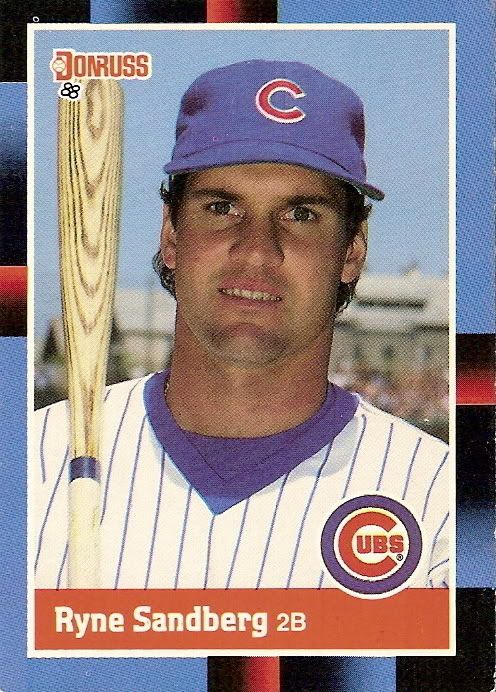
It's been a couple days now, but it's worth noting that Mike Quade, not Hall of Famer Ryne Sandberg, was named the new Cubs manager. A lot of people here in Chicago are pretty upset about this. Phil Rogers was upset. Gene Wojciechowski was really freaking upset. Sandberg was a hero, obviously, and it was clear that he really wanted the job. Instead, they named some guy nobody had ever heard of before he was named interim manager (except the Cubs fans who noticed he was their third base coach), somebody who never made it out of the minors as a player.

Here's the thing, though: I don't think anybody has a clue whether Sandberg would be a better manager than Quade, or vice-versa. Not you, not me, not Gene or Phil, maybe not even Jim Hendry. Managing is a hugely opaque thing; there's no WAR or wOBA or FIP that's going to tell you if a guy is or will be a good manager. Winning percentage certainly doesn't do it. What you'd need to do, really, is watch the games as closely as possible to evaluate their decisions. And then interview their players, hang around the clubhouse, really get an idea of how they do at leading a team. If anyone did that, it's a lot more likely to have been the Cubs than, say, Wojciechowski or Rogers or the enraged fans next door.

Let's break down the fans' (and nostalgic hometown writers') arguments, as I see them, for Sandberg:

Wednesday, August 25, 2010

The Cost of "Playing the Percentages"

By The Common Man

The Common Man tries not to write and complain too frequently about the Minnesota Twins in this space. After all, this is a general baseball site, and TCM’s not one of the more pessimistic Twins fans out there. That said, last night’s ninth inning demonstrated in sharp detail how a flawed roster and manager can conspire to snuff out a team’s chance to win a ballgame.

Monday, August 23, 2010

Skipper Sendoffs Part Deux

By The Common Man

Bill brought up some managerial mysteries in his skipper sendoff post from earlier, noting that it's not immediately apparent why some legendary managers walked off the job when they did. Here are the conditions under which the 18 managers currently in the Hall left the game:

Walter Alston
Bill wrote: "Because I haven't been able to find the actual reason for the weird timing, I'll have to assume that he saw J.R. Richard's sparkling three-hit shutout (with, uncharacteristically, zero walks and just five strikeouts), running the 26 year old's record to 19-15, and figured he was finally beat once and for all."

What happened: Tommy Lasorda had long been considered Alston's heir and had waited patiently for Smokey to move aside, even passing up multiple other managerial offers. Finally, in 1976, Alston decided he was done in the dugout. With the Dodgers 10 games back of the Reds, and mathematically eliminated from the postseason, Alston wanted Lasorda to get his feet wet, telling reporters, "I think it would be good for Tommy to take over from this point on and get a little background for next season. I think I'll just turn it over to him right now. But I want to warn him what he does will go on my record."

Sparky Anderson
Bill wrote: "George Lee Anderson stuck it out to the bitter end of the Tigers' 60-84, strike-shortened 1995 season."

What happened: Sparky resigned, saying, "I knew it was time. This city has to change, and it must change with someone else." Sparky was either being incredibly optimistic, or was a true visionary about what was going to befall Detroit. The parting seems amicable. Tigers President John McHale called Anderson, "one of a handful of greatest managers in big league history. He leaves today as he came: his own man. Cherish him, remember him. We will not see his likes again." Sheesh. Anderson was hoping to catch on with another club at 61 years old, but that never materialized.

Ned Hanlon
Bill wrote: "There was nothing he could do for the 1906-07 Cincinnati squads, who went a combined 130-174 under Hanlon's helmsmanship. Leaving after the season was at least ostensibly Hanlon's decision."

What happened: Hanlon did not go quietly. In July of 1907, he publicly announced his intention to retire at the end of the year after a power struggle with Reds President August Herrmann. "Mr. Hanlon said when he was last here [Baltimore] that he made up his mind to quit Cincinnati, as matters there are not to his liking, and he has reached the age and fortune where he does not have to submit to unpleasant features." According to the same reporter,
"Mr. Hanlon has never been the real manager...since the season of 1907 began. He has been manager in name and has had to bear the brunt of the club's misfortune, while players have been signed, released, forgiven for their misdeeds, and allowed to run themselves and their alleged manager by Mr. Herrmann.... Mr. Herrmann's desire to be a 'good fellow,' his well-known easy going nature, and his determination to be at the top of everythinbg connected with the club have negatived [sic] any good managers such as Mr. Hanlon might do."

Bucky Harris
Bill wrote: "The Tigers went 82-72, and it's not clear to me whether Harris left on his own terms or the Tigers'."

What happened: Harris resigned on September 25, 1956, effective at the end of the season. It had been a rough one for Harris, as the AP reported that "Harris earlier this season had been under heavy fire both by the public and by [Tigers President Spike] Briggs himself. Later, after the club was sold to an 11-man syndicate for $5,500,000; Briggs and the new owners announced that Harris would be retained at least until the end of the 1956 season." Translation: The new owners wanted their own manager.

Whitey Herzog
Bill wrote: "Now this was a good one to go out on...if you had to leave in the middle of a terribly disappointing season."

What happened: Whitey quit midway through the 1990 season with two more years left on his contract, saying "I still enjoy managing, but I just don't feel like I've done the job. I feel like I've underachieved. I can't get the guys to play....It isn't that I can't stand losing, if I feel like the club is playing up to its capabilities. I'm just bewildered. I can't believe this team is playing as bad as this team is playing. It's really bad. I felt like I just wasn't getting it done."

Miller Huggins
Bill wrote: Pretty safe to say that Babe Ruth made Huggins a Hall of Famer, right (see also Lazzeri, Combs, Meusel, Hoyt, etc.)? Anyway, this was another late-season exit, game 147 in the Yanks' 1929 season."

What happened: Huggins took ill with influenza that was severe enough that he was hospitalized. While there, he contracted a rare facial infection that eventually put him in a coma and ended his life.


Al Lopez
Bill wrote: His final years with the Sox read like Billy Martin's time with the Yankees, but I'm not clear on whether he was getting fired or quitting/retiring.

What happened: Lopez retired after the 1965, saying he was tired of managing and wanted to work on his golf game. His hand-picked successor, Eddie Stanky, did all right for two years, before the bottom fell out in 1968. Lopez was coaxed out of retirement to take the reins, but had a significant stomach ailment that led to an appendectomy and kept knocking him out of the dugout. He had to take time off in '68, and after being weak throughout Spring Training in 1969, he was forced to resign again after just 17 games.

Connie Mack
Bill wrote:
"The A's 52nd win against 102 1950 losses was the last win for Mack, who won 3731 of them (but lost even more) in 53 seasons before finally calling it quits at age 87."

What happened: Well, he was 87. Mack's sons had purchased the team from him in 1949 and announced that their father was welcome to manage for as long as he wanted to, despite public calls that he had become a burden on the team he built. Mack lasted one more miserable summer, before giving way to Jimmy Dykes, saying in that stilted way of his, "I am retiring from active management of the baseball club but will remain as a director."

Joe McCarthy
Bill wrote:
"He made his name with the Cubs and (especially, of course) Yankees, but he'd also had great success in 1948 and '49 with the Sox. The 5th consecutive loss on June 18, 1950, though, dropped the team to just 31-28, and the 63 year old McCarthy was done."

What happened: Well, this was just a cluster. McCarthy was sick, and was planning a break from the team. Earlier that evening, he had scoffed at the notion that he was leaving, saying, "Those reports that I'm resigning are really too silly. I'll never quit under fire, and you can bet your last dollar that as soon as I'm well enough I'll be back." Then Red Sox traveling secretary Tom Dowd contradicted McCarthy, telling the press that McCarthy was indeed resigning and being replaced by Steve O'Neill. Sounds from here like McCarthy was forced out.

John McGraw
Bill wrote:
"The New Yorkers led 2-0 after six, but gave up one in the 7th and three in the 8th. I imagine McGraw just left in a disgusted huff and never looked back."

What happened: McGraw had been sick for several years with a "sinus condition" that often kept him from traveling with the Giants on the road (except, of course, to Brooklyn). When the condition worsened, and his doctor advised him not to travel at all anymore, he handed over the team to 1B Bill Terry, saying "It is my desire that a man be appointed who was so thoroughly familiar with my method and who had learned his baseball under me." McGraw stayed on as a team stockholder and Vice-President.

Bill McKechnie
Bill wrote:
"As with Alston, McKechnie lasted until the team's final four games in his final season (1946, here), and as with Alston, I can't figure out why."

What happened: Also like Alston, McKechnie was leaving ostensibly to give his successor some time in the dugout. He told the press, "I felt it was advisable to have the matter settled at this time so that both the club and myself could make definite plans for the future." He had hoped to catch on with another team, but no job presented itself.

Wilbert Robinson
Bill wrote:
"Another long-termed Dodgers (er, Robins) manager, Robinson saw his 18th season with the team through to the end in 1931."

What happened: Robinson had survived several coup attempts by his team's board of directors, and eventually succumbed, though he admitted being "surprised" at the move, especially since the Dodgers had made it back to the first division in 1930 and '31. His replacement, Max Carey had one good year before the Dodgers succumbed to habit and became Dem Bums again.


Frank Selee
Bill wrote:
"He started '05 a very respectable 37-28 but was replaced anyway by another Hall of Famer, Frank Chance, who went on to player/manage the team through easily the best seven years of its history."

What happened: Selee took ill with what was being called "severe indigestion" in July, and was forced to give up the club. In reality, he had tuberculosis. He moved west and managed a team in Pueblo, Colorado, and died in Denver in 1909.

Billy Southworth
Bill wrote:
"The Boston squad, with which Southworth had been successful--if not nearly as successful as with his earlier work with the Cardinals"

What happened: Southworth was a tough guy to play for, even without all the booze and before his son died in World War II. His players revolted in 1949, and he walked off the job. In 1951, he did it again. Guy Butler of The Miami News wrote, "After winning the pennant his first year, 1948, in a five-year contract, it seems the man who did a great comeback once before after shunted off to the minors as a manager, could not forget. He grew hard, bitter, tough on his players. Dissension reared its ugly head, the team wasn't winning, and --well, Billy decided to chuck it all and go back to Sanbury. Maybe this time for keeps."

Casey Stengel
Bill wrote:
"You'd probably guess Stengel's exit was horrid -- he finished with four and a half god-awful years at the head of the expansion Mets -- and you'd be right."

What happened: Well, Stengel got pretty old, and allegedly his doctors told him to hang it up, as he cited "medical advice" in his farewell press conference. He took a ceremonial job in the Mets front office, but was cagey about whether he'd come back, I wouldn't want to say. I have this new job now and that's all I'm thinking about at this moment. You never know what will happen later." Right.

Earl Weaver
Bill wrote:
"Weaver tried to come back after just two and a third seasons off, and the magic was gone."

What happened: Indeed, it was gone. Weaver didn't have a lot of fun in '86, and privately told friends he wouldn't come back the next year as early as mid-August. He told reporters, "The facts the way they are is that I'm not interested in 1987, but I'm very interested in the remainder of 1986." His eventual replacement, Cal Ripken Sr., didn't believe him, equating him to the 1980s baseball version of Bret Favre, "Earl always leaves the door open. As he says, 'I can always change my mind.' He's very disappointed in the ballclub right now but if he sits down later, he might think he can come back and turn the thing around."

Dick Williams
Bill wrote:
"Managing the late-eighties Mariners is not the way a Hall of Fame manager should have to end his career. He was canned after this ho-hum loss dropped them to 23-33 and 16 games out of first on June 5 of '88."

What happened: The players revolted. Mark Langston complained about being left in too long, and other players were less than complimentary. So the Mariners fired Williams, "in the interest of the current season as well as for the future," according to team President Chuck Armstrong. GM Dick Balderson piled on, "I think in the last couple of days Dick Williams lost control of this club. I just don't think the players were responding to him at all. I don't think Williams was getting all he could out of his players." After that, the gloves came off. Mike Moore told reporters, "When you're a player, you like a pat on the back once in a while. You never got that from Dick Williams. Instead, you were kind of in limbo." Michael Brantly expressed frustration too, "A lot of guys didn't know what Dick wanted from them. Guys on the team didn't know their roles." Harold Reynolds: "I think this move will be good for the team. We're a better club than we've shown." Dave Valle: "Whenever something like this happens, it's bound to be good." Alvin Davis: "Over the last three weeks, there has been a change as far as the decision the manager has made. I really don't know why." Mark Langston: "I'm excited to get things going again. I think this is a very positive decision. It's got to take a big burden off the players." Ouch.

Skippers' Sendoffs

By Bill

When Lou Piniella called it quits yesterday, it's not as though he was planning his perfect exit. You have to respect a guy for just realizing that his family situation required him to leave, even though that the leaving would be forever, even though he was leaving a team that was 51-73 and facing a much, much better team. This was to be how 49 or so years in pro ball all ended, and it didn't figure to be good.

And boy, wasn't it! The Cubs kept it to 5-3 entering the seventh, but then the Braves scored eleven runs in Piniella's last three career managerial innings, and it ended 16-5.

So I got to thinking: I think Piniella will probably be in the Hall of Fame eventually. Just the one World Series berth, but he's managed the 13th most games in big-league history, has the 14th most wins, a bunch of playoff appearances, that 116-win season, and of course has that memorable character and reputation.

So here's how it ended for the other Hall of Fame managers (those who are actually specifically in the Hall as managers):

Walter Alston: Astros 1, Dodgers 0 (loss)
Alston's almost-23-year run as manager of the Dodgers ended with just four games remaining in the 1976 regular season and his team at 90-68 (the last four games, and next twenty years or so, were handled by Tom Lasorda). Because I haven't been able to find the actual reason for the weird timing, I'll have to assume that he saw J.R. Richard's sparkling three-hit shutout (with, uncharacteristically, zero walks and just five strikeouts), running the 26 year old's record to 19-15, and figured he was finally beat once and for all. Actually, it's entirely fitting that the manager of the 1960s Dodgers went out on a 1-0 game.

Sparky Anderson: Orioles 4, Tigers 0 (loss)
Wow, two-for-two in shutout losses so far! George Lee Anderson stuck it out to the bitter end of the Tigers' 60-84, strike-shortened 1995 season. In the finale, Mike Mussina stymied them in a complete game, two-hit, two-walk, seven-K gem. Like Richard above, Mussina was 26 and won his 19th game in the great manager's walk-away loss. Buddy Bell took over for Anderson, and was...less successful than Lasorda.
This game was also the last for Lou Whitaker, making it the finale for the Trammell-Whitaker should-be-hall-of-fame keystone combo.

Ned Hanlon: Redlegs 13, Pirates 1 (win)
No boxscore available. Hanlon made the Hall (nearly sixty years after his death) on the strength of his work from 1894-1900, when he led Baltimore and Brooklyn teams to five NL pennants in seven years. There was nothing he could do for the 1906-07 Cincinnati squads, who went a combined 130-174 under Hanlon's helmsmanship. Leaving after the season was at least ostensibly Hanlon's decision. Just 49, he was invested in a Federal League team, and was involved in the landmark Supreme Court suit that ended up creating the deplorable MLB antitrust exemption.

Bucky Harris: Tigers 8, Cleveland 4 (loss)
The final game of Harris' 29 year managerial career brought his career record to within 61 games of the .500 mark (managing the Senators for 18 years can do that). "Shortstop" Harvey Kuenn went 3-for-5, 21 year old vet Al Kaline hit a two-run triple and Billy Hoeft came on in relief in the 4th inning to walk away with his 20th win on the last day of the season. The Tigers went 82-72, and it's not clear to me whether Harris left on his own terms or the Tigers'.

Whitey Herzog: Cardinals 4, Padres 1 (win)
Now this was a good one to go out on...if you had to leave in the middle of a terribly disappointing season. It was the Cards' 80th game in 1990, and raised their record to just 33-47. Tied 1-1 in the 9th, the Cards exploded to score three runs off of Greg Harris in a rally that, fittingly, included both a sacrifice bunt and a stolen base. Whitey was somewhat improbably replaced by 67 year old former Cards great Red Schoendienst, who kept the seat warm for Joe Torre for a few weeks.

Miller Huggins: White Sox 7, Yankees 0 (loss)
Pretty safe to say that Babe Ruth made Huggins a Hall of Famer, right (see also Lazzeri, Combs, Hoyt, etc.)? Anyway, this was another late-season exit, game 147 in the Yanks' 1929 season. Chicago pitcher Hal McLean walked six and gave up two hits to Ruth, but allowed just two other hits for the third shutout loss in six so far. Art Fletcher finished the season, then Bob Shawkey for 1930, and then some guy named McCarthy came in in '31.

Tommy Lasorda: Dodgers 4, Astros 3 (win)
The Dodgers scored two in the 8th off of Billy Wagner to tie it at 3, and then Mike Piazza, the kid of Tommy's family friend, won it with a walk-off homer in the bottom of the ninth. It would've been a perfect sendoff...except Lasorda had no intention to make it one. He had a heart attack the next day, officially ending his career a little over a month later. It also ended a pretty incredible run; Alston and Lasorda managed the Dodgers for a combined 43 seasons, and they've had six managers in the fifteen years since.

Al Lopez: Royals 5, White Sox 4 (loss)
A Joe Foy single in the bottom of the 12th ended Lopez' impressive career (no world championships but a .584 regular season winning percentage), just 17 games into the 1969 season, after which he retired. His final years with the Sox read like Billy Martin's time with the Yankees, but I'm not clear on whether he was getting fired or quitting/retiring.

Connie Mack: A's 5, Senators 3 (win)
The A's 52nd win against 102 1950 losses was the last win for Mack, who won 3731 of them (but lost even more) in 53 seasons before finally calling it quits at age 87.

Joe McCarthy: Tigers 10, Red Sox 2 (loss)
He made his name with the Cubs and (especially, of course) Yankees, but he'd also had great success in 1948 and '49 with the Sox. The 5th consecutive loss on June 18, 1950, though, dropped the team to just 31-28, and the 63 year old McCarthy was done. Ted Williams hit his 275th career home run in the losing effort. Steve O'Neill took over the rest of the way, and went 63-32.

John McGraw: Phillies 4, Giants 2 (loss)
McGraw's 33rd year as manager (and 30th as manager of the Giants) ended after just 40 games, in which the Giants had gone 17-23 and were in 8th place. The New Yorkers led 2-0 after six, but gave up one in the 7th and three in the 8th. I imagine McGraw just left in a disgusted huff and never looked back. The next manager, Bill Terry, lasted nine more seasons.

Bill McKechnie: Reds 6, Cardinals 0 (win)
As with Alston, McKechnie lasted until the team's final four games in his final season (1946, here), and as with Alston, I can't figure out why. Great one to go out on, though, as Bucky Walters and the Reds' defense blanked the eventual world champion Cardinals. He was replaced by Hank Gowdy, who only ever managed those four games (going 3-1).

Wilbert Robinson: Robins 12, Giants 3 (win)
Another long-termed Dodgers (er, Robins) manager, Robinson saw his 18th season with the team through to the end in 1931. His boys thumped the second-place Giants, with every player including the pitcher collecting at least one hit (mostly in the first three innings off Freddie Fitzsimmons). Joining the hit parade with a 2-for-4 was a 22 year old catcher named Al Lopez.

Frank Selee: Reds 6, Cubs 0 (loss)
No boxscores from 1905. Selee made the Hall of Fame (almost a century later) for his work with the Boston Braves before the turn of the century, but he'd had some success in Chicago. He started '05 a very respectable 37-28 but was replaced anyway by another Hall of Famer, Frank Chance, who went on to player/manage the team through easily the best seven years of its history.

Billy Southworth: Cubs 3, Braves 0 (loss)
Another shutout loss! The Boston squad, with which Southworth had been successful--if not nearly as successful as with his earlier work with the Cardinals -- in most of his first five seasons, fell to 28-31. Bob Rush threw a four-hit, four-K shutout. Tommy Holmes (hey, read about him here!) took over after the game as player/manager.

Casey Stengel: Phillies 5, Mets 1 (loss)
You'd probably guess Stengel's exit was horrid -- he finished with three and a half god-awful years at the head of the expansion Mets -- and you'd be right. Jim Bunning shut them down in a two-hit, 12-K complete game, running the Mets' 1965 record to 31-64 and Stengel's career Mets record to 175-504 (.302). I bet most people don't realize that even after 12 wildly successful years with the Yankees, Stengel's career record fell all the way back to just barely above .500 (.508, to be exact). Wes Westrum somehow suffered through most of the next three years, and then Gil Hodges took over and things got better.

Earl Weaver: Tigers 6, Orioles 3 (loss)
Joe Gibbs should've taken a lesson; Weaver tried to come back after just two and a third seasons off, and the magic was gone. The Orioles weren't terrible for most of 1986, but lost their last five games and ten of their final 13 to finish 73-89. Really nothing worth reporting about that final game. Cal Senior took over in '87, and certainly didn't do any better.

Dick Williams: Royals 7, Mariners 3 (loss)
Managing the late-eighties Mariners is not the way a Hall of Fame manager should have to end his career. He was canned after this ho-hum loss dropped them to 23-33 and 16 games out of first on June 5 of '88. There were a lot of great things in Williams' career, and Alvin Davis, Jim Presley and Rey Quinones played no part in any of them.

Quite a few ignominous endings in there, but nothing quite like the 16-5 drubbing Piniella took home with him yesterday.

Wednesday, July 21, 2010

Lou Piniella's Resume Is Impressive In Its Bredth and Scope

Yesterday’s announcement that Lou Piniella was set to retire was a good reminder that, geez, Sweet Lou has been around for a long time. Piniella debuted on a 1964 Orioles team that had Harvey Haddix on it, for God’s sake. You can get from Lou Piniella to Cap Anson in just six players using Baseball-Reference.com’s Oracle feature (though, to be fair, that’s true of anyone who played with Phil Niekro, the Robert DeNiro of Six Degrees of Cap Anson).

After a brief exposure to the Bigs in ’64, Piniella hung around for another 17 seasons before he retired in 1984, and by 1986 he was managing his Yankees. Aside from years off in 1989 and 2006, Lou has been at the helm of a ballclub in every year, and currently sits 14th all time in managerial wins. But that success only tells part of the story, as Piniella was a leading figure on some excellent Yankee teams in the late 1970s and early ‘80s. Indeed, Lou Piniella has been the rare individual who has been excellent as both a player and a manager, he must have gotten to celebrate on the field a number of times after his teams’ wins.

How many times? Well, these are the kinds of things The Common Man wonders about, and thanks God he has Baseball-Reference.com to help answer. As near as The Common Man can tell, Lou Piniella’s teams have won 3369 games in his careers as a player and a manager. And while Piniella’s contributions as a skipper sandwich him between Bill McKechnie and Ralph Houk, if we count all of the wins he’s had to sit through, Lou leaps into the Top 4. Consider the following chart*:

NamePlaying WinsManagerial WinsTotal Wins
Connie Mack48037194199
Joe Torre148522463731
John McGraw69427633457
Lou Piniella154318263369
Tony LaRussa51026043114
Casey Stengel109619053001


The next tier of players/managers includes Leo Durocher (2953), Dusty Baker (2916), and Al Lopez (2914), each of whom have more than 2900 wins under their belts. They’re followed by Bill McKechnie (2790), Frank Robinson (2721), Jimmy Dykes (2638), Bobby Cox (2630), Wilbert Robertson (2625), and Dick Williams (2624). Charlie Grimm and Felipe Alou each also top 2500 total wins.

First of all, it probably shouldn’t surprise anyone that Connie Mack still tops this list. Mack has more than a thousand more victories than any other manager, which will happen when you also own the team for more than 50 years. It’s some nice job security. Plus, Mack had an 11 year playing career in the 19th century for the old Washington Nationals, Pittsburgh Pirates, and in the Players League to add to his total. McGraw also had a very successful playing career that basically ended when he was just 29 years old, to help bolster his total. But Piniella and Torre provide perhaps the most balanced resumes on the list, ranking 3rd and 5th in player victories respectively, allowing them to vault over some of their more one-dimensional colleagues. Robinson had the most wins in his playing career among managers on this list, with 1656. Bobby Cox, whose ’68 and ’69 Yankees won just 163 games in his two seasons as a 3B, has the fewest.

Some have speculated on Lou's chances for making the Hall of Fame, once his career ends. It seems awfully likely. As Rob pointed out yesterday, everyone above him on the all time managerial wins list will have made the HOF except Gene Mauch. And several below him are also in. But even if you doubt his managerial resume, 1826 wins, one World Championship, and extended success with non-Tampa teams, his overall body of work is incredibly impressive, and should qualify Lou for a nice bronze plaque that highlights all of his accomplishments in the game.

*(A couple notes about The Common Man’s methodology: First, in some cases these numbers are estimates, as players were traded in midseason and we don’t have accurate data to determine exact win totals. As this is an ultimately meaningless, but fun, exercise, just take the above numbers with that grain of salt. Also, TCM has accounted for seasons in which the above gentlemen were Player/Managers to avoid double-counting wins.)

Friday, June 4, 2010

When You Change Horses

Well, it’s official, Dave Trembley is out as the Orioles’ manager. And Juan Samuel is in. The Orioles have been terrible in 2010, winning just 15 games out of 54. To say their offense has struggled would be an understatement. At 3.33 runs/game, they are dead last in the American League, and have scored 10% fewer runs than their closest competitor for the bottom. Their run prevention has also been terrible, leaving them 12th in the AL in runs allowed/game. Their pitchers have allowed the most homers in the American League and the most hits. They have the second fewest strikeouts in the league. And their allowed batting average on balls in play is a high .306 (10th in the AL). Mostly, this last problem is due to some atrocious defense being played in the Emerald City. Nick Markakis already has cost the team seven runs on defense. Ty Wigginton, miscast while filling in for Brian Roberts at 2B, has allowed an extra 9 runs in. Corey Patterson, Miguel Tejada, Garrett Atkins, and the statuesque Nolan Reimold have also been defensive disasters. Only Caesar Izturis and Julio Lugo have been assets on the defensive side. And the development of the teams’ future, Adam Jones and Matt Wieters, seems to have stalled under Trembley’s watch. So, really, Trembley’s exit is probably a good thing.

But what about the strategy of firing the manager in general? Since the Royals shuffled Trey Hillman out for Ned Yost earlier this year, The Common Man has wondered whether changing horses in midstream is generally a good idea. So he went back and looked at every team that switched managers midseason from 1901 until today, to see what kind of differences a new manager might make. What he discovered is below.

There were 338 cases (including Trembley) of a club changing managers at least once during the season. You won’t be shocked to know that, taken as a whole, managers who start the season with clubs, but are replaced, lose more games than they win. At 7210-8715, they have a winning percentage of .453. That works out to a 73-89 record over 162 games. The performance of their replacements, however, might surprise you. Second, third, and even fourth skippers have a combined record of 5355-6023, a winning percentage of .471, which works out to a 76-86 record over 162 games. In 223 of these 338 team-seasons, the subsequent managers performed better than the man they replaced. In retrospect, however, what should we have expected? Teams that fire their managers tend to be underperforming, and extremely bad squads have a tendency to regress to the mean. Really, in light of this, a three win swing is not all that significant. Indeed, it’s not at all clear that firing the manager has any impact on the performance of teams, as a macro-level strategy.

But on the micro level, with individual teams and individual manager in individual situations, perhaps it does make a difference. It is up to the general manager to make that determination, and to hire the right man to right the ship, if that’s the ultimate goal. Not just to find an interim manager, but a better manager to steer the club’s roster for the long term.

It should be noted that teams change managers for several reasons. The skipper may have lost the clubhouse, be tactically inept, have the wrong mindset to motivate a particular group of players, or simply be losing a lot of games (and since you can’t fire the players…). Or it could be some combination of reasons. And not every managerial change is designed to win more games during the season in question. For instance, the Angels fired Cookie Rojas in 1988 with eight games to play, and a 75-79 record. The team had no hope of catching the Oakland A’s, and eight games wouldn’t have been enough time to really get fans excited about 1989, but the club simply couldn’t stomach Rojas anymore. Rojas was replaced by Moose Stubing, who went 0-8 at the helm (Stubing holds the record for most games at the helm without a win in the 20th and 21st centuries). Likewise, Dave Bristol was fired by Braves owner Ted Turner in 1977, with a record of 60-100. Turner quickly installed himself as the manager for a game, before turning the team over to Vern Benson for game 162.

The first midseason managerial change of the 20th century occurred in 1902, when Horace Fogel’s Giants stumbled out of the gate. Fogel had never played in the Major Leagues, and had previous experience managing the Indianapolis Hoosiers in 1887. Between jobs, he was a sports writer. Somehow, he convinced Giants owner Andrew Freedman to give him the job, not that Freedman would admit it. In March, the club released news that Fogel had been hired as an “associate manager,” but also announced “that Fogel had not signed to manage the New Yorks.” The Pittburgh Press reported, “that Fogel had called on Freedman and informed him that he had several promising young players under contract, whom he could sign for the New York club if they were wanted. Fogel was told to go ahead, but was not given any reason to believe that he would be associated or connected in any way with the management of the team.” Apparently, that’s not what Fogel had been telling others, “Fogel certainly informed several reliable persons on Thursday last that he had signed to manage the New York team. There were even rumors heard of a considerable lump of advance money paid to the Philadelphia man.” Eventually, Fogel was officially installed as the team’s official skipper, and lasted all of 41 games. Sam Crane wrote in the August, “Fogel is the worst that ever happened as a manager. It was he who disrupted the New York team his spring and made Mathewson dissatisfied with his job.” Indeed, in his brief tenure, Fogel had tried to make Christy Mathewson a first baseman. Second baseman Heine Smith took over for Fogel and managed to do even worse, 5-27. Only then did the Giants strike gold, hiring a certain John McGraw, who would hold the job for the next 31 years.


Fogel apparently stayed on the payroll for at least half the season, and was called the “Chief of Scouts” as late as June 24, when “Horace even hinted in Brooklyn something about having the great Lajoie sign to a New York club contract before many days, but Horace is very apt to ‘talk through his Panama’ when his imagination gets working overtime, so we will have to pass the Lajoie story up until more results are shown than the breeze from Fogel’s ‘trap….’ Now is the time for him to get out and hustle—earn his princely salary by getting Lajoie even if he has to kidnap the slugging Frenchman.”


Some teams do indeed send their manager packing to, hopefully, inspire their club. In 2004, the Astros fired Jimy Williams after 88 games (and a 44-44 record) and installed Phil Garner. Under Garner, Houston went 48-26 down the stretch and made it to the NLCS. Last year, famously, the Rockies fired Clint Hurdle after 46 games (18-26) and brought in Jim Tracy (74-42) and surged to the Wild Card.

But for every great success, there are huge disappointments. On August 15, 2001, Jimy Williams managed the Red Sox to a 6-2 loss against the Seattle Mariners. Williams’ Sox had lost 6 of their last 7, and general manager Dan Duquette got out his hook, despite the Sox sitting in 2nd place, just 5 games back of the Yankees and two back of the A’s for the AL Wild Card. Williams was replaced by pitching coach Joe Kerrigan, who immediately had problems. Nomar Garciaparra and Carl Everett both went down with injuries. First base, second base, shortstop, and leftfield all became carousels of personnel. Manny Ramirez, who had been limited to DH, lost a lot of time to injury. Kerrigan went 17-36 down the stretch and the Red Sox finished just 3 games over .500. Now, Williams probably wouldn’t have made the difference, as the Everett and Garciaparra situations were probably unavoidable, and the A’s surged, winning 28 of their final 32 games. But Kerrigan’s tenure had to be a big disappointment, as he was not retained after the season and hasn’t managed since.

In another disappointing managerial swap, Billy Martin helped the Yankees jump out to a 40-28 record in 1988. The team was in first place until June 20, when it lost the second of four straight contests. Swept by Detroit at Tiger Stadium, the team fell 2.5 back of their opponents. More importantly, Martin seemed to be self-destructing. In May, Billy had been ejected in Texas for arguing with an umpire, and went to a topless bar after the game. There, he got in a fight with another patron and ended up needing 40 stitches to reattach his left ear. Later that May, general manager Lou Piniella resigned because he couldn’t work with Martin. The next day, Martin threw dirt on Dale Scott. According to the New York Times, his use of the pitching staff was getting on his team’s nerves, “Dave Righetti complained he did not receive regular work. Cecilo Guante has privately told teammates he has been used too much. Tommy John, the 45-year-old left-hander, was used three times in a five-day period. Charles Hudson, after throwing only 10 pitches in the bullpen, gave up a grand slam last Sunday on '’a batting-practice fastball.’ Some pitchers have expressed dissatisfaction with a lack of attention from the coaching staff.” Finally, after a dispute (which Martin aired with the New York press) with new GM Bob Quinn over whether Don Slaught was ready to come off the DL, Martin was sent home. He was immediately replaced by his former GM, Lou Piniella, but Piniella scuffled. For all the trouble he caused, Billy did win ballgames. Lou went 45-48 the rest of the way and was fired after the season when the Yanks finished in 5th.

Also, not all managerial changes are the owner’s choice. Bobby Winkles had managed the A’s to first place in the AL West in 1978 with a 24-15 record, but actually quit rather than continue to work for owner Charlie Finley. He told the AP later that year, “it just boiled down to a difference in philosophy on how one human being treats another.” Under Jack McKeon (who Winkles had replaced the previous season), the club went 45-78 and finished 6th. Winkles never managed again.

In 1946, Joe McCarthy pulled a similar move, resigning from the Yankees (who were 22-13 and 5 games back of the Red Sox). McCarthy cited “ill health,” but there were rumors that he had been feuding with new boss Larry MacPhail. Whether this is true or not, McCarthy apparently handled his resignation with class and dignity, meeting with his team and throwing his full support behind new player-manager Bill Dickey, “Dickey is the finest, most loyal fellow on the ball club….Give him a chance and I’m sure he’ll make good.” Dickey had just come back from World War II, and didn’t really have his legs back. He hit just .261/.357/.366 as the backup catcher, but probably took too much time away from starter Aaron Robinson (.297/.388/.506) and young phenom Yogi Berra (.364/.391/.682). Dickey’s record, 57-48, was ok, but the team slumped from the heights it had reached under McCarthy. The Reading Eagle reported that Dickey was “as quiet and efficient as a manager as he had been as a player, [and] lacked the fire and spark that MacPhail had hoped he would engener into the Yankee team.” Dickey allegedly asked MacPhail for his release and told him that he “had taken enough as pilot of the club and that he didn’t want to be considered for the job in 1947.” Johnny Neun managed the last 14 games for the Bombers, and Dickey would never manage again. The Yankees finished 3rd, 17 games behind the Red Sox.

McCarthy holds the distinction of having the highest winning percentage of any manager who managed more than 10 games and didn’t finish out the season. Paul Richards, who had a 91-54 record for the White Sox in 1954, comes in a close second. Richards quit the club late in September, with the team 13.5 games behind the Indians, taking a job as the new general manager and field manager of the Baltimore Orioles. Richards’ deal included a bump in salary, additional control as the GM, and three guaranteed years. Marty Marion took over for Richards, and went 3-6, but would win 91 games the next year.Richards helped to improve the Orioles, getting them out of the second division by 1960. Richards would also leave the Orioles before the end of 1961 to become the first GM for the Houston Colt .45s.

The other end of the spectrum, managers fired after a slow start, is much more robust. Cal Ripken Sr in 1988 and Phil Garner in 2002 were fired by the Orioles and Tigers respectively after starting 0-6. Their replacements, Frank Robinson (54-101) and Luis Pujols (55-100) didn’t do a lot better. Malachi Kittridge had the worst start of anyone who managed more than 10 games, going 1-16 for the Senators in 1904. Patsy Donovan (37-97) took over and was equally unable to help the club improve. On the other hand, Bill Norman started 2-15 for the Tigers in 1959 (ironically, Norman had helped the club finish strong in ’58 after replacing Jack Tighe). He was replaced by Jimmy Dykes, who went 74-63 the rest of the way before earning the boot himself in ’60 after starting 44-52.

Eighteen clubs have made it to the postseason with more than one man at the helm. The Cubs, Astros, Dodgers, Brewers, and Yankees have each done it twice. Of these teams, nine have made it to the World Series (though only four from the division era), and two (the 1978 Yankees and 2003 Marlins) have won it all. The Yanks, of course, replaced the contentious Billy Martin with Bob Lemon and cruised the rest of the way. The Marlins dumped bane-of-young-pitchers Jeff Torborg and hired Jack McKeon.

Of the 30 clubs, the Giants have gone the longest without replacing a manager midseason. In 1985, they replaced Jim Davenport with Roger Craig for the final 18 games, then handed the reigns to Craig for the next seven years. Craig begat Dusty Baker, who helmed the club for ten seasons. Then Felipe Alou managed for four years before being replaced by Bruce Bochy. The Twins (Tom Kelly and Ron Gardenhire) and Oakland A’s (Tony LaRussa, Art Howe, Ken Macha, and Bob Geren) each haven’t flipped managers midseason since 1986. This suggests a strong and consistent organizational philosophies of not rocking the boat and not making rash decisions. These clubs have consistently hired good managers (each of the managers on the list above have made the postseason, except Geren) and have not seen the benefit of making a move just to make a move. Indeed, that would seem to minimize team flexibility moving forward, since a new manager’s success may pressure the team to extend a manager who’s not ideal for that team.

The Dodgers, not surprisingly, have been the least likely club to make an in-season change over the course of the franchise. Wilbert Robertson, Leo Durocher, Walt Alston, and Tommy LaSorda were all long-serving and respected skippers, and had enough respect not to be brushed aside midseason, for the most part. Alston, in failing health, bowed out for Lasorda in ’76, and Lasorda did likewise for Bill Russell in 1998. In 1947, with Durocher suspended for the year, Clyde Sukeforth managed Brooklyn for two games (and won both), but did not want the job. Burt Shotton took over the rest of the way, and guided the club to the World Series. The Browns/Orioles (7) and the Senators/Twins (9) also have been shy about pulling the trigger midseason. Of the original 16 teams, the Indians and Cubs lead the way with 22 in-season changes each in 110 total seasons.

So is it a good strategy to change horses midstream, as it were? Again, on a macro level, there is no evidence that it’s significantly helpful. And, indeed, it can undermine a team’s flexibility to search for the ideal candidate the next offseason. That said, this is entirely team specific. General managers who feel their team needs a different skipper to get back in the race may, indeed, want to make this move. But if the GM is responsible for hiring the wrong manager in the first place, there is certainly no guarantee that they will choose the correct replacement. If a team is out of contention, it seems silly to jettison a manager, who you will still have to pay, for an extra three wins a year (particularly if a manager hasn’t lost the clubhouse). Thus, while a potentially good strategy, it is probably overused.

(note: The spreadsheet TCM created of mid-season managerial changes can be found here.

Thursday, March 18, 2010

She don't lie, she don't lie, she don't lie

The big news yesterday and today, of course, was Ron Washington’s surprising revelation that he had tested positive for using cocaine during the 2009 season. New details have been leaking out over the past 24 hours, including the possibility that Washington and the Rangers may have been blackmailed by a former employee (who is also the probable source for the original report). The reactions, of course, have come fast and furious, including this report by ESPNDallas reporter Jim Reeves,
Yes, the Texas Rangers should have fired Ron Washington on the spot in July. That, I suspect, is what most teams or companies would have done. You or I probably would not have survived such a transparently self-serving confession of "one time" cocaine use….That doesn't excuse his behavior. This goes beyond stupid. This begs the question: How can Washington manage others when he can't manage himself?

Reeve’s opinion here is by no means outside of the mainstream. Many scribes have called for Washington’s firing and questioned his ability to manage his players “when he can’t manage himself.”
Look, what Ron Washington chose to do was wrong, was stupid, and was potentially career-ending. The Common Man has absolutely no interest in defending Ron Washington’s actions last summer. Ron Washington screwed up, and while firing him would have been a justified punishment, The Common Man is glad we live in a world where a man with no prior history of bad acts can get a second chance. The truth is that we don’t know how or why Ron Washington chose to do cocaine last summer, we don’t even know if it was his cocaine he was using (perhaps he was out with a friend), nor does TCM think we have any real right to know that information. TCM has no bone to pick with Ron Washington, nor does he particularly like him.

So with that out of the way, let’s lay to rest the entirely stupid notion that Washington can’t manage his players because he “can’t manage himself.” None of us is perfect, not even The Common Man, and we all have problems successfully managing ourselves from time to time. Have you ever had an extra drink, even though you knew it wasn’t a good idea, saying “I’m going to pay for this tomorrow?” (TCM is guilty) Did you ever punch a wall in frustration and either break some fingers or dent the drywall? (TCM is guilty of the latter) Have you skipped class, even though you knew that you’d catch hell? (Totally guilty) Have you ever driven while you’re exhausted, eaten an extra pop tart at breakfast, smoke a cigarette? (yep, yep, yep) Did you ever smoke pot, try pills, pull fire alarms, or pick a fight? (alas, TCM never rose to this level). Congratulations, you have at least at one point in your life not been a good manager of yourself. Now, the degree to which these things are “bad management” is debatable, but the test is the same as the one Ron Washington failed. From the outset, you know that what you are doing to yourself is not healthy, yet you do it anyway.

So Ron Washington is really no different than the rest of us, except to the degree that what he did was inappropriate. And while that degree is relevant, we have no evidence he did it more than once or that he put anyone in danger; there is certainly no disturbing pattern of behavior with Washington, after all Reeves goes out of his way to say how much he likes Ron and says he generally does a good job. And baseball history, after all, is filled with successful managers, Hall of Fame managers, who succeeded in spite of their personal failings and bad decisions, just like the rest of us.

John McGraw was a notorious hothead and drinker, who would fight his players, opponents, and umpires. Until Bobby Cox came along, McGraw held the record for the most times ejected from a game, and by all rights he deserved it (particularly since the threshold for umpire abuse was much higher then). McGraw also was touted as the single best judge of talent in baseball, won 2763 games, finished with a .586 winning percentage, won seven pennants and three World Championships.

Billy Southworth had another incredible managerial career. He helmed the Cardinals and Braves for twelve consecutive years beginning in 1940, won 100 games three years in a row, two World Series, four pennants, and retired with a .597 winning percentage (behind only Joe McCarthy for 20th century managers. Like McGraw, Southworth was a tough manager for players to love, his rules were often seen as oppressive and angered his players. Southworth was also an alcoholic whose systematic abuse of alcohol finally caught up to him…after twelve years of almost unparalleled success.

Leo Durocher won 2008 games across 24 seasons as a skipper. He won three pennants and a World Series as a manager. He was apparently also disliked by almost everyone in baseball at one point or another. He feuded with Larry MacPhail, his commissioner (whose name was Happy, how hard do you have to antagonize a man named “Happy” before he dislikes you), and the most beloved Cub of all time, Ernie Banks. He got himself suspended in 1947 because of his association with gambling and gamblers. His inability to keep his personal life from impinging on his team may have cost his team Durocher for the ’47 season, but it didn’t cost them anything on the field. Burt Shotton guided the team to the NL Pennant, before they fell in seven games to the Yankees.

The most obvious example of out of control managers, of course, is Billy Martin. Martin’s vagabond managerial career took him from Minnesota to Detroit to Texas to Oakland, and to the Yankees five separate times. And Martin’s personal demons are well-documented. He was an alcoholic and was violent. He baited umpires, opponents, his players, and his owners into fistfights. His roudiness, drunkenness, and borderline criminal behavior cost him every job he had, except Oakland (and there it probably didn’t help any). Billy Martin is the very definition of not being able to manage himself. The irony, of course, is that he could manage baseball teams, and Martin presided over 7 teams that won more than 90 games, including 5 and a half that would finish in first place (Martin was fired in the middle of the Yankees Championship season in 1978). He won two AL pennants and one World Series. And many of his teams, particularly the Oakland A’s in the early ‘80s, improved because of his presence. Indeed, Martin managed others just fine despite having almost no control over his own addictions and demons.


Of course, Martin’s an extreme example, and ultimately his indiscretions kept him from continuing to manage in the major leagues. However, Tony LaRussa was arrested for drunk driving during spring training in 2007, the year after he won a World Series. LaRussa had fallen asleep at the wheel of his car, and was idling at a green light when police woke him and gave him a breathalyzer. Clearly, this is an example of a man who was not, for one night at least, managing himself. While LaRussa endured a public flogging for his crime, very few questioned his right or his ability to continue managing the Cardinals. One month later, Cardinals’ relief pitcher Josh Hancock would kill himself in a drunk driving accident. Again, almost no one thought to question whether LaRussa’s personal mismanagement had led to a culture of excess and lack of regulation, a thesis perhaps supported by his players’ extensive history with steroid use.

Bobby Cox is generally regarded as one of the greatest managers of the last 40 years. His steady hand guided the Braves to 14 division titles, 4 pennants, and one World Championship in a 15 year stretch, and he led the Blue Jays into the playoffs in 1985. But for one night in 1995, Bobby Cox’s hand was not so steady. Police called to his home in Atlanta arrested Bobby Cox and he was charged with simple battery against his wife. She told the officers that Bobby had punched her and pulled her hair. Cox was ordered to complete violence counseling and an alcohol evaluation and the charges were dropped. No one thought to wonder whether the man who holds the all time record for ejections and who once punched his wife was the right man to manage the Braves.


Indeed, when managers like Cox, Lou Piniella, or Ron Gardenhire fly off the handle and get run from a ball game, it’s often fair to question not only whether they are fit to “manage people,” but whether they are in possession of all of their faculties. The tirades performed by these pudgy, red-faced buffoons does nothing to improve the immediate fortunes of their team (for almost all arguments are lost), and instead only serves to deprive his team of the leadership and expertise the manager was supposedly hired to provide. Do these tirades help in any way? Sure, there are instances where teams come back against their opponents and credit their manager with rallying them, but it’s hard to see these as credible, and The Common Man is sure that some enterprising soul out there, looking at win probability data would find that, in games where a manager is ejected, teams win exactly or almost exactly as often as we would expect them to if the manager had stayed in the game.

So what’s The Common Man’s point? It seems that there are any number of ways that managers have been historically “out of control” either in one-time instances or in a disturbing pattern of behavior that belies serious substance abuse or anger-control problems. Managers are, after all, human and subject to our imperfections and lapses in judgment (except, of course, for Connie Mack). Even the wise King Solomon sinned in the eyes of the Lord, and had his kingdom taken away.

However, many of these same men, who have had so little control over their own demons, have not only “managed others” without incident, but have thrived. Indeed, what will doom Ron Washington as a manager is not whether his use of cocaine last year makes him “fit” or “an example for young men to follow,” but whether he wins more often than he loses, and makes progress toward winning the AL West in 2010 and 2011. As it should be.