Showing posts with label San Diego Padres. Show all posts

Thursday, January 12, 2012

Happy Birthday...

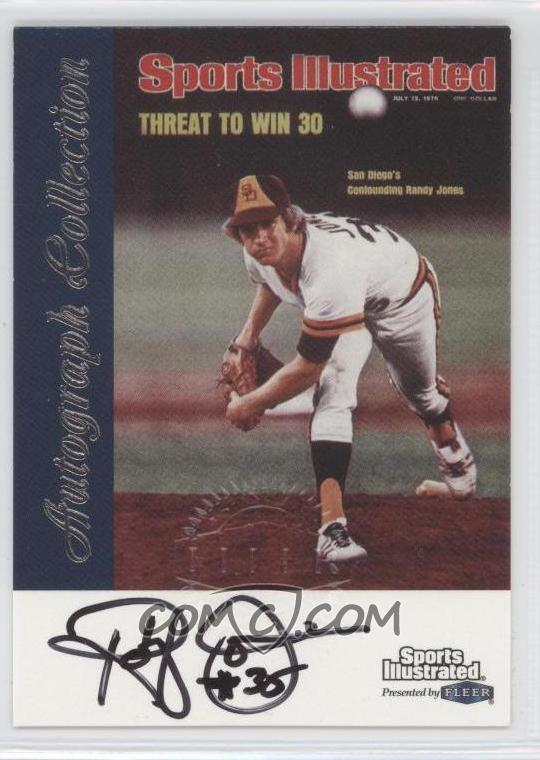
Randy Jones!

The National League gave out ten Cy Young Awards in the decade of the 1970s, as you'd probably expect. Eight of them went to players who were now in the Hall of Fame: two to Tom Seaver, two to Steve Carlton, and one each to Bob Gibson, Fergie Jenkins, Gaylord Perry, and Bruce Sutter.

One of the other two was Mike Marshall, the rubber-armed reliever turned kind of crazy kinesiologist doing scary things with young pitchers' arms, who appeared in a record 106 games in relief in 1974 -- 13 in a row, at one point -- and pitched 208.1 innings, all in relief, gathering 15 wins (with 12 losses) and a league-leading 21 saves.

The tenth one, you've probably guessed, was Randy Jones.

Friday, February 25, 2011

The Padres will be better than you and Vegas thinks

By The Common Man

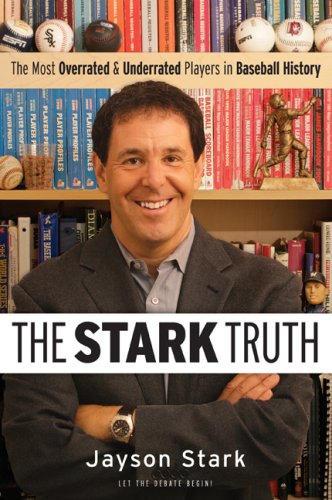
Aside from The Common Man, who praised the Padres to the heavens for their offseason moves here and here, the conversation from the national media has largely dismissed the San Diego Padres, given that they traded superstar Adrian Gonzalez to the Red Sox this offseason. Jayson Stark gave them an C, for instance. And now, according to the Vegas sports books (h/t to Aaron Gleeman), the San Diego Padres are going to finish with somewhere around 76 wins. Frankly, that’s a bet you should take. And take the over. Here’s why:


Thursday, February 10, 2011

Missing the Grade

By The Common Man

The Common Man really didn’t want to write today, at least not about this. He’s getting ready for his big gig on the SweetSpot blog next Monday. But he just couldn’t let Jayson Stark’s offseason grades for the NL West go by without saying something. After all, Jayson gave the Padres a C and the Dodgers a B+ for their efforts this Winter, while TCM ranked the Padres #1 overall in their offseason execution, while Los Angeles fell to #17.


The Common Man knew lots of students in high school and college who never really applied themselves like they could have to their studies. They were smart, they knew it, and they got by on acceptable marks while biding their time until bigger and better opportunities came around. Meanwhile, TCM also knew classmates who would turn in a flurry of paper, assignments and extra credit, pandering to the teacher and reciting back what they had just been told, verbatim. They didn’t learn anything, but they looked like good students. Most of those guys and women are in middle management now. The other guys, the underenthused, tend to be running non-profits, getting PhDs, working for think tanks, and advising US Senators. Jayson doesn’t seem to know the difference.

Tuesday, November 30, 2010

3 Questions: San Diego Padres

By The Common Man

Continuing with the 3 Questions series here at The Platoon Advantage, the San Diego Padres are under the microscope today. As always, you can find a complete list of the 3 Questions that we’ve covered so far here.

Question 1: Was 2010 a fluke?

On one level, this question doesn’t matter very much. 2010 happened and the Padres were, unexpectedly, very competitive. The construction of this team was brilliantly executed by current GM Jed Hoyer and former GM Kevin Towers around a central philosophy of maximizing the run suppressing environment of PetCo Park through exceptional defense. The 2010 Padres were a terrific reminder that defense remains an undervalued and readily available commodity, and their success speaks well of the Padres brass’ ability to construct successful clubs in the future.

On the other hand, the question above is not just academic. Because if 2010 was a fluke the Padres’ management team needs to adjust their approach to this offseason. Is this a club that just needs to be strengthened around the margins, or should the Padres continue to look to fundamentally remake their club? Is this a team that is still rebuilding, or are they ready-made to compete? The Common Man leans more toward the former answer, but understands that the Padres will need to be in a continual process of rebuilding and renewal as their players (ahem, Adrian Gonzalez, ahem) get too expensive for the club to hold onto.

Question 2: How long can you hold Adrian Gonzalez?

Speaking of Gonzalez, San Diego’s remarkable success has created an impossible decision for the Pads. The slugging 1B, who has emerged as one of the best hitters in the National League, was not supposed to be with the club this year. Supposedly, when the Padres fell out of contention, they were going to unload him for a bevy of prospects that would form the central cast of the next great Padres team. Of course, as we’ve learned, a funny thing happened on the way to the forum.

When the Padres stayed competitive, Gonzalez stayed on the Padres as virtually their sole source of offense. And if the team wants to contend in 2011, Adrian Gonzalez is indispensible. But if they keep him until the end of the year, Gonzalez is prepared to walk away via free agency, leaving the Padres holding only a couple of compensatory draft picks. Those are valuable, but not nearly as valuable as the prospects the Pads would get back in a trade. It’s a dilemma worthy of Solomon himself. If the Pads deal Gonzalez, they essentially forfeit 2011. But if they keep him, they severely damage their ability to compete in 2012 and beyond.

Question 3: How do you improve the offense without sacrificing defense?

It’s not all about the defense. The Pads sported the second best K/9 and K/BB ratio in the National League, after all. But a large portion of their success at keeping runs off the board stemmed from the team’s ability to catch the ball. They turned in the second best defensive efficiency rating in the National League (.701) thanks to a fly ball oriented staff, a park that suppressed homers, and some outfielders who cover a lot of ground.

The trouble is that those outfielders don’t tend to hit all that much, even given their hitting environment. Tony Gwynn Jr., whose defense in CF was otherworldly, managed just .204/.304/.287, a 68 OPS+ that was not out of line with the rest of his career. Will Venable has emerged as a decent offensive player in RF, but his lack of on-base skills and power seriously limits his upside as a player. Chase Headley has been seen as a good prospect, but hit just .264/.327/.375 last year at 26 years old, so there’s not a lot of room for growth.

Fortunately, the Marlins are available to help solve part of that problem. Despite not having an in-house replacement, Florida was moved to act when San Diego offered up two whole relievers for Cameron Maybin, a former top prospect with good defensive skills, who still has significant upside and a strong minor league track record. But the team still needs to fill holes at SS and 2B, while hoping that Ryan Ludwick figures out where he misplaced his bats after being acquired from the Cardinals if they’re going to keep pace with the Giants, Dodgers, and Rockies again.

Thursday, July 15, 2010

Stay Classy, San Diego (even when you fall out of the division lead in the NL West)

On last night’s podcast, Bill brought up that his favorite story of the year has been the San Diego Padres improbably run to the top of the NL West. Still, things aren’t going to be easy for the Friars. At 51-37, they are ust two games up on both the Rockies and the Dodgers, and four up on the Giants. And while they’ve been great so far, The Common Man can’t help but feel like we’ve reached the Padres’ high water mark in 2010. Indeed, if TCM had to pick one division leader right now who was not going to make it to the finish line, it would be San Diego.

There are several obstacles standing in their way. The first, and most important, is that they are fighting with three other teams for the division lead. While they have a head start, the likelihood of one of the other clubs (in particular, the Rockies, who are going to get Troy Tulowitzki and Jorge De La Rosa back soon) putting together a big second half is high.

The Padres also have a grueling end of the season, playing 13 of their final 20 contests on the road in Colorado, St. Louis, Los Angeles, and San Francisco. Plus, three of their seven home games come against the NL Central leading Reds. All in all, it’s going to be a tough back half of September for these Padres.

And while it may not seem like it, given the offensive black hole they play in, the Padres may have some weaknesses in their rotation, where Clayton Richard, Jon Garland, and Wade LeBlanc all have xFIPs a run or so more than their ERAs.

The Padres have also fared incredibly well in one-run games thusfar, winning 19 of 31 contests. To a certain extent, this is a function of the team’s magnificent bullpen, but it’s also likely that this kind of success simply isn’t sustainable.

And then there’s this: The Common Man doesn’t expect the Padres to make any major moves here at the trade deadline. For one thing, the team is not poised to take on additional salary. Increasingly, these deadline deals are being made for financial reasons, and many of the players that GM Jed Hoyer could acquire to help (Roy Oswalt, Jose Guillen, Corey Hart, Jayson Werth, etc.) make a bunch of money.

The Padres remind The Common Man a lot of the Seattle Mariners from last year or the Twins from 2001, in that no one really expected the clubs to be competitive, but they did through great defense, decent pitching, and mediocre offense. That said, it’s important to note that both clubs ran out of gas, as they were just not good enough to stay in it. And given the realization that the Padres are probably playing over their head, it doesn’t make a lot of sense to plug leaks on a ship that’s going to sink anyway.

Under smart leadership, the Padres are also going to patiently implement their master plan, which is incredibly similar to the M’s. With a lead, it doesn’t make sense to sell off players and compromise their long term prospects for a short term gain. Instead, they’ll hold tight to prospects Donavan Tate, Simon Castro, and Jaff Decker. The Padres, in their market, will only remain competitive by building themselves into a player-development machine on par with the Twins of the early 2000s.

Indeed, while the Twins did try to upgrade in 2001, they smartly refused to part with their prospects, who included Justin Morneau, Michael Cuddyer, Luis Rivas, Bobby Kielty, Matt LeCroy, JC Romero, Kyle Lohse, Lew Ford, Juan Rincon, Jason Kubel, and the young Johan Santana. Each of these players would prove valuable in the coming years as the Twins became the dominant team in the AL Central. Expect the Padres to hold course and, at best, pick up a castoff in August to cover CF or SS. But in the meantime, they’re likely to get passed by either San Francisco (who seems to be aggressively pursuing offensive upgrades) or Rockies.