As The Common Man mentioned earlier, it’s Washington Week on this site, in honor of Stephen Strasburg’s big debut. And in watching that debut, it’s fun to dream about Strasburg becoming the face of Washington baseball for the 21st century. But, as The Common Man alluded to earlier, this was hardly the first big debut of a premier pitching talent in Washington’s history.

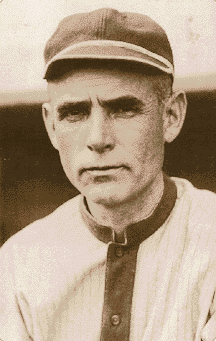
First and foremost, of course, is The Big Train, Walter Johnson, the premier player in Washington baseball’s annals. His 417 wins are second all time, and his 110 shutouts are 20 more than the nearest competitor (Pete Alexander). He was the most dominating pitcher in the Major Leagues from 1910-1924. He won two MVPs, despite not being eligible for several after winning in 1913 (because players couldn’t win twice). And his strikeout record stood for more than 50 years. On him, Clark Griffith built his pennant winners in the 1920s, even though Johnson was in his 30s.
If you believe the legends, Walter was a thunderbolt from a blue sky when he arrived in 1907. According to 1962’s The Greatest in Baseball,
“As a boy growing up on a isolated farm in Humboldt, Kansas, Walter Johnson had little chance to play baseball. He was almost 20 when a traveling salesman saw him pitch in a sandlot game. The excited drummer dispatched urgent letters to all the major-league clubs, extolling the virtues of the unknown sandlot pitcher….Eventually the Washington Senators…picked up pitcher Walter Johnson for the price of a $9 railroad ticket.”That story, as you’d probably expect, is a bunch of hooey.
Yes, Johnson was born on and lived at a farm in Kansas, but moved to Los Angeles with his family in 1902. At 16, he began playing ball on a sandlot, but quickly graduated to a semipro outfit for a local oil company, according to Charles Carey of SABR’s Baseball Biography Project. From there, he got a brief trial with Tacoma in the Northwest League, before settling in with another semipro club in Idaho. News of Johnson’s success was broadcast throughout the baseball world, including an apparent consecutive scoreless inning streak of 77. Washington sent a scout to check Johnson out, and he convinced Johnson to come back East as a member of the Senators. He was well regarded enough that the Los Angeles Times did a story on his signing on July 21, 1907.
Johnson got his first start on August 2, 1907 against the Detroit Tigers. According to the box score the next day, Johnson went 8 innings and gave up 6 hits, including a homerun to Sam Crawford. He walked one and struck out three. Davy Jones relates, in The Glory of Their Times, that
“Being the lead-off man…resulted in my holding the unique distinction of being the first man to ever face Walter Johnson in a major-league game….Boy, could that guy ever fire that ball! He had those long arms, absolutely the longest arms I ever saw. They were like whips, that what they were. He’d just whip that ball in there.”
 Sam Crawford remembered that day as well, saying
“Did you know that I was playing with Detroit the day Walter Johnson pitched his first major-league game? His very first. In fact, I beat him. I’m not being egotistical, you know, but it’s a fact. I hit a home run off him and we beat him—I believe the score was 3-2.”Crawford’s almost right. Indeed, he homered, and probably did so off of Johnson. But the Tigers pulled this game out in the bottom of the 9th, after Johnson had left the game. Instead, Tom Hughes gave up the final run on four hits, and was hung with the loss. But by now we’re used to inaccuracies in GOTT, and as far as they go, this isn’t too egregious.
Despite the loss (or no-decision, as it were), people were impressed. Tigers pitcher Bill Donovan called him “the best raw pitcher I have ever seen.” Ty Cobb reported that Johnson’s fastball, “made me flinch” and “hissed with danger.” The press picked up on it too. On the 18th, the Reading Eagle wrote,
“Johnson is only 19 years old, but is strong and husky, and has already shown remarkable ability. He has an exceptionally steady head for a youngster , and has a bunch of benders that prove very puzzling [sic] to batsmen….Johnson made good in the box from the very start, but was weak at the bat. He blanked the Tigers in six of the eight innings he pitched….With the Tigers as competitors, that’s going some. [Manager Joe] Cantillon was greatly pleased with Johnson’s showing and will retain him whether or not he holds his present form, in the belief that ultimately he will be a great pitcher.”
Indeed, Johnson was Strasburg 80 years before Strasburg was even born. But there’s one problem, Johnson’s first start came on the road in Detroit.

To find another Hall of Famer who debuted in Washington, we have to fast forward to 1930, when the Yankees came to town. This debut, however, did not generate any fanfare. On April 29, the Yanks jumped out to a 7-0 lead over Senators ace Bump Hadley, and looked poised to run away with the game. In the bottom of the third, however, Washington came roaring back against former Senator Tom Zachary. Zachary, after cruising through the first six batters of the game, couldn’t even record an out in the third frame, and gave way to Roy Sherid after being tagged for five runs. Sherid couldn’t retire anybody either, giving up two more hits before being replaced by rookie Californian Vernon Gomez.
 Lefty Gomez had been a 20 year old star in the Pacific Coast League in 1929, winning 18 games for the San Francisco Seals, and was purchased by the Yankees for $45,000. On the way back north after Spring Training, Gomez apparently shut out the Little Rock Travelers in an exhibition, while also getting two hits. Impressed, the Yankees added him to the big league roster.
Against a strong Senators lineup, however, Gomez wasn’t very effective. He allowed Sherid’s runners to score and before the inning was out, it was tied. Gomez would pitch four innings in all, giving up two more runs on four hits and 2 walks. By the end of the contest, the Senators were on top 11-8, and Gomez was hung with the loss. The game recaps that TCM has located from the next day don’t mention him at all, focusing instead on the offensive onslaught of the Senators, who had just won their 8th straight game. On the year, Gomez would go 2-5 with a 5.55 ERA in 60 innings, and walked more batters than he struck out (28 to 22). According to an AP report, he was demoted to the St. Paul Saints in late July, where he acquitted himself nicely (8-4, 4.08 in 86 innings). He’d be back in the majors in 1931, and would win 21 games.

 Nine years later, the equally anonymous Early Wynn came to Washington to pitch for the home team. Wynn had been signed, at 17, by the Senators, who had watched him develop into a strong pitcher by 1939. He won 15 games for Charlotte that year, with a 3.96 ERA in 243 innings. He was called up on September 12th, but had trouble impressing reporters, who wrote,
“Early, nowadays is performing for the Washington Senators…in one of those noble experiments which Clark Griffith conducts each fall with a double motive—hoping that he can convince the Washington fans that he is bringing up new players and really ‘building for next year,’ and hoping he can take the minds of the said fans off the sorry spectacle annually presented by the Senators.”Ouch.
The prelude to Wynn’s start was actually more exciting than the start itself. On September 12, the White Sox and Senators were playing a tight contest, and were up 2-1 against Sox pitcher Thornton Lee. That’s when things got interesting, according to the Associated Press,
“With Johnny Welaj on first base, Taft Wright hit a pop fly to left. Gerald Walker of the White Sox caught the ball, then dropped it, picked it up and threw to shortstop Eric McNair, who tagged out Welaj. The umpires ruled that Walker had held the ball long enough to make a put-out and upheld the Sox’ claim to a double play.”
Senators manager Bucky Harris argued and played the rest of the contest under protest. The Sox would score 2 in the eighth and hang on 3-2. Afterward called AL President Will Harridge. After hearing Harris, Harridge upheld the protest (an interesting precedent, given the umpire was undoubtedly making a judgment call; would this have helped the Tigers in the Galarraga game?) , declared the game itself forfeit, and ordered the teams to play a doubleheader the next day.
In the first game the next day, Ted Lyons and Ken Chase battled in an epic pitchers’ duel that entered the 11th inning tied at 1-1. In the top of the 11th, the Sox pushed across two runs, and hung on to win. Both hurlers went the whole way. In the nightcap, again, both pitchers went the whole way, but the game was called after eight innings, presumably because of rain or darkness (no game accounts TCM has found indicate anything about this, but given that the attendance is listed at 500, something was off. Wynn walked Ollie Bejma to lead off the game, and the Sox scored two on follow-up hits by Mike Kreevich and Gee Walker. Wynn would settle down, giving up six hits and five walks in his eight frames, which led to four runs (three earned). He didn’t strike out a batter. The Senators would go down 4-2, handing Wynn his first of 244 losses.
The next day, game recaps were more interested in the winning pitchers and the upheld protests than a raw emergency starter from Alabama. They also enjoyed mocking the Senators’ losing streak, which had just stretched to 6 games (7 counting the wiped out game), and the fact that their protest was for naught.
For what it’s worth, Wynn’s next start was more exciting, but for the wrong reasons. Wynn struggled on the mound, giving up 11 hits and 6 runs over 6.1 innings, but was especially notable at the bat. John Strothard writes sarcastically, for the Daytona Beach Morning Journal,
“Yesterday, the ex-Florida State league hurler came through to cover himself with glory and stuff. The Senators, playing Cleveland, had men on first and second with none out. Early, trying to bunt, hit a pop fly….Ken Keltner…grabbed the pop and dropped it. Keltner threw to Lou Boudreau at second. Boudreau touched Mickey Vernon who was off the bag for out one. Boudreau threw to Oscar Grimes at first and Grimes tagged Al Evans, who had started for second. That was out No. 2. Grimes, moving and thinking quickly, leaped to first base to put out Wynn, apparently confused by the whole business, had trotted toward first base, bat still in hand.”It was the first triple play in the American League in 1939. Somehow Wynn weaseled his way into one more start, in which he gave up five runs in six innings. On the year, he had walked 10 batters in 20.1 innings, while striking out just 1, and given up 15 runs. Obviously, Washington fans were uninspired, and Wynn was returned to Charlotte the next year, where he stayed until 1941.

“Major League” baseball was played in Washington from 1884-1972 (with years off in 1885, 1890, and 1900). And it has been back in the city since 2005. That’s 94 seasons. In all that time, based on what I’ve looked at, only two Hall of Fame pitchers have ever debuted in Washington, and neither was even close to as overwhelming as Strasburg’s. That’s a pretty remarkable drought.
 One caveat. This could change as early as next year, if Bert Blyleven finally, deservingly, gets his place in Cooperstown. Blyleven was a much-hyped, 19-year old rookie when he made his debut with the Twins on June 5 of 1970 at RFK Stadium. Facing Frank Howard and the rest of the Senators, Blyleven was masterful, pitching seven innings, giving up one run, and striking out seven with his big curveball. Both managers were effusive after the game. The Twins’ Bill Rigney told reporters, “What can I say about him. He’s the best looking prospect I’ve seen. I’ve got to rate him with all the real young players that I’ve ever looked at. He’s just beautiful.” The Sens’ Ted Williams agreed, “He looked exceptionally good out there. He was outstanding. He’s the most mature 19-year-old I’ve seen in a long time.” Howard, who had to stand in against the youngster, also praised him, “He’s got a fine arm. He’s everything they’d say he was. He knows how to pitch. It’s hard to say anything based on one game, but he looks like he’s got a great future. Somebody’s taught him a lot about pitching.”
Even though it’s unlikely, The Common Man hopes that Strasburg’s career turns out to be as brilliant as the Dutchman’s. And actually, Strasburg’s debut with the historically bad Nationals may cost him some wins, just like pitching for middling franchises in Minnesota, Texas, and Cleveland cost Blyleven over the course of his career. By the time Strasburg’s retired, maybe we’ll be past caring so much about Wins, and both guys will have plaques in Cooperstown. We can dream, right?