Thursday, April 5, 2012
Moving Day
You’ve come here looking for us. And sadly, you won’t find us here. Only the lonely sound of crickets chirping.
Happily, you will find us at our new site on the Bloguin network. We even took all our archived articles over there too. So…yeah, there’s not really any reason you should be here. Maybe you should check out our new digs. We’d love to see you.
Thanks!
The TPA Crew,
TCM, Bill, Jason, Cee, and Chris
Wednesday, March 28, 2012
TPA Ottoneu Draft - Monte Pfeffer's Heifers
INTRODUCTION
The Platoon Advantage (the site you are reading right now) started an ottoneu league with a few friends and here is my obligatory post about the draft. If I seem to post this begrudgingly, it is because I am. This is a mandatory post and my overlords here would fire me and sue me for all of the millions I am earning with this.
I picked my team name using the baseball-reference random page feature. It led me to a player named Monte Pfeffer with four career plate appearances and I liked the sound of it. I then found a rhyming word with Pfeffer and went with it. There is no historical information to confirm or deny the reports that Monte Pfeffer ever owned a heifer. Play-index bonus: Pfeffer is the only player to ever have a career in which he played in only one game, had four plate appearances, no walks and one hit by pitch.
STRATEGY
I had never done an auction draft before, so I was a little worried about being behind in that area. Thankfully, this was a common theme throughout the draft room, which made me feel more comfortable. In order to have a plan of action, I googled "baseball auction draft strategy" and found the idea of nominating expensive players that I didn't really want. This makes other teams spend more money so you are in a better position with the players you really want. This worked with my other strategy of taking really good young players, who turned out to be popular with everyone (imagine that).
Tuesday, March 27, 2012
What Is a Ground-Ball Pitcher?
More than 50 percent, and you're a ground-ball pitcher. More than 55 percent and you're an extreme ground-ball pitcher (if not quite Brandon Webb).Well I wasn't completely convinced, so I decided to do this for myself. I used Baseball Prospectus's ground ball statistics and defined GB% as GB/Batted Ball (as they do). Here is a graph of GB% since 1950:
The data from 2000-2002 only show outs, so those years are removed from this analysis. Throughout the 50s and 60s, GB% rose steadily. It held fairly constant until the early 80s, declined through the 90s and has been holding steady again throughout the 2000s. So the definition of a high ground-ball pitcher has changed throughout the years.
Which Free Agents Were Overpaid This Off-season?
INTRODUCTION
This post has been in the work for five months. I wanted to see for myself how good each free agent signing was in terms of the market, so throughout the off-season, I kept track of how much money each Major League free agent signed for. I used each player's past three seasons and included an aging curve to estimate how useful he will be to his team for the length of the contract. These are their stories (dun-dun):
METHOD
I found the average of each player's previous three years WAR from Fangraphs, Baseball-Reference and Baseball Prospectus. Then I used an aging curve to determine what a team might be expecting from the player in the future.
I split relief pitchers from all other players because their market is different than everyone else.
Buyouts are included in the guaranteed salary, but options are not. If a player has a 3 million dollar option with a 1 million dollar buyout, only the guaranteed buyout money is included in the average yearly figure. I also tried to exclude non-guaranteed contracts, though some may have slipped through the cracks (I barely caught Casey Blake's).
This isn't meant to be a highly precise representation of how teams valued players. If you read my work for any amount of time, you can tell that I shy away from factoring everything into an analysis. I prefer to do quick and dirty, in the ballpark type of stuff, while acknowledging the limitations of what I have done. So take this for what it is: a simple career average plus aging curve dollar per win graph.
RESULTS
The Path to Respectability: Pittsburgh Pirates
by Jason Wojciechowski
You've seen this a couple of times before, so you know how it goes. Today, we examine the mediocre team with the best stadium in the game, the Pittsburgh Pirates. They're not the sad-sacks they used to be, what with some young stars and a well-regarded front office that's causing better things to come, but they're not really going to be competitive this year, either.
The Baseball Prospectus depth charts, the place I start, has the Pirates coming out 72-90 this year, fifth in the tall stack of the N.L. Central. Their lineup of position players doesn't look terrible, with no Jimmy Paredeses hanging around, but the pitching, which features such luminaries as Jeff Karstens, Kevin Correia, and Charlie Morton, is not impressive. Still, I think we're better off trying to squeeze extra wins out of the position players than the pitchers because the former, at least, have some youth and upside to their credit.
As before, I cheat right off the top: we'll count on five wins of run-distribution luck over the course of the season, leaving us needing to find eleven wins on the roster to get the team to the Holy Grail of Respectability, 88 wins.
Friday, March 23, 2012
The Meddler, Part 2: Heyman lets Torii Hunter slander Lew Ford
Yesterday, as you'll recall from TCM's post this morning, Jon Heyman said some things that were basically untrue. Today, he opened his laptop again and relayed information that was patently, blatantly false in his post contending the Twins were consistently intimidated by the Yankees in their playoff losses. Take it away, Jon:
Ex-Twins star Torii Hunter said some Twins players were beaten before they started, which finally confirms what has long been suspected: that the Twins are intimidated by the Yankees.... Hunter recalled one 2004 ALDS game the Twins lost where they had a runner on third with one out, down a run against the great Yankees closer Mariano Rivera, and Twins manager called on a young righty hitters to bat against Rivera, and Hunter recalled that hitter turning down the pinch-hit assignment. "You need a righty hitter against Rivera with his cutter,'' Hunter recalled. But according to Hunter, Ford shook his head no. So Gardenhoire used another kid, Jason Kubel, a lefthanded hitter, who Hunter recalled getting jammed. "Kubel wasn't afraid, but he's a lefty hitter,'' Hunter said.That's a really compelling story, undone only by the small problem that it never happened. At least not like Torii Hunter said it did. Kubel never pinch hit against Rivera in 2004 (his first year in the Majors), and Lew Ford started three of the four games, and in the one he didn't start, Rivera faced six batters, and none of them were (or should have been) pinch hit for.
The Meddler
It’s not exactly a hatchet job that Jon Heyman did on Ichiro Suzuki yesterday, but it’s close. At least Heyman’s clear that Ichiro works hard and prepares himself well. But other than that, whoo boy. It’s an article that goes out of its way to essentially call Ichiro a meddling prima donna who maneuvers behind the scenes to get coaches reassigned, players he wants inked, and blows off reporters before games (guess which one is probably the reason Heyman wrote this column). However, to make his case that Ichiro is the great Seattle puppet master, Heyman has to stretch and distort facts wildly to fit his narrative, use remarkably vague unnamed sources, and dredge up something that may have been an issue years ago but, by Heyman’s own admission, isn’t a current problem.
Heyman writes that “Ichiro’s ‘absurd’ influence [over Mariners owner Hiroshi Yamauchi] was either unknown, underestimated, or deemed unimportant when Mariners longtime stars Ken Griffey Jr. and Jay Buhner were on the team.” Yet, Griffey was long gone by the time Ichiro debuted in 2001, and Buhner sat out most of the season before coming back and playing 19 games in September. How much influence could these “longtime stars” have had that kept Ichiro in check or allowed him to machinate unnoticed when neither was in the clubhouse? Sure, Griffey came back in 2009 and 2010 for a farewell tour with the Mariners, but that would mean that Ichiro’s influence or lack thereof has been a non-factor for the last three seasons. And if that’s the case, then why is this an issue even worth dredging up?
Thursday, March 22, 2012
Negro League Database Diving
This morning, Baseball Reference dropped a bombshell when they went live with their Negro League database that covers 1903-1948. This represents the most complete public airing of Negro League statistics that we’ve ever seen, and baseball fans everywhere should be incredibly grateful to the National Baseball Hall of Fame, Seamheads.com, Sean Forman and his Baseball Reference team for making these publicly available. What a treasure trove of data.
Previously, we’ve had to rely on incredibly incomplete data and oral histories (much of which have been wonderful to read and hear, though they are highly subjective) to try and understand the black game in the age of segregation. This shines a beacon on a terrifically understudied and little understood part of baseball’s history.
The Common Man and Bill spent much of the morning combing through the stats and passing little treasures back and forth. We have a lot more to do to get a more complete picture of the database, but here are our ten favorite things we learned this morning:
Wednesday, March 21, 2012
The Path to Respectability: Houston Astros
by Jason Wojciechowski
![]() |
| They're cooked Photo by Rik Panganiban |
Midway through this self-assignment to figure out how each of the crummy MLB teams could be respectable and win 88 games, I've come to my hardest test: the Houston Astros. The Astros aren't a team with a ton of young talent that projection systems don't like but everyone thinks could be good in two years. (They're not the Royals, that is.) They're just a really bad team.
PECOTA sees the Astros having the worst offense in the National League, and it's not even close. Their .243 projected team True Average is nine points below the next contender, the Pirates. For context, if you had two players with those TAvs (you'd have two crap players, but that's an aside), over the course of a season (650 PAs), the Pirates' player would be worth 6.5 more runs than the Astros' guy. A team, of course, amasses a lot more than 650 PAs in a season.
On top of the offense, PECOTA sees the team allowing, through a combination of bad defense and weak pitching, more runs than anyone else in the National League. Including Colorado. Who play on the moon.
But hey! The team has a new owner who's hired a new, more progressive front office. So hope is rising. Is there any hope for this year? Let's get this team to 88 wins.
PECOTA and the BP depth charts have the team at 60-102 (another aside: it's astounding that a team can be projected to over 100 wins), so we need to find 28 wins. As always, I'll lop five wins off of that figure due to good run distribution luck, leaving me needing "only" 23 on the roster itself. Unlike with other teams, there's no picking and choosing here. I'm going to need help from every single player and position.
Tuesday, March 20, 2012
The Path to Respectability: Oakland A's
by Jason Wojciechowski
![]() |
| It’s a port Photo by Daniel Ramirez |
Having knocked out the Seattle Mariners yesterday, today sees my attempt to get the other half of the bottom-feeding portion of the A.L. West up to 88 wins and respectability. As you know, I'm an A's blogger, but I'm honestly not sure whether that helps or hurts this exercise. It's very likely that previous posts in this series have been unreasonably optimistic about some player or some event occurring such that fans of the team are silently laughing at me. Here, I'm more likely to silently laugh at myself.
Anyway, the baseline. PECOTA and the Baseball Prospectus depth charts currently have the A's finishing third in the West at 73-89, ahead of the Mariners but not even in hailing distance of the two division leaders. They feature an offense full of guys who project to be within a respectable distance of average, one star hitter who will be suspended for the first fifty games of the year, and one well-above-average guy who's never played in America. The pitching, by contrast, and contrary to what you've come to expect from the A's, looks poor. Brandon McCarthy is good, but behind him, there's nobody you can count on for 200 innings of solid baseball.
As always, I start the A's off with five wins of luck, pushing their record, before changes to the roster and individual players' expectations, to 78-84. I need to find ten wins.
Monday, March 19, 2012
The Path to Respectability: Seattle Mariners
by Jason Wojciechowski
![]() |
| Where's the rain? Photo by Michael Righi |
You'll forgive the long layoff between Path to Respectability posts. I poisoned myself this week with peanut butter, so I was out of commission for some time. To catch up, the Orioles were covered here and I wrote about the Royals here. After the Mariners, I'll go on to do the A's, Astros, Pirates, and probably the Cubs. Arguably bad teams that I'm skipping are the Twins (because Bill covered there at Baseball Prospectus), the White Sox (because in the Central, as a team that PECOTA sees winning 77 games, 88 could result just via schedule and some luck), the Mets, Dodgers, and Padres (78-to-79-win teams per PECOTA, too close to my target of 88 to make this exercise much fun). This is a shift from my original idea to take the worst team in each division, because that's less fun than looking at the actual bad teams. Like I said, pushing the Mets or Padres to 88 wins is boring.
Onward!
The basics on Seattle: PECOTA has them at 70-92, last place even behind the A's in the West, a full seventeen games back of Texas, on the "strength" of the second-worst offense (by True Average, BP's offensive value stat, which is park-adjusted) in the American League. The only real bright spots on the roster are Jesus Montero (2.8 WARP projection despite nearly all his playing time coming at designated hitter) and Felix Hernandez (you've heard of him).
Friday, March 16, 2012
Just This Once, Shut Up George Brett
Let The Common Man preface this by saying that he loves George Brett. Brett was a tremendous player who led some really good Royals teams in the late 1970s and 1980s. He is almost certainly one of the top 5 third basemen of all time (and you know how we love third basemen around here). Well deserving of all the honors and privileges that come with being an all-time great.
But maybe George Brett should have, in this instance, shut the hell up instead of saying “guys in the 500-home run club, guys like Schmitty (Mike Schmidt) and some other guys like that, if those guys [“PE”D users] make it in then they’ll…never go back and attend (the Hall of Fame inductions) if the cheaters get elected.” Because, as we’ve pointed out here repeatedly, virtually everyone who has played since the mid-80s has played with steroid users. This includes George Brett (Wally Joyner and Phil Hyatt, if you’re interested). Steroid use in baseball dates back to Brett’s heyday in the 1970s. And there’s an excellent chance that someone has been enshrined in the Hall of Fame who used illegal drugs designed to help them play better. And as Craig Calcaterra pointed out this morning, it’s Mike Schmidt actually believes the exact opposite of what Brett alleges.
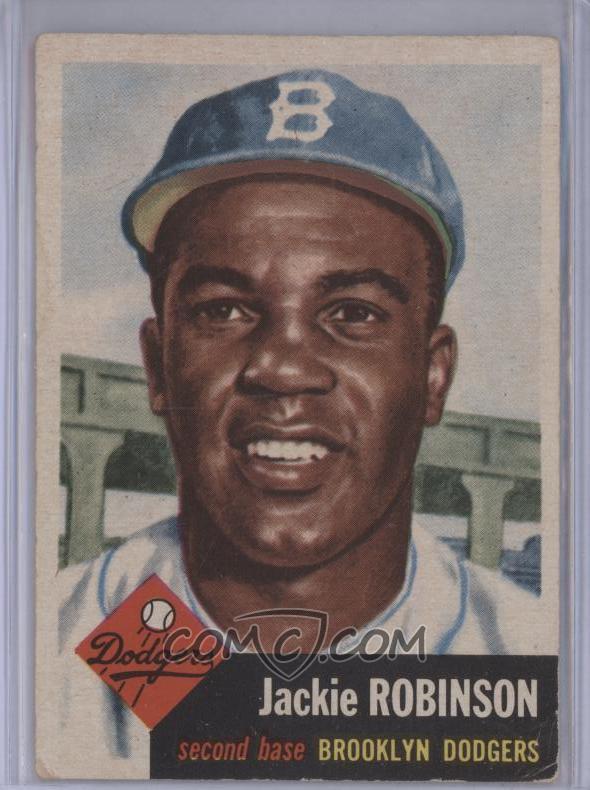
In Which Jackie Robinson Wins All the MVPs
Initially, this was going to be about Stan Musial. Through the age of 27, Musial had won three MVP awards in five seasons (ignoring the one he missed while at war) and added a fourth-place finish. He'd never win another, but he would go on to finish in the top ten of the voting for the next nine consecutive years, including second-place finishes from 1949 through 1951 and in 1957. In many of those years (see Jim Konstanty in 1950 and Hank Sauer in 1952, for instance) the actual winner of the MVP Award was substantially less deserving than Stan the Man was. I approached this thinking that maybe the voters just got tired of giving Musial the award -- as they seem to have done much later with Barry Bonds, robbed several times from 1995-2000 -- and that perhaps one could argue that Stan really should've ended up with seven or eight awards.
One can't, though, or at least I can't. It's not that he wasn't better than the majority of MVP winners from 1949 through 1957; he certainly was. And there's a beloved legend who was deprived of multiple MVP awards during those years; it just wasn't Musial. Jackie Robinson, by and large, was even better.
Thursday, March 15, 2012
How Many Home Runs Do Hitters with High Just Enoughs Lose the Following Year?
INTRODUCTION
A little over a week ago I looked at Home Run Damage, an attempt to quantify the awesomeness of home runs. Now, I'd like to look at the opposite end of the spectrum - home runs that barely made it over the fence, or just enoughs.
The question is raised: Do hitters who hit more just enoughs in one year hit fewer home runs the next? If so, how many? Well I have this information from the ESPN Home Run Tracker, so let's see! If anything, I like to get as much use out of one data set as possible.
METHOD
I found each hitter's total amount of JE, JE/L and JE/ULs in one year and compared it to the difference in HRs hit between the two years. Only hitters with more than 10 total HRs both years qualified. This covers the years from 2007-2011.
I also looked at JEs divided by total HRs in one year versus the difference in HRs next year, thinking a power hitter will hit more home runs in general, including those that barely sneak over the fence. However, there was no correlation between the two.
RESULTS
Wednesday, March 14, 2012
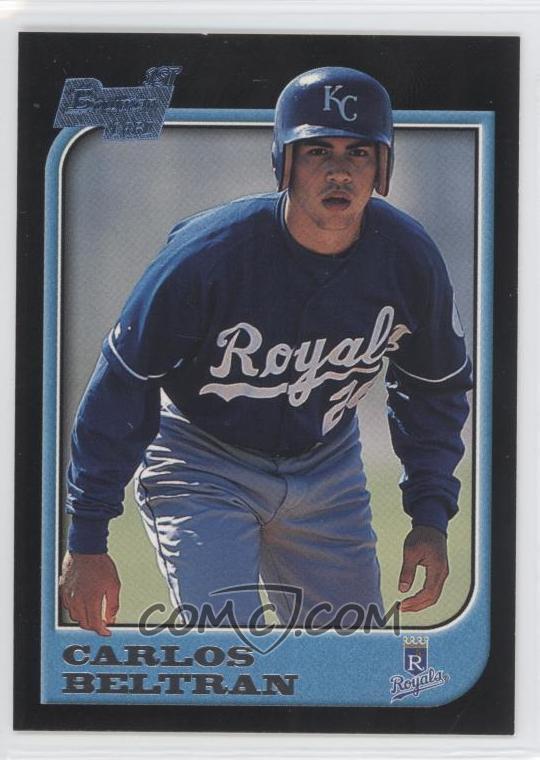
On the Greatness of Carlos Beltran
So Carlos Beltran was in the news a bit yesterday (that is, at least, the drummed-up nothing that real-news-starved writers try to pass for news during this part of the year, when actual news doesn't happen), when he, technically, faced off against his longest-tenured former team for the first time since his trade from the Mets last July. Beltran had some light-hearted comments about former teammate Jon Niese's nose job and some classy, polite and low-key things to say about the Mets. (He was 1-for-4 with a run scored in the "game.")
I'm a bit surprised, but I haven't been able to find any Mets fans or media who have found a way to twist this into something negative about Beltran, yet. Maybe everything is forgotten once he's not on the team anymore? I don't want to try to judge the Mets fanbase as a whole, but the talk radio crowd and media were hugely critical of Beltran during the course of his contract with the team, painting him as lazy, selfish, all the usual stuff. The great Ted Berg has done a great job of counteracting all that.
But anyway, I didn't see any of that today in response to Beltran's comments. Though there was this, on Twitter, from the also-excellent Mark Healey:
Someone called me up last night and compared Roger Maris to Carlos Beltran. The difference? Maris ' 2 MVPs and WS rings #stlcards #mets
— Mark Healey (@MHealeyBaseball) March 13, 2012
I assume Mark's point was to explain the difference between how the two men were treated in New York, and not actually to compare them as players. Because the real difference is that Beltran has had just a much, much better career than Maris. And that tweet does get to exactly why people don't seem to get that; Beltran has had two years roughly as great as Maris' two MVP years (and a ton more good-to-very-good years), but just didn't happen to get the hardware. And he's done just as much to help his teams win as Maris did (considerably more, for most years of their respective careers), but hasn't had the team around and behind him to turn that into a championship.
You probably know that, and you probably don't need me to explain to you that Beltran was better than Maris, or that his peerless baserunning and brilliant defense (to go along with his excellent bat) are what have made him such a great, and underappreciated, player. That's, like, so 2009. Instead, here are some facts about Beltran that I hope make you think about him in a way you haven't, quite, before:
Tuesday, March 13, 2012
Tuesday Trade Tree: Rime of the Ancient Mariner
Once upon a time, there was a man named Bill Stein who was drafted in the 4th round of the amateur draft out of Southern Illinois University-Carbondale by his hometown Cardinals back in 1969. Stein never did much in Cardinal red so after a couple partial seasons, the Cardinals dealt him to the White Sox for Jeff DaVanon's dad. The White Sox of the mid-1970s were a mess, so they had room to give a light-hitting infielder 400 plate appearances in 1976 at second and third base. Stein hit .268/.310/.347 (which was actually good for a 92 OPS+) and was worth 0.1 win above replacement. He was not viewed as a significant part of the Sox franchise.
But that’s not what the newborn Seattle Mariners saw. They saw the cornerstone upon which their franchise would be built. Bill Stein may have been a mediocre (at best) utility infielder who couldn’t handle shortstop, but when the Mariners took him in the 5th round of the 1977 expansion draft, they knew that Bill Stein would be the key to their franchise’s future. That he would be responsible, in part, for 16% of the Mariners’ 2012 Major League roster. Observe:
What Do Minor League Walk and Strikeout Rates Tell Us About Prospects? Recap
Introduction
A few months ago, I created a database that includes all of the prospect rankings from Baseball America, Keith Law and Kevin Goldstein. I didn't have a direct purpose for it, I'm just the type of person who likes to accumulate as much data as possible. So it sat around on my computer until I found a good use for it. Well, thanks to fantasy baseball and Starling Marte's horrible 3.8% walk rate in AA last season, I have. Marte is a possible target in my dynasty minor league draft and I wanted to see what other prospects had poor walk rates and how successful they were in their careers.
Method
In interest of saving digital space (and your scrolling finger), I will only post the full method on the Rookie and Low-A edition of this series.
History
Rookie and Low-A
Single-A
Advanced-A
Double-A
Triple-A
Bust Percentage
I calculated a percentage of players who were busts at each level for high and low walk rates and strikeout rates. Remember, the Rookie and Low-A levels had very small sample sizes, so their numbers don't always follow the pattern. Looking at the data this way shows us where prospects have the most likely chance of failure.
I combined the Very Low/Low and Very High/High categories into one for simplicity's sake.
Monday, March 12, 2012
What Do Minor League Walk and Strikeout Rates Tell Us About Prospects? Triple-A Edition
Introduction
A few months ago, I created a database that includes all of the prospect rankings from Baseball America, Keith Law and Kevin Goldstein. I didn't have a direct purpose for it, I'm just the type of person who likes to accumulate as much data as possible. So it sat around on my computer until I found a good use for it. Well, thanks to fantasy baseball and Starling Marte's horrible 3.8% walk rate in AA last season, I have. Marte is a possible target in my dynasty minor league draft and I wanted to see what other prospects had poor walk rates and how successful they were in their careers.
Method
In interest of saving digital space (and your scrolling finger), I will only post the full method on the Rookie and Low-A edition of this series.
History
Rookie and Low-A
Single-A
Advanced-A
Double-A
Triple-A
389 of the 480 prospects in this dataset accumulated at least 150 plate appearances in Triple-A. 19% were successful, 20% were average and 61% were busts. This is close to the overall 21/21/58 trend for all prospects.
Walks
The Hall of Very Good
You're here because you like baseball. You're also here because you have some advanced mastery of the Internet as well, which means you probably have all sorts of fancy technology that you can use to read ebooks. And you're here at The Platoon Advantage either by complete accident or because you actually like the things that we write here. Normandin and Kalkman launched the Kickstarter and within four days they nearly doubled their goal and have since surpassed their goal of $3,000 to start the project by 244%. So, this project is definitely happening and the Kickstarter remains open for 11 more days and there are different levels of funding that get you the opportunity for many exciting things--including an advanced copy of the ebook or your name on the dedication page.The Hall of Very Good is an ebook meant to celebrate the careers of those who are not celebrated. It's not a book meant to reopen arguments about who does and does not deserve Hall of Fame enshrinement; rather, it's meant to remember those who, failing entrance into Cooperstown, will unfairly be lost to history. It's for the players we grew up rooting for, the ones whose best years led to flags and memories that will fly together forever. Players like Bret Saberhagen, Will Clark, Dwight Evans, Tim Salmon, Wilbur Wood, Orel Hershiser, and literally hundreds of others.This is not a numbers-driven project (although our contributors lean analytical in their views). Our plan isn't to be overbearing with numbers and spreadsheets to convince you that these players are worth remembering. What we want to do, instead, is accomplish that same task through stories. Think of your favorite players growing up: they have their moments, games, seasons, quirks, personalities, and legends worth remembering and sharing. Now, combine the best of everyone's forgotten favorites, and you've got a Hall of Very Good. Ask the people who have those memories and love for these players to write essays about them, and you have a book on the same topic.
Not only does the project promise essays on some of the most under celebrated players in history, Normandin and Kalkman have assembled an All-Star cast of writers from places like Baseball Prospectus, Sports Illustrated, New York Magazine, ESPN, NBCSports, Yahoo!, The Classical, Fangraphs, and SBNation....and the Platoon Advantage?
That's right-- The Common Man, Bill Parker, Jason Wojciechowski, and Cee Angi will all have essays in the Hall of Very Good, which is just another reason to check out this project (or because you like reading things by those more professional than us like Joe Posnanski). Whatever your reason, you will want to have this collection of essays (available in PDF and EPUB formats). Period.
If you buy a copy of the Hall of Very Good, you'll get to read essays from the following celebrated writers:
- R.J. Anderson
- Cee Angi
- Tommy Bennett
- Ted Berg
- Jon Bernhardt
- Jon Bois
- Grant Brisbee
- Dave Brown
- Craig Calcaterra
- Carson Cistulli
- Cliff Corcoran
- Chad Finn
- Steven Goldman
- Owen Good
- Jay Jaffe
- Christina Kahrl
- King Kaufman
- Matthew Kory
- Will Leitch
- Ben Lindbergh
- Sam Miller
- Rob Neyer
- Eric Nusbaum
- Bill Parker
- Jason Parks
- Jeff Passan
- Joe Posnanski
- Old Hoss Radbourn
- David Raposa
The list of contributors continues to grow as the Kickstarter funding increases, so the more of you that support the project, the more essays about under celebrated players there will be-- but you only have 11 more days before the Kickstarter expires. So, go check out the project (there's a video!), give them your money, and wait for the magic to happen.
- David Roth
- Jon Sciambi
- Emma Span
- Cecilia Tan
- The Common Man
- Wendy Thurm
- Jon Weisman
- Josh Wilker
- Jason Wojciechowski
Friday, March 9, 2012
The Path to Respectability: Kansas City Royals
by Jason Wojciechowski
![]() |
| Remind me to tell you the story Photo by Jimmy Emerson |
Yesterday, I looked at how we could get the Orioles to 88 wins in 2012. It wasn't easy, but with a little optimism here and there, we got there. Today, it's Kansas City's turn.
The thing about the Royals, who Baseball Prospectus projects to 71 wins, one fewer than the Orioles, is that their division doesn't have the behemoths that the East does. Detroit looks formidable, certainly, with boppers in the lineup and Justin Verlander on the mound, but they're not the Yankees, and behind Detroit, the Central isn't so pretty. Cleveland or Chicago is probably the second-best team in the stack, and nobody thinks that either squad will be fighting for a Wild Card come September, even with Bud Selig's Great Expanded Playoff Adventure coming to pass. Eighty-eight wins might, as we'll see, look unreasonable for the Royals, but it could, if things fall right, actually get the team into the playoffs. (BP has the Tigers projected to 86 wins, a number that might look low to you until you consider the team's outfield, a crew that makes up a full 1/3 of the batting lineup in any game.)
Like yesterday, I'm starting off cheap: the Royals get five wins on run-distribution luck, jumping them all the way to 76. Unlike with the Orioles, I don't see an obvious trade for the Royals to make to shore up a particular position. Any team could trade for a starting pitcher at any time, of course, but figuring that a team will make that kind of move is boring for the purposes of this exercise. So let's try to find twelve wins on the roster as it stands.