Showing posts with label Kansas City Royals. Show all posts

Friday, March 9, 2012

The Path to Respectability: Kansas City Royals

by Jason Wojciechowski

Remind me to tell you the story
Photo by Jimmy Emerson

Yesterday, I looked at how we could get the Orioles to 88 wins in 2012. It wasn't easy, but with a little optimism here and there, we got there. Today, it's Kansas City's turn.

The thing about the Royals, who Baseball Prospectus projects to 71 wins, one fewer than the Orioles, is that their division doesn't have the behemoths that the East does. Detroit looks formidable, certainly, with boppers in the lineup and Justin Verlander on the mound, but they're not the Yankees, and behind Detroit, the Central isn't so pretty. Cleveland or Chicago is probably the second-best team in the stack, and nobody thinks that either squad will be fighting for a Wild Card come September, even with Bud Selig's Great Expanded Playoff Adventure coming to pass. Eighty-eight wins might, as we'll see, look unreasonable for the Royals, but it could, if things fall right, actually get the team into the playoffs. (BP has the Tigers projected to 86 wins, a number that might look low to you until you consider the team's outfield, a crew that makes up a full 1/3 of the batting lineup in any game.)

Like yesterday, I'm starting off cheap: the Royals get five wins on run-distribution luck, jumping them all the way to 76. Unlike with the Orioles, I don't see an obvious trade for the Royals to make to shore up a particular position. Any team could trade for a starting pitcher at any time, of course, but figuring that a team will make that kind of move is boring for the purposes of this exercise. So let's try to find twelve wins on the roster as it stands.

Tuesday, May 17, 2011

Tuesday Trade Tree: The Curse of Tony Ferreira

By The Common Man

As you may have noticed, the Kansas City Royals jumped out to a very fast start in 2011, and while they’ve fallen off recently and are at 20-20, they finally seem poised to take a big step forward. There is a sense of optimism in Kansas City again, a sense that the future really will be brighter. And that’s crucial for a team that hasn’t made the postseason since their World Series win in 1985.


Some will point to the bevy of young prospects the Royals are on the verge of graduating to the Big Leagues. Some will point to surprisingly cagey free agent pickups like Jeff Francoeur, Melky Cabrera, and Bruce Chen. Some may even point to improved chemistry with Zack Greinke gone. But they would be wrong. For The Common Man has uncovered the real reason the spectre of 25 seasons of futility has been lifted from Royals’ shoulders. Rejoice! For the Curse of Tony Ferreira has been lifted! Observe:

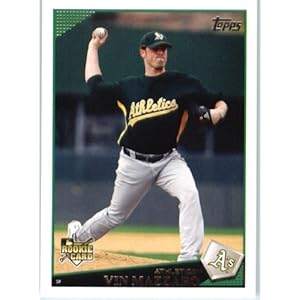
Vin Mazzaro's Historically Bad Night

By Bill

The amazing thing is that it didn't start out badly at all for Vin Mazzaro. Making just his second appearance of the year -- the first was a start, five days ago, in which he gave up two earned runs in four innings -- Mazzaro was already the third pitcher called on by the Royals yesterday, even though they were trailing just 3-0 in the third. He had to know he'd be counted on to get a bunch of outs.

And like I said, it went well at first. He inherited a runner on first, and retired all three batters he faced in the third without permitting the runner to score (he did uncork a wild pitch in there, but no harm done). Then he came back out in the fourth and completely lost his way, giving up ten runs in the inning...and then the Royals sent him back out there for the fifth. Five batters and one out later, they finally pulled him for Jeremy Jeffress...who promptly allowed all three inherited runners to score, giving Mazzaro the following final line:

2.1 IP, 11 H, 14 R, 14 ER, 3 BB, 2 SO, 1 HR, 1 WP

If that 14-run performance sounds like some sort of record...well, it kind of is.

Friday, May 6, 2011

Two Moves, Two Reactions

By The Common Man

The Common Man hasn't really had a reason to praise the Royals for a lot of years. For one thing, they're a division rival of TCM's beloved Twins, and who really likes to praise the competition? And, even if TCM were inclined to stroke the enemy's ego, since the early 1990s, they've made terrible move after terrible move, locking up mid-range players at expensive prices, selling off good players for pennies on the dollar, chasing low-probability players in the draft. It was a cavalcade of errors that bottomed out with 106 losses in 2005 and that has had just one winning season since 1995.


So, imagine how impressed TCM must be to say, the Royals are finally getting it right and calling up Eric Hosmer. After a strong start that sees them 17-14 to start 2011, Kansas City targeted 1B as a spot where they were struggling and could quickly improve, and did not feel constrained by the need to save a few million dollars in the long run.

Despite how he started the season (.195/.295/.317), Kila Ka'aihue is not a bad player. His minor league track record is strong, and he'd almost certainly improve over the course of the season, and hit along the lines of his projected rates. But Hosmer, pretty clearly, is already a better hitter and has been smacking around the Pacific Coast League to the tune of .439/.525/.582 over his first 26 games. He's shown excellent control of the strike zone (19 BB against 16 Ks) and is considered a good fielder around the bag. Also, he's only 21 years old, meaning he is clearly a better long-term solution to 1B in Kansas City than the 27 year old Ka'aihue. TCM also got the chance to check out Hosmer up close in Spring Training, and came away very impressed by his size and by the way the ball carries off his bat.  The dude just screams ballplayer.  Quite simply, for now and for the future, the Royals are making the right move for their organization.

It will be a shame if this is the last opportunity that Ka'aihue gets, because he's clearly paid his dues and would probably make a decent and cheap DH for someone. But that chance is not going to come in Kansas City, and it's time for the club to move forward. Finally.
-------------------------------------------

The Twins, on the other hand, who have been an abject disappointment this year, have essentially been forced to call up prospects Ben Revere and Rene Tosoni as they struggle to replace the production of Joe Mauer, Tsuyoshi Nishioka, Jim Thome, and Delmon Young. Revere, in particular is interesteing. Keith Law is actually very high on Revere, and suggested to TCM that his defense in centerfield is roughly a 70 on the 20-80 scale (elite level), and that with even below-average offensive skills, he can be a positive contributor to the Major League club.

Revere does have significant holes in his game. He has absolutely no power, and very little patience. But he does have excellent speeed, and is, as Klaw pointed out, an excellent defender. Staunchly refusing to take advantage of these strengths, the Twins are reportedly planning to use him at a corner outfield spot while letting Denard Span continue to roam CF. Span has, according to Fangraphs, aquitted himself relatively well in CF, but he is four years older than Revere and probably still better suited to a corner spot, where he could play Carl Crawford level defense.

It's not likely that Revere is up for good. When Delmon Young comes back, he's almost certainly going to reclaim the LF job. And keeping Revere around as a 4th or 5th outfielder won't help his development at all. But playing well in this limited exposure will do a lot to convince the Twins whether Revere might be able to hold down a spot next year when and if Jason Kubel and Michael Cuddyer are allowed to walk.  Let's hope he makes good

Wednesday, March 30, 2011

Seven Games in Three Days (kind of)

As some of you may have ascertained, The Common Man was in Arizona over a four-day weekend to take in the tail end of Spring Training. What follows are a few of the notes and remembrances from the trip:


Mike Sweeney and son after dropping
off the Royals' lineup.
 On Friday night, The Common Man hit up Royals camp in Surprise for their game with the Giants. The stadium the team shares with the Rangers is nice and spacious, clean and friendly. The Baseball Project was playing in front, imploring TCM not to be “another foul-ball fatality,” which was reassuring. Inside, the Royals honored Mike Sweeney on the day he retired by allowing him and his son to deliver the starting lineup to the plate, and to hang in the dugout. Sadly, something like 60% of the fans were there to watch the Giants, and he didn’t get nearly the ovation he deserved. Maybe he’ll get a proper day in KC this year.

Wednesday, February 2, 2011

3 Questions: Kansas City Royals

By Bill

Let's get this out of the way: the 2011 Kansas City Royals are going to be bad. Really, really bad. They've currently got Major League-quality starting ballplayers at designated hitter, and possibly first base, shortstop and left field; they've got a couple number four or five starters and a quality closer. And that's pretty much it. They managed not to be the worst team in the AL last year -- they were third-worst ahead of Baltimore and Seattle, the final two stops on my half of the 3 Questions series -- but it'll be awfully hard for them to repeat that, er, accomplishment again in 2011.

So there's really no question about that. What are some questions we can talk about?

Tuesday, February 9, 2010

Beer Leaguers: Natty Lite and Willie Bloomquist

Once upon a time, as astute reader and friend of the blog BikeMonkey has pointed out, The Common Man used to write about a lot of stuff man-related. Beer, politics, sports, film, TV. That has largely gone by the wayside in deference to the almighty baseball; but that doesn’t mean it’s not fun to bring them back every now and again, particularly when TCM loves mix genres. So today marks the beginning of a new feature here The Common Man.com: Beer Leaguers. What follows is the first in a series that will compare baseball players to beer, or beer to baseball players, depending on your perspective. It’s an opportunity to combine TCM’s favorite topics, and to praise (or deride) the deserving. Today, in light of some nasty weather, The Boy peeing (again) in The Common Man’s bed last night, and two-hour meetings that start at 8:00, The Common Man is in a nasty temper. So today, he’s afraid, you get the dregs.

The beer/The ball-player


Fig. 1: Natural Light (aka Natty Lite, The Natty, Swill) and Willie Bloomquist

Natty Lite is about the most piss poor excuse for beer The Common Man has ever had. In the can, sure, it looks like it might do the trick, but dig deeper and you’ll see the beer looks like diffused urine and tastes not much better. The Common Man could barely stomach it in college, before he knew what beer was supposed to taste like. Now, of course, discerning beer drinkers know to stay away. Yet, across college campuses, Natty Lite is plentiful. It flows like the Amazon in the rainy season, a torrent of frothy yellow filth that no one should be forced to take internally, lest they contract a horrible parasite. Of course, the reason for its popularity is clear, Natty Lite is the cheapest beer out there, and college students don’t know better. While they could be getting plastered on better tasting/higher ABV beers, they throw their pennies away weekend after weekend, sacrificing quality for quantity.

Like Natty Lite barely qualifies as beer, Willie Bloomquist barely qualifies as a baseball player. He may look the part, filling out his uniform and generally looking athletic, and he’s definitely got speed, but in watching him every day you will be frustrated by his general lack of skills. He lacks power, plate discipline, and the ability to hit for average (last year, Bloomquist had a line-drive rate of 20%, and still only hit .265). He has played all around the diamond, giving the appearance that he’s a jack of all trades, but really has been below average at every position except 2B. And he’s horribly miscast when his teams try to use him in the OF or at SS. He’s the kind of player that makes you regret trying to play him. In 1829 PAs across 7+ seasons, Bloomquist has accumulated a WAR of 1.9, his highest being a 1.2 win season in his rookie campaign (which was immediately wiped out by a -1.2 win season the next year.

Like Natty Lite, Bloomquist became popular and prevalent for terrible reasons. First, he came up with the Mariners and was a hometown prospect, growing up in a suburb of Seattle. He was never really supposed to be a good player, either. Bloomquist had a .294 OBP as a 23 year old at AA (in the offense-happy Texas League!) and put together just a .714 OPS in AAA the next year. Still, as the M’s entered a five-year drought that saw them below .500 four times, lose 90 games three, and 101 once. Bloomquist became one of the few marketable and popular players on the team, and seemed approachable (unlike Ichiro, who got hung with an “aloof” label). He was a local boy who made good, even if he wasn’t particularly good. And he was “scrappy” and “made the most of his talent” unlike perpetual whipping boys Yuniesky Betancourt, Jose Lopez, Jeremy Reed, Richie Sexson, and Adrian Beltre. The fact that Bloomquist wasn’t very good simply didn’t matter much, and he developed an Ecksteinian reputation as a “gamer.”


Fig. 2 Gritty.

It’s not that Bloomquist is a bad resource to have around. Actually having a utility player who can handle, passably, six positions, and who you can give 100-150 PAs to is not a bad idea. It provides a team with flexibility and allows it to give its stars needed days off over the course of the season. Indeed, even Natty Lite fulfills a function, getting college kids to pull off ill-conceived stunts that end up on StupidVideos.com and have drunken hook-ups with their roommate’s ex-girlfriend’s roommate (which can lead to some fun and delicious awkwardness). But the reason Natty continues to fill this function and fill it well is because it is so cheap. Alas, as Bloomquist aged, he lost that cheapness that made him a good alternative. If Natty inexplicably raised its prices to $25 a case, the students would move on to another comparable brand (Keystone?). Like cheap beers, there are Bloomquist-esque utility-infielders-in-waiting all over the minor leagues, ready to be plucked from obscurity and given a chance to live the big league life for at or near the league minimum.

Which is why it is so strange that the Kansas City Royals, last year, just had to have Willie Bloomquist. They not only guaranteed him two years, but gave him $3.1 million for the privilege. It was like walking into a liquor store, finding Natty Lite for $14/case, and haggling with the clerk to give him an extra $5 for the trouble. Indeed, Bloomquist was probably overpaid by the M’s during his final season (he made $1 million), but at least he had some PR value. All he adds to the Royals is Tony Phillips’ versatility without the quality that made Tony Phillips so ridiculously valuable.

The year after they let Bloomquist walk, the Mariners used Ronny Cedeno and Josh Wilson as their backup infielders for the grand total of somewhere around $600,000, and even managed to make Cedeno part of the deal for new SS Jack Wilson. The M’s improved by 24 games last season (not because they got rid of Bloomquist, mind you, but their decision not to pursue him was indicative of a smart organization that knows how to find free or virtually free resources, and where to devote their energy and money). The Royals, on the other hand, snapped up Bloomquist. While agent Scott Boras has done client Johnny Damon a disservice this offseason, surely most of that negativity is balanced out by the ridiculous deal he got for Bloomquist. Not surprisingly, given their apparent lust for crappy middle-infielders,


Fig. 3 Exhibit B.

the Royals not only overpaid for Bloomquist, but gave him almost 40% more playing time than he’d ever had before. Indeed, Bloomquist got into 125 games in 2009, garnering 468 PAs. No wonder the lost 97 games. Nobody in their right mind would drink Natty Lite if they didn’t have to.


Fig. 4 Nobody in their right mind.

Tuesday, March 10, 2009

Royals Gone Rong

Before he does anything else, The Common Man wants to congratulate the Dutch WBC team for its remarkable upset wins over the vaunted Dominican team. True, the Dominicans were not at full strength, but the Dutch pitched lights out, dodged bullet after bullet, and made big plays when they had to. He can't wait to see what this George Mason of the WBC does next (and if you think about it, with real underdogs like the Netherlands, South Africa, Korea, Australia, and Italy playing tough, perhaps the WBC should be viewed in the same light as the NCAA Basketball tournament. Perhaps that can attract some of the negative nellies. How can you watch a celebration like the Dutch piling on Eugene Kingsale and not love this tourney).

Anyway, earlier today, lar at wezen-ball celebrated the 40th anniversary of the 1969 expansion by profiling each of the four franchises spawned that year, the Kansas City Royals, Seattle Pilots (now the Brewers), San Diego Padres, and Montreal Expos. Lar concluded that the Royals are the most successful, largely on the success of their World Series win in '85 and their appearance in '80.

But, as lar notes, the last decade and a half have been fraught with disappointment, "Their recent failures have helped to erase the memories of a winning franchise from many people's minds. In fact, the Royals only have five seasons in the last forty where they had a .400 winning percentage or worst, and all five of those have come in the last 10 years." Lar goes on to point out that "That stretch coincided entirely with the peak of George Brett's career, and the Royals haven't been able to do too much since then." While technically true, lar's statement unintentionally (The Common Man assumes) pins the Royals' decline on the decline and absence of their signature player. But even without Brett, the Royals (like Terry Malloy), could have been a contender. But they have squandered every chance to get back there. The Common Man thought it would be instructive, since no one really pays attention to the Royals (except Rob Neyer and Rany Jazayerli), to point out the main junctions where the Royals went wrong, and how they became a laughingstock.

The Royals recent problems putting a decent product on the field stem from:

1) Buying into the small-market mindset that said that they couldn't compete. As Oakland, Minnesota, Colorado, Tampa Bay, Cleveland, and Milwaukee have demonstrated, it's entirely possible to build a relatively sustainable success through a commited investment in a farm system and scouting department and a willingness to exploit the inefficiencies in the market. Kansas City, for years, settled for developing players and dumping them for more prospects(which they never seemed to properly gauge).

2) Incompetent ownership and management (related to #1). Following the death of Ewing Kauffman, the Kauffman family and David Glass eras have been horribly managed. And the hiring (and extended employment) of utterly lost GMs Herk Robinson and Allard Baird allowed the talent at all levels of the Royals' system to atrophy. An owner who recognizes competent leadership and management and stays out of their baseball peoples' way (someone like Lew Wolff or John Henry or John Moores or even the late Carl Pohlad) goes a long way to ensuring success.

3) Actual disadvantages of playing in a small market. There are real disadvantages to playing in Kansas City, which Nate Silver rated as the second-smallest market in the league in 2007. Fewer fans means a smaller pool to attract to the ballpark (the Royals haven't finished above 10th in the AL in attendance since 1992 (and then they were 9th). And it means fewer fans to watch their television and listen to their radio broadcasts, which means less ad revenue. Fewer people buying jerseys. While it's possible to compete on a shoestring budget, it's undoubtedly more difficult, as there is less margin for error (as the A's have discovered from the crippling Chavez and Crosby contracts). And with less money available, the Royals are unable to fill the holes created by their deficient farm system with adequate free-agents.

4) Astro-turf at Kauffman Stadium (now gone, thank God). The stuff is just bad. And in Kansas City it always looked flourescent for some reason.

5) and 6) Trading David Cone in '87 for Ed Hearn and trading Danny Jackson for Ted Power and Kurt Stillwell in '87. It's true that the Royals' strength in 1987 was its pitching staff. The Royals had a phenom in Bret Saberhagen, an effective Charlie Liebrandt, a good young Mark Gubicza, a competent Bud Black, and a talented Jackson (who was the 1st overall pick in 1982. So trading Cone at the start of the year might have been acceptable in spite of his age and excellent skills, especially with the widely lauded Melido Perez coming up behind him. But Ed Hearn, who had a .265/.337/.349 performance as a 25 year old at AAA the year before wasn't enough for the young gun, especially since the Royals were breaking in Mike Macfarlane in 1987 (a 4th rounder in '85 who had flown threw the minors and was being groomed for the job), who would prove to be an entirely serviceable backstop. After the season, the Royals moved to address their glaring hole at shortstop, sending Jackson (who, at 25, had lost 16 games with a 4.02 ERA) and incumbant SS Angel Salazar (.205/.219/.246, 23 OPS+) to the Reds for 23 year old, former 2nd overall choice, Kurt Stillwell (who was superfluous with Barry Larkin around) and swingman Ted Powers. Stillwell, who was rushed to AAA at the age of 20, would solidify the SS spot of the Royals for four years, never a star but consistantly acceptable. Meanwhile, Cone and Jackson would combine to go 43-8 in '88 for their NL clubs. And Cone would, of course, win 194 games in his illustrious career. With those two guys in '88, and a replacement level SS, the Royals may well have challenged the A's for the AL West title and ushered in a renewed era of Royals glory. (By the way, look at that '88 Reds lineup. That's the definition of good young talent.)

7) Signing the Davis brothers in '90. Mark Davis' ERAs before being traded for the bloated corpse of Juan Berenguer: 5.11, 4.45, 7.13, 7.18. And 7 total saves in 3+ seasons. Storm Davis' ERAs before being shipped off for 70 at bats from Bob Melvin: 4.74, 4.96. While the Davis signings didn't exactly make the Royals shy (they would sign Kirk Gibson, Mike Boddicker, Wally Joyner, Greg Gagne, and David Cone to big contracts in subsequent years), but they did demonstrate the kind of short-sighted, ill-considered deals that became part and parcel of the Herk Robinson era.

8) Choosing high school power arms who went bust from '97-'01, and whiffing with their first picks from '87-01(though they got Damon as a supplemental 1st pick in '92. Despite high draft positions, neither Herk Robinson nor Allard Baird showed any real ability to find help through the draft. After Kevin Appier was chosen in 1987, the Royals picked Hugh Walker, Brent Mayne, Joe Vitiello, Michael Pittsley, Michael Tucker, Jeff Granger, Matt Smith, Juan Lebron, Dee Brown, Dan Reichart, Chris George, Matt Burch, Jeff Austin, Mike MacDougal, Kyle Snyder, Mike Stodolka, and Colt Griffin. And their supplemental picks were largely wasted on Jay Gehrke, Jimmy Gobble, Matt Burch, Chris George, Sherard Clinkscales, and Jason Pruitt. That's a lot of terribleness. Random throws at a dartboard probably could have done better. As the major league squad suffered defection after defection, these consistent misses meant that no one was there to fill the void.

9) Trading Gregg Jeffries for Felix Jose. People tended to focus on what Jeffries couldn't do (field) far more than what he could do (absolutely rake). And by trying to force him into a position he couldn't handle, the Mets and Royals got diminished results at the plate. After trading an increasingly fragile Bret Saberhagen (thank you heavy workloads at a young age) for the moping and disinterested Kevin McReynolds and the promising Jeffries in 1992, the Royals were showing good sense. But by losing their patience with Jeffries quickly, the Royals significantly weakened their squad. Jeffries went to St. Louis in '93 and immediately became and MVP candidate and .300 hitter. Jose went to the Royals and put up a 71 OPS+. The Royals had a solid 1B already in Wally Joyner, and Gary Gaetti would do admirably at 3B once Phil Hiatt washed out. But at DH was 40-year old George Brett (.266/.312/.434). Brett had gotten to 3000 hits the year before and was just playing out the string. But letting George go, adding a guy who goes .342/.408/.485, and finding a passable RF would have significantly cut into the White Sox division lead.

10) Not protecting Jeff Conine in the expansion draft. Never really a star outside of South Florida, Jeff Conine was just a solid outfielder for seventeen seasons. David Howard, who was protected by the Royals in place of Conine had a .229/.291/.303 for a 53 OPS+.

11) No Balboni. One of the greatest names in baseball history to say is Steve Balboni. Balboni was a great hulk of a man with thick glasses and a thick mustache who played 1B well enough to be a good DH. His 1990 Strat-o-matic card was a joy to behold (The Common Man should really find it and post it here one of these days). Balboni was a main cog in the Royals last great team in '85, hitting 36 homers. And in his post Royals career, he bounced from the Mariners to the Yankees to the Rangers. In 1994, Balboni was resigned by the Royals. Though he never played a game for them that year, his presence rallied them to their last season above .500. The Curse of Balboni lingers in Kauffman Stadium to this day. [note: The Common Man, for whatever reason, was blocking out 2003, when he was absolutely sure they were 79-83, rather than 83-79. So, um, the curse is lifted! Hurrah!]