Showing posts with label steroids. Show all posts

Friday, March 16, 2012

Just This Once, Shut Up George Brett

By The Common Man

Let The Common Man preface this by saying that he loves George Brett. Brett was a tremendous player who led some really good Royals teams in the late 1970s and 1980s. He is almost certainly one of the top 5 third basemen of all time (and you know how we love third basemen around here). Well deserving of all the honors and privileges that come with being an all-time great.


But maybe George Brett should have, in this instance, shut the hell up instead of saying “guys in the 500-home run club, guys like Schmitty (Mike Schmidt) and some other guys like that, if those guys [“PE”D users] make it in then they’ll…never go back and attend (the Hall of Fame inductions) if the cheaters get elected.” Because, as we’ve pointed out here repeatedly, virtually everyone who has played since the mid-80s has played with steroid users. This includes George Brett (Wally Joyner and Phil Hyatt, if you’re interested). Steroid use in baseball dates back to Brett’s heyday in the 1970s. And there’s an excellent chance that someone has been enshrined in the Hall of Fame who used illegal drugs designed to help them play better. And as Craig Calcaterra pointed out this morning, it’s Mike Schmidt actually believes the exact opposite of what Brett alleges.

Thursday, February 9, 2012

Fighting The Latest "Performance Enhancers"

By The Common Man

Yesterday, we learned that George Brett and his company are being sued for making false medical claims about "Ionic Necklaces," which are similar to the Phiten necklaces that MLB players have been wearing since 2010. Brett's necklaces, according to Brett, "help customers relieve pain in the neck, shoulders and upper back, recover from sports fatigue and improve focus. The company has also falsely claimed its bracelets, which include two roller magnets, would relieve wrist, hand and elbow pain, the lawsuit said."

Phiten's product, meanwhile, supposedly "helps to promote stable energy flow throughout the body. The benefits of this are longer lasting energy, less fatigue, shortened recovery time and more relaxed muscles” using "aqua-titanium technology" according to the product description.

So, magnetism and metal dispersed in water. That's what these guys sell to athletes. In return, the products are supposed to boost athletic performance by helping move energy around, or promoting healing, or energizing your particles, or some such nonesense.

Here's The Common Man's question: Isn't that what Performance-Enhancing Drugs are supposed to do? Steroids and HGH are both ways for athletes to gain a competitive advantage on their opponents with the aid of technology and chemistry. Isn't this the same thing, except delivered in a fashion accessory rather than a needle?

Monday, January 2, 2012

Update: Three More Suspected Plagiarists Slither Out From Under Their Rocks

By The Common Man

We asked you to be vigilent. And you have come through for us.

We asked you to find us more writers who believed, without evidence, that Jeff Bagwell was too "suspicous" to have naturally played baseball so well, knowing that it would be equally fair for all of us to collectively suspect those writers of being dirty, stinking plagiarists based on the same lack of evidence they use to punish Jeff Bagwell for his big arms and for the era in which he played.

And you (if your name is Joshua Powling, aka @AstroBrit, of The Crawfish Boxes and AstroBrit's Astros from Across the Atlantic) found us two in one article. God bless you (Joshua Powling), for bringing to our attention:

Wednesday, December 28, 2011

Everyone Played With PEDs Users

By The Common Man

If you're a Hall of Fame voter, you're running out of time but it's not too late to get your ballot in. As we've pointed out...repeatedly... we at The Platoon Advantage ask relatively little from voters. We ask that they be intellectually consistent, that they do research, that they carefully consider their ballots, that they be open and transparent about who they are voting for and why. We also ask that they not engage in speculation and participate in witch hunts that leave deserving candidates on the outside of the Hall of Fame looking in, when there's absolutely no evidence that they have used. As last year, the biggest ommission on various ballots seems to be Jeff Bagwell.

Bagwell is, from an objective standpoint, one of the top ten first basemen in baseball history. If you ask The Common Man, he's more like 4th or 5th all time. Yet Bagwell continues to get no acknowledgement from voters. Bagwell, the argument goes, played with a bunch of PED users. Guys like Ken Caminiti and Roger Clemens and Andy Pettitte. And thus we should treat his denial that he ever used PEDs with skepticism, despite the total lack of evidence that he used.

It's true. Jeff Bagwell did play with those guys. Bagwell also played with Gregg Zaun, Ron Villone and Chris Donnels, all of whom were implicated in the infamous Mitchell Report. And, obviously, you can see how PED use dramatically improved their games. But Bagwell wasn't the only one. Nolan Ryan played with Caminiti in Houston.  Andre Dawson also played with Roger Clemens in Boston, as did Jim Rice, Dennis Eckersley, Tom Seaver, and Wade Boggs. Boggs also played with Pettitte in New York.  Tony Gwynn played with Caminiti and Villone in San Diego, as did Rickey Henderson.  Cal Ripken and Roberto Alomar both played with Zaun in Baltimore.

Now, Caminiti claimed to have not started using until joining the Padres years later, but he could conceivably be lying. After all, if he's willing to use PEDs, who knows what other immoral activities he's engaged in? There's no reason he would have to lie about when he started to use, but let's assume he's a dirty liar. Hell, let's assume all steroid and PED users were dirty liars who used PEDs throughout their careers.

But if we do that for the PED users who played with Bagwell, we have to do it for the PED users who played with other players on the ballot this year, and other players who are in the Hall of Fame. And if we assume that the six accused PED users that Bagwell played with influenced him to the point where he started to use, or even worse, that he got them into the shadowy world of PEDs, we have to assume the same of other players on the ballot and other Hall of Famers. What's good for the goose must be good for the gander.

To figure out who we should be actively suspecting, The Common Man used the list of players linked to PED use from Baseball's Steroid Era, and cross-referenced the careers of every player on the list with those of baseball's Hall of Famers.  Here then, is a list of players currently in the Hall of Fame who played with PED users and the number of PED users they played with:

Thursday, December 15, 2011

Update: Plagiarists Who (might) Write Among Us

By The Common Man

Last December, The Common Man came across Dan Graziano, then a writer for AOL Fanhouse with a Hall of Fame vote, who refused to vote for Jeff Bagwell based on his suspicion that the Astros legend had used Performance Enhancing Drugs in his career. Graziano wrote,
“I don't know for sure that Bagwell took steroids or any other performance-enhancing drugs to help him attain his Hall of Fame-caliber numbers. I don't have evidence, like we do against Mark McGwire and Rafael Palmeiro. But I'm suspicious. And this year, that suspicion was enough to make me send back my ballot without the Bagwell box checked. I'd rather withhold the vote based on suspicion than vote the guy in only to find out later that he cheated and I shouldn't have.”


Over the past year, it’s become increasingly apparent that, despite there being no evidence or accusations that Bagwell used PEDs, a number of Grazianos colleagues around the BBWAA agree with him. Bagwell garnered just 41.7% of the vote last year, despite eye-popping numbers (.297/.408/.540, 449 homers, 149 OPS+, 81.9 Avg WAR). These numbers, and Bagwell’s physique, are part of the problem. All home run hitters from the PED Era of the mid-1990s and early 2000s are suspect, Graziano and his compadres argue. Tom Verducci, in what has become an influential summary of Bagwell’s case, wrote

“Bagwell's numbers look worthy of Cooperstown, but he has been tied to steroid speculation enough that he “defended” himself in an ESPN.com interview last month. His defense? “I have no problem” with a guy juicing up, he said. To take such a position today is wildly irresponsible. It also invites the very talk that Bagwell claimed to be “sick and tired of.”

Bagwell was an admitted Andro user who hired a competitive bodybuilder to make him as big as he could be, who claimed, McGwire-like, that Andro "doesn't help you hit home runs," who went from a prospect with "no pop" to massively changing his body and outhomering all but six big leaguers in the 13 seasons before steroid penalties (Ken Griffey Jr. and five connected to steroids: Bonds, Sosa, Rafael Palmeiro, Mark McGwire and Juan Gonzalez), and who condones the use of steroids -- but said, "I never used."
This led The Common Man to the realization that, if it was fair for writers to penalize Bagwell* because of their own suspicions that they were apparently too busy to investigate during Bagwell’s playing career, it was equally fair to suspect them of being plagiarists.** After all, sports reporters tend to write an awful lot, and so many of them seem to be writing about the same topics and coming to the exact same conclusions. Are we really so naïve as to think that they are doing this naturally?

Monday, December 5, 2011

Hall of Fame Hypocrisy and Witch Hunt Gets An Early Start This Year

By The Common Man

Today, the Hall of Fame got a little better with the election of Ron Santo by the Veterans Committee. We’ve been over how good Santo was, and how deserving he is of this honor, but it’s nice to see an ignorant injustice corrected, and TCM commends the 15 out of 16 voters who understood what baseball’s writers ignored for so long.


Baseball writers continue to be ignorant in their Hall of Fame voting, treating their ballots as column fodder and as a belated punishment for crimes and slights both real and imagined. Thanks to our friend LeoKitty, of The Girl Who Loved Andy Pettitte, and her terrific Hall of Fame voting tracker, TCM came across the shining example of Jeff Schultz, of the Atlanta Journal Constitution, who published his intellectually inconsistent, moronic, and hypocritical ballot this morning.

Wednesday, August 17, 2011

Yet Another Slugger Linked to PEDs...By Random Trolling Columnist With Zero Evidence

By The Common Man

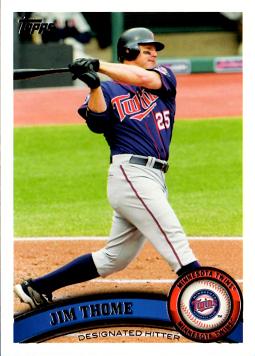
In the wake of Jeff Miller’s reeking post about Jim Thome and his baseless accusation that Thome used steroids (TCM won’t link to the actual article, which is a classic attempt to troll the internet. Instead, read Matthew Pouliot’s takedown on HardballTalk), The Common Man wants to skip his usual rant about the dangers of idiots with media credentials, who seem to think that their journalism degree gives them license to essentially slander another person with the charge of PED use. And he’s skip the lecture about the hypocrisy of the mainstream sports media, who refuse to call out one of their own for such disgusting, unfounded allegations, despite the fact that the mainstream media would (rightfully) pillory an unaffiliated blogger who made similar claims. Instead, The Common Man wants to tell you a story.

Tuesday, May 24, 2011

John Harper's Hypocrisy

By The Common Man

As Craig reminds us this morning, in 2009, Jerod Morris wrote an article on fantasy baseball that pondered a fast start by Raul Ibanez, and went through a few of the possible causes for that start. After running through various explanations, Morris wrote,
“It’s time for me to begrudgingly acknowledge the elephant in the room: any aging hitter who puts up numbers this much better than his career averages is going to immediately generate suspicion that the numbers are not natural, that perhaps he is under the influence of some sort of performance enhancer. And since I was not able to draw any absolute parallels between his prodigously improved HR rate and his new ballpark’s hitter-friendliness, it would be foolish to dismiss the possibility that “other” performance enhancers could be part of the equation.
Sorry Raul Ibanez and Major League Baseball, that’s just the era that we are in — testing or no testing.”
Morris was excoriated by the mainstream press.  Somehow, his article got picked up by the Philadelphia Inquirer, who called it a “cheap shot,” and took it to Raul Ibanez. Ibanez vehemently denied using PEDs. Geoff Baker (a writer TCM has come to respect though he still believes Baker to be ridiculously pompous and out to lunch in this particular article), wrote about the differences between “basement bloggers” and “real journalists.” And various ESPN talents weighed in on the controversy.

Fast forward to 2011, and John Harper of the New York Daily News, a “real journalist” by Baker’s (and any others’) definition, speculates on the causes for Jose Bautista’s increase in offense and writes,

“Let's hope he's clean.

Sorry, but even in this drug-testing era, it's impossible not to be suspicious when someone suddenly starts hitting the ball to the moon in his late 20s. Unfortunately, steroids forever hardened us to the romance of a late-bloomer like Bautista, especially when baseball still has no test for human growth hormone.”

Tuesday, April 12, 2011

Fifteen Years of "Tainted" Titles?

By The Common Man

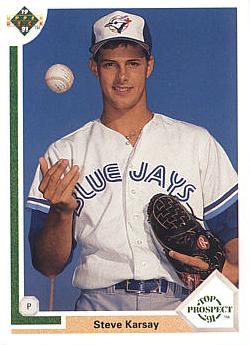
Earlier today, The Common Man had an interesting exchange with former reliever Steve Karsay on Twitter that got his mind working. Karsay was having a conversation with a pretty obnoxious Red Sox fan, when he said, “your rings are tainted with guys like Manny who used steroids.” That’s an interesting word, “tainted.” Even though Manny wasn’t caught using banned substances until 2009, Karsay makes the (understandable) leap to say that the Sox’s 2004 and 2007 titles were not won fairly. It’s a relatively fair point, as no one really thinks Manny began using in 2009, and the Sox also had other players suspected, accused, or suspended for use, including David Ortiz, JC Romero, Eric Gagne, Bronson Arroyo, and Brendan Donnelly.


But this left TCM wondering, are there any teams that we can claim won their titles fairly over the past 15 years? How wide-spread was the problem? Is everyone tainted? Using the Mitchell Report, Jose Canseco’s books, players MLB has suspended for banned substance use, and players who have admitted their use publically, TCM has done some digging to find out how many World Series Championships have been tainted by PEDs, using the definition laid out by Karsay (who, by the way, was incredibly engaged, seems like a good dude, passionately hates PEDs, and should have more followers).

Below, is a table, showing all the alleged users of Performance Enhancing Drugs that were on the rosters of World Championship teams (note, there are a couple more added in the comments section). These players presumably made some contribution to the team’s overall success and have therefore tainted their team’s success.

Tuesday, January 18, 2011

What Do Voters Owe to the Past?

By The Common Man

Jim Reeves turned the Hall of Fame Sanctimony up to 11 today in describing his role as a voter, saying,
"Judge and jury? Moral compasses? Gatekeepers? Yeah, maybe so, because that's the responsibility we accept when we qualify to become a Hall of Fame voter. Because of the steroids issue, it's a responsibility that has become so charged with controversy, I have even considered rejecting that honor and asking that my name be taken off the rolls as an active voter. It was a difficult and often agonizing challenge before the steroids era descended upon us. You can only imagine what it's like now.

But I haven't quit as a voter -- not yet, anyway -- because I consider it a sacred responsibility to the great players of the past to keep their exclusive club as clean and pure as possible. And yes, I say that with full knowledge that there are already a few in there with questionable credentials and backgrounds. All I can do is the best that I can. I owe that to late greats such as Joe DiMaggio and Lou Gehrig, Eddie Matthews and Roberto Clemente. I owe it to Nolan Ryan and Fergie Jenkins, to Alomar and Blyleven.” (h/t to Craig Calcaterra)
Really, though, here's what The Common Man can't figure out:  Where does this idea that BBWAA members "owe something" to past players come from?  Most of the players in the Hall of Fame are dead and gone, and a lot of them weren't all that great people to begin with.  What could Jim Reeves possibly owe to them, and why? Did he ever meet Joe DiMaggio or Lou Gehrig? Did he ever cover Eddie Matthews or Roberto Clemente? Does he even acknowledge that baseball was not clean during the careers of Nolan Ryan, Fergie Jenkins, Roberto Alomar, and Bert Blyleven? 

No, of course not. What Reeves means is that he owes it to his idea of what these players were, and how they supposedly competed. But that’s ridiculous. These are not great men. These are ballplayers. Yes, Americans love to watch them play and tend to idolize and glorify them. But, ultimately, they are only ballplayers, just as human as a typical doctor, teacher, engineer, or lawyer (well, maybe they’re better than lawyers). DiMaggio was, by most accounts, a jerk of a human being who was almost indescribably arrogant and unpleasant, and only got along with Lefty Gomez…because everybody got along with Lefty Gomez. If Reeves had to cover DiMaggio, he likely would have hated the chore of getting anything out of the reclusive great.

Clemente was a humanitarian, but he also punched an autograph seeker in 1966 (later calling it "a misunderstanding") and played on teams with known drug and PED users (such as Dock Ellis, who famously combined LSD and Amphetamine use).  Isn't that now the same evidence being used to hang Jeff Bagwell and Mike Piazza?  That they "associated with" PED users? 

And Fergie Jenkins was caught, during his playing career no less, with cocaine, marijuana, and LSD in his possession. Didn't Reeves want Ron Washington fired for testing positive for cocaine use?  Didn't he argue that Lawrence Taylor shouldn't be allowed in the NFL Hall of Fame because of cocaine use (Fort Worth Star-Telegram, Jan. 30, 1999)? 

So what does Reeves owe to those players?  Nothing.  After all, they are in the Hall because their playing careers were more important than whatever personal issues they may have had.  If anything, Reeves should respect that these players were good enough to overcome those issues and apply that precedent accordingly to modern candidates.

But does Reeves owe anything to his forerunners in the Baseball Writers’ Association to keep the Hall “pure?” Well, it’s not like they were terribly concerned with keeping it pure to begin with. After the 1926 season, Ty Cobb and Tris Speaker, after all, had been jointly accused of throwing a ball game in 1919. Dutch Leonard alleged that he, Cobb, Speaker, and Joe Wood had arranged for Cleveland to lose the last game of the year, thereby allowing the Tigers to clinch third place (for which every player was awarded a bonus from the league). Leonard also alleged that the four had put money down on the game, since they knew the outcome, arranging to bet through a Tigers employee, Mark West. While Leonard’s testimony was scrutinized heavily, Cobb admitted something was afoot. Testifying to Judge Landis, Cobb reported that Leonard had come to him with help in arranging a bet on the game, and that he had set the pitcher up with West as “a man they could trust.” Joe Wood similarly admitted that he had knowledge of this, while Speaker denied knowing anything.

Nevertheless, there is at least as much evidence that Cobb and Speaker threw a game as there is that Jeff Bagwell or Frank Thomas or Mike Piazza used steroids, and they were ushered into the Hall in the first two classes by Reeves’ ancestors in the BBWAA. Indeed, while their rhetoric may indicate otherwise, writers have never had regard for the Hall as something sacred. They've always (except in the case of Joe Jackson) allowed talent to trump "purity."  So Reeves doesn’t owe them anything either in terms of keeping the Hall of Fame somehow "pure" and "above reproach."

What Reeves and today's BBWAA voters do owe is an explanation. Reeves, for instance, needs to explain how he can sit in judgment now while he, in his 40 years covering the Texas Rangers (one of the organizations most tainted by steroid and PED allegations), neglected to write a single article about steroid use in baseball until 2004 when he began arguing that Barry Bonds “should not be allowed” to pass Hank Aaron (Fort Worth Star Telegram, December 4 and 15, 2004).   (The Common Man doesn't often do this, but he is admitting he was wrong.  Reeves did write about steroids on May 31, 2002, when he wrote that steroid users "should all be wearing a scarlet 'S,'" and that Rusty Greer never saw steroids in the Ranger clubhouse.  He also defended Gabe Kapler against steroid accusations in August of 2000.  And on August 25, 1998, he said, wait for it, that the story about Mark McGwire's andro use "is overblown" and that "You wouldn't begrudge Nolan Ryan his Advil, would you? Troy Aikman his Met-RX? Popeye his spinach?"  He continued to write about steroids on occasion between 2002 and 2004, all excoriating steroid users, never questioning his profession's role in missing them for so long, and he did not, at any point in that time, seem to admit the Rangers' entanglement in the problem with the exception of Ken Caminiti.)  In 2005, he wrote,

“As a baseball beat reporter from the mid-'70s to the mid-'80s, I was always a little uncomfortable with that mantra. It was my job to see that what happened in the clubhouse didn't necessarily stay there.

Drug usage, for instance, wasn't something that was going to stay covered up.

There might have been a time when jars of "greenies" -- amphetamines -- sat openly on tables in the clubhouse, where players could grab them as they walked by, but either they were gone by the time I started covering the Rangers, or I was too green myself to recognize them. Same goes for steroids. If they were there, I didn't see them or recognize them, and players certainly weren't sticking needles into their bodies in front of snoopy reporters….I did my share of sniffing around, but not, if I could help it, in the bathroom.” (Fort Worth Star-Telegram, Feb. 13, 2005)
This is part of an article that criticizes (without apparent irony) Jose Canseco for “violat[ing] the code of the clubhouse.” Reeves and other BBWAA voters owe you and the players they covered an explanation as to why they care so much about steroids in the Hall of Fame vote today, when they apparently couldn’t even be bothered to go in the bathroom to look for them 15 years ago.

Thursday, January 6, 2011

Is Jeff Idelson Lying or Incompetent? Either Way, He's Trying to Ruin the Hall

I sat down this evening and was all set to write a nice, light-hearted (if, hopefully, thought-provoking and properly shaming) response to The Common Man’s elegant but misguided manifesto on Morris and Hall of Fame voting from the other day.  I was looking forward to that, and I’ll still do it, maybe tomorrow.  

But just as I was sitting down to write that nice light-hearted post, I saw this Joe Posnanski piece in which he recaps a brief interview with Hall of Fame president Jeff Idelson.  And as someone who, for whatever reason, cares deeply about the Hall of Fame and its history, standards and (continued or restored) relevance, this made me...saddened?  Angered?  Terrified?  Finally consider saving my sanity and abandoning the institution altogether?  Yeah, I suppose, all those things and then some.

See, it’s just a few quotes, but they were enough to make a few things clear.  One, Idelson either has no idea or is blatantly lying about the history of the institution for which he’s serving as president.  Two, Idelson has no problem simply making up things that are not true when it fits more neatly into his moral code.  And three...well, I’m not sure there needs to be a third thing.  That’s enough, isn’t it?

Let’s walk through it:

“Baseball has historically been held to a very high standard, right or wrong,” he says. “There’s a certain integrity required when it comes to baseball’s highest honor, which is being inducted into the Hall of Fame.”  

What do you suppose he means by this?  More people care about various fairness and morality issues in baseball than in any other sport.  I think that’s true.  What’s clear is that these standards, historically, have not applied to the Hall of Fame, and that whatever else you might say was required of Hall of Famers, “integrity” has never been a part of it.

Thursday, December 30, 2010

Dan Graziano a "no" for this writer

By The Common Man

Yesterday, Dan Graziano of AOL Fanhouse announced that he was not voting for Jeff Bagwell because of lingering suspicions he had regarding whether or not Bags used steroids,
“I don't know for sure that Bagwell took steroids or any other performance-enhancing drugs to help him attain his Hall of Fame-caliber numbers. I don't have evidence, like we do against Mark McGwire and Rafael Palmeiro. But I'm suspicious. And this year, that suspicion was enough to make me send back my ballot without the Bagwell box checked. I'd rather withhold the vote based on suspicion than vote the guy in only to find out later that he cheated and I shouldn't have.”
This morning, Friend of the Blog Craig Calcaterra pointed out that Graziano’s stance, and that of many of his fellow BBWAA voters, represents a new McCarthyism in baseball, an era of accusation without evidence, based on hearsay and speculation, “Let’s not make any mistake here: this is an accusation. Maybe not a legally-actionable one, but Graziano believes Bagwell took steroids and says it as plain as day.” Joe Posnanski, in his excellent HOF column today, compares it to a witch hunt, “Let’s just burn him at the stake. If he survives, you will know you were right” and “I’d rather a hundred steroid users were mistakenly voted into the Hall of Fame over keeping one non-user out.” As usual, both of them are right on. For if you can accuse (or suspect) Bagwell of using steroids based on the era in which he played and the numbers he put up, that opens the field up to all kinds of wild accusations.

For instance, The Common Man suspects that Dan Graziano, of AOL Fanhouse, is a plagiarist. Now, TCM doesn’t have any evidence. Nor has anyone else made a specific public accusation against Mr. Graziano. Nevertheless, he writes an awful lot, doesn't he? Far more than a regular person writes on a daily basis. And he has been writing about the Hall of Fame lately, which a lot of other writers (including Bill and TCM) have been writing about. It’s just hard for TCM to believe that Graziano could be writing so much without help. And it’s equally hard to believe that it’s a mere coincidence that his article is so similar to other articles out there, both in the mainstream media and the blogosphere.

Frankly, The Common Man isn’t comfortable that a suspected plagiarist might have a Hall of Fame vote, but it sounds like Dan’s already turned in his ballot. So TCM is calling on the Hall of Fame and the BBWAA to put a hold on Graziano’s vote until he can clear up these salacious rumors. If he isn’t a plagiarist, Dan Graziano should produce evidence here and now that he is not and never has been one. Otherwise, he should never be considered eligible for the J.G. Taylor Spink Award, the highest honor the BBWAA can bestow on its members, for which their names are inscribed in the Hall of Fame itself.

Look, TCM realizes his call will not be a popular one. People will hate this position (for instance, Mr. Graziano might be a bit annoyed). But TCM offers this defense: we readers who read Graziano's article should have reported our suspicions earlier. But the fact that we could have been subject to legal action for such reporting works in our defense. But the time for staying silent has long past.

The withholding of eligibility for the Taylor Spink Award based on suspicion of unethical activity is not the same as writing a blog story accusing someone of unethical activity (although, ironically, TCM is writing about his suspicions that he'll have to accuse Graziano of unethical activity in a blog). The Common Man is not accusing Graziano of plagiarizing. He's just saying he's suspicious.*

*There is, TCM realizes now, an argument that he didn’t give much weight to. It could be that Graziano is a good and prolific writer. Not just good, but better than his contemporaries. Perhaps Graziano is such a good writer that he has the ability to post more often and with more insight than other writers. Maybe he’s just better. In that case, TCM would have to apologize to Graziano for airing his baseless suspicion, and take back his call that Dan’s vote be stricken and demand that his eligibility be restored for the Spink Award. But unless Dan can provide us with proof of that he didn’t build his reputation on the backs of other writers, TCM just doesn’t see how that will ever happen.\

Update: Great, now TCM has to suspect Jeff Pearlman of plagiarism as well.  Seriously, The Common Man has in his hand a list of 300 mainstream media members who are suspected plagiarists, and he will release it at a future date.  Jeff, if you're not a plagiarist, how can you take positions similar to those who are suspected plagiarists?  Expain yourself and provide evidence, Jeff!

Thursday, June 3, 2010

The End of the Road and the End of Innocence

So, not much happened around the league yesterday, right? Right. The Common Man is sure you want to talk about Yovanni Gallardo’s homerun yesterday as much as he does, but instead, The Common Man wants to talk about one of the little news stories you may have missed yesterday, as excited as you were about the return of Matt Tolbert.

Yesterday afternoon, Ken Griffey Jr. announced his retirement from baseball, ending his career with 630 homeruns (5th all time) and a 135 OPS+. For a while, Griffey was the best player in the American League, but his dominance effectively ended after 2000. In 2001, he fell victim to the first in a string of leg injuries that culminated in completely rupturing his hamstring in 2004. While he bounced back in 2005, he was unable to sustain that level of performance and became no better than an average offensive player, but below average for a corner outfielder. TCM has talked about the end of Griffey’s career extensively before, and doesn’t want to rehash everything here, but BaseballReference.com lists Griffey as having a -1.4 WAR from 2008-2010, which would tie him with Ernie Banks at #149 for worst career endings.

Yesterday and today, Griffey is being celebrated for the excitement he brought to the game in the 1990s, as well as for being the best player not “touched” by the steroid scandal. Ken Rosenthal says, “He is a first ballot Hall of Famer, not simply because he hit 630 home runs, but because he is the few players from this era who is not tainted by allegations of performance enhancing drugs….This will not be a problem for Griffey unless some bombshell emerges…and no one expects that to happen.” Rosenthal goes on, saying “We’ll never know if Griffey could have avoided some of his many injuries — or, on the flip side, if his injuries would have occurred with even greater frequency….We will always remember him clean.” Rosenthal’s doe-eyed optimism and faith is kind of touching, actually. Of course, we have no proof that Ken Griffey used PEDs. Nor have we heard anything about him using. But had anyone accused ARod of using PEDs before the positive tests in 2003 came to light? Didn’t everyone (The Common Man included) assume Rodriguez hadn’t used them because he didn’t need them? Did anyone actually think Andy Pettitte had used PEDs before his usage became public knowledge?

And, in Griffey’s case, there may have been a need there. Indeed, one of the recurring themes from PED users who have admitted their transgressions has been a desire to recover from injury faster. Has there ever been a more frustrating rash of injuries than those suffered by Ken Griffey from 2001-2004? Was he ever approached about using PEDs? Did he make any discreet inquiries about whether they would help him get back on the field? Did he succumb to temptation? It's entirely possible to construct a narrative in which Griffey was disappointed in himself and his body enough to look into, and perhaps use them. And using the Bonds criteria (his body was bigger than when he was a rookie, and so was his head!), it's possible to build a circumstantial case, if you were inclined.


But obviously there’s no way to answer these questions without, as Rosenthal says, some kind of bombshell. Griffey surely won’t talk about it, nor should he (at the risk of incriminating himself and tainting his legacy). And anyway, The Common Man chooses to assume that Griffey was clean, because TCM always liked Junior. But don’t pretend that Griffey was above performance enhancing drug use. Plenty of great players have used PEDs, including those who probably didn’t need it and who you would not normally have suspected. Ken Griffey was a terrific ballplayer, and a first-ballot hall of famer, but he wasn’t a saint. Griffey probably didn't use steroids, HGH, or any other kind of performance enhancers. But if he did, in this day and age, we really shouldn't be surprised.

Best to just leave it out of the analysis all together and be content that Griffey was a terrific player for a long time, and one of the game's most popular.

Sunday, May 10, 2009

Funny Business

Every day from here to there,
funny things are everywhere.

--Dr. Seuss

Manny Ramirez exited, stage left (pursued by a bear?), last week, banished for 50 games for testing positive for a banned substance. Naturally, the next day A-Rod makes his 2009 debut and hits the first pitch he sees for a three-run homerun. A-Rod, at this point, is a complete cartoon character and is seen as the ultimate villain in major league baseball today. If he could grow a mustache to twirl, he'd be perfect.

At the same time, given that he is almost universally reviled in the media right now, perhaps that can take some of the pressure off of what must be a simultaneously wonderful and horrifying life. Without worrying about pleasing everybody (because he seemingly can't please anybody), maybe A-Rod finally finds some peace. Sweet, oblivious peace.

Not that it should really matter to the Yankees, mind you. Last year, Rodriguez went through a nasty divorce and ugly tabloid rumors, and still had his best overall season since 2000.

Speaking of steroids and obliviousness, enjoy this clip of John Kruk saying that Manny Ramirez should be kicked off the Dodgers (Krukie goes off about a minute in). Meanwhile, has John Kruk ever addressed the rampant steroid use that was apparently a bedrock of his 1993 Phillies?


Meanwhile, Ramirez's replacement, Juan Pierre, has been making the most of his newfound playing time. Pierre has been a huge disappointment for the Dodgers since signing with them in 2007, and a feather in the cap of bloggers and pundits who chuckled and chided the Dodgers when they saw the 5 year, $45 million price tag he came with. But in the four games since Manny's departure, Pierre has gone 9-for-16, with a couple walks, a couple doubles, a couple stolen bases (though also a couple caught stealing), four runs scored, and four RBI. Yesterday, he scored or drove in 4 of Los Angeles' 5 runs in a 7-5 extra-inning loss to the Giants.

Pierre's hot streak comes at exactly the right time for him and the Dodgers. If Pierre can prove capable over the next fifty games, he and the Dodgers might just be able to sucker a contender with deep pockets to give up something of value for Pierre, especially if they view him as an option in centerfield. The White Sox and Yankees have already demonstrated unhappiness with their CF situation, and Pierre seems like just the kind of mistake they might make, if they're desperate in July.

As hot as Pierre's been, however, Zack Greinke's been hotter. Greinke lost his first game of the year on Saturday, proving that he is human. Indeed, all you have to do to beat Zack Greinke is hold the Royals to zero runs. Then, when he goes eight innings (for his 4th complete game), and gives up a single run (raising his ERA from 0.40 to 0.51), you can still hold your head high, after he retires 21 of the final 23 guys you send up against him. Yikes.


Also, Joe Saunders (who pitched the shutout that beat Greinke), you're pretty awesome with your 5-1 record and 2.66 ERA.

Finally, The Common Man has kept his pinko, leftist politics out of his blog for a while now, after discovering that far more readers were interested in baseball than in the other eclectic collection of topics The Common Man bounced within. So please indulge him for a moment as he expresses some admiration for this country's new President. Barack Obama, is there nothing he can't do?:


Friday, March 6, 2009

Pushing IIATMS

Jason at It Is About the Money Stupid has been all over a recent online article that links Don Hooten, whose son Taylor committed suicide after using the PED Lexapro, to a steroid promoting and sales organization. The discussion is frank and has been updated significantly since it first posted yesterday morning. Jason's in an interesting position, as he has put himself in the middle of two apparently sparring parties, and using his site as a clearing house for their explanations and arguments. The conversation should lead readers to question how best to fight steroid use among teens as it examines the techniques steroid pushers use to sell their product and sabotage anti-steroid efforts, and the importance for non-profits to exercise due diligence in deciding who to associate themselves with. It's an important discussion, and one The Common Man is glad Jason's led us to.

Tuesday, March 3, 2009

Aging Hipster

Given how many writers still seem to have fun portraying Alex Rodriguez as some kind of cyst on the game of baseball, it's seems only appropriate that A-Rod develop one of his own, just so he knows how the game feels with him in it. Call it karmic penance. The condition began as a tightness and stiffness in his right hip, and has advanced to the point where Rodriguez is questionable for the upcoming World Baseball Classic (another one bites the dust).

But this post isn't meant to pillory A-Rod for his steroid-doing, nor to lament the ongoing laming of the WBC. Instead, this is a post about the home run record. The big one. The one formerly held by Henry Aaron, and now in the possession of one Barry Lamar Bonds. The new magic number: 762.


It was only a few short months ago that A-Rod still represented a prevailing hope that someone "clean" would break Bonds' record and restore a perceived legitimacy to baseball's most hallowed mark. And with 553 home runs through age 32, Rodriguez looked poised to deliver. After all, he simply needed to average a little over 23 homers over rest of his contract to do it, and he figured to be in the mid to high 30s for at least the next few seasons.

But then, of course, the public image A-Rod had constructed of himself collapsed under increased scrutiny when results of his 2003 steroid test was leaked. And suddenly, no one was hoping A-Rod would beat Bonds anymore. Because it's easy to categorize Bonds as a cheater, and to discount his accomplishments. Sure, he did amazing things on the baseball field, but his attitude and his seemingly shameless and repeated violation of baseball's PED policy, continued association with Greg Anderson, and unwillingness to give any quarter to his attackers turned him from a cartoonishly great hitter into a cartoonishly evil villain, one who could be swept aside in favor of the much beloved Aaron.

With A-Rod, who seemed play the game with dignity and pride and has had the decency to try to leave the circus behind when he steps on the field, it's harder to set him aside. He clearly had the talent before he began using. And statistical analysis suggest that his use may not have actually helped him at all. It's reasonable to question how much he used and how much it affected his play. And, as week as his apology was, A-Rod has apologized and has promised to try to recover some of the trust and goodwill he has lost. And that's something Bonds has never done. So to set A-Rod aside, and continue to acknowledge Aaron's record as sacrosanct would take significantly greater mental gymnastics that The Common Man doesn't think most members of the media and baseball fans look forward to.

Nate Silver offered a beacon of hope late last month when he announced that PECOTA sees A-Rod falling short of the mark. Silver wrote,
"PECOTA's best guess is that Rodriguez will finish with 730 lifetime home runs, running out of steam after another three or four seasons and leaving him just shy of the marks established by Aaron and Bonds. Of course, there is a lot of uncertainty in this estimate. If Rodriguez follows the path charted by Aaron or Frank Robinson [who were wildly successful in the late stages of their careers], he could finish with well in excess of 800 home runs (and possibly as many as 900). On the other hand, if he draws Albert Belle's ping-pong ball, he might not top 600. Overall, the system puts Rodriguez's chances of surpassing Aaron at only about four in 10 and of surpassing Bonds closer to three in 10."

And perhaps A-Rod's cyst is a sign of what to expect for the rest of his career. Small, chippy injuries that slowly take their toll on Rodriguez's body, slowing him until he has no hope of catching either Bonds or Aaron. Last year, after all, Rodriguez went to the DL for the first time since 1999, suffering from a strained quad. And if this is a precursor to additional hip problems (cysts can be associated with rheumatoid arthritis, the disease which quickly ended the career of Albert Belle), it could be a rapid descent indeed.

There's no right answer here. The Common Man himself is neither rooting for or against Alex Rodriguez. And if you want to root against A-Rod, you should go right ahead. But The Common Man does want to point out, again, that all the hand-wringing about records, about history, and about steroids is overblown. There is a chance that Alex Rodriguez will be the next home run king. But there's an even better chance that this is not even an issue. That Father Time and a death of a thousand cuts and strains and cysts will take care of the issue before it comes to a head. And maybe by the time the next contender for the throne comes along (Pujols?), everyone can just be a little more rational and a lot less star-struck about the whole process.

Wednesday, February 18, 2009

Around the Horn

It sounds like Shysterball's 25 baseball things idea has really taken off. And now Rob Neyer, the Zen master himeself, is threatening to jump in. The Common Man looks forward to reading everyone's. If you don't have a blog, feel free to use the comments section here to post them, or if you do have a list up somewhere, feel free to leave a link (they certainly don't have to be as The Common Man's). If there isone thing that The Common Man thinks you and he can agree on (unless your name is BikeMonkey), it's that it's awfully fun to listen to why other people love the game and to compare it to our experiences. So share and enjoy.

Speaking of BikeMonkey, The Common Man feels badly that he's not down with teh baseballz. But really, The Common Man doesn't understand how anyone can not like baseball. The Dentist, The Common Man's little brother, hated baseball when he was a boy, choosing soccer instead like the rest of his friends. But with the wisdom of age, The Dentist has come to love watching the game, and follows it with nowhere near the intensity of his big bro. But it's still a big step. The Common Man doesn't know why BikeMonkey's such a stick in the mud, but most people who profess to hate the game claim that it's boring and slow. The prefer the up and down action of basketball or the explosiveness of football. Meanwhile, baseball is often a slow build, like a truly good film or song, adding tension and excitement as the game progresses until it reaches a fever pitch in the late innings. In between, it's a collection of exciting moments that are largely disconnected from one another. It takes a sophisitcation and appreciation of the finest things to appreciate baseball. A knowing patience. And because of this patience and willingness to wait for the final payoff, The Common Man likes to believe that baseball fans make the best lovers. Generous and willing to prolong the experience, baseball fans aren't interested in the quick and dirty slam-bam-thank-you-mamn (or sir), but the drawn out, tantalizing prospect of making love. All night. Isaac Hayes style. The Common Man does not say this to disparage BikeMonkey, who The Common Man knows has the ability to appreciate and love the game, but to challenge him.

Meanwhile, The Common Man feels bad not a whit for MLB Commissioner Bud Selig, who told reporters Monday, "I don't want to hear the commissioner turned a blind eye to [steroids in baseball] or he didn't care about it. That annoys the you-know-what out of me. You bet I'm sensitive to the criticism." Bud's been awfully quick to slough off responsibility for the steroid era in the past, and to dump it on the players (who, deserve a large share of the blame, no doubt). But to eschew responsibility entirely is childish and disingenuous. No Mommy, Little Bud has no idea how the lamp got broken. He admits, "A lot of people say we should have done this or that, and I understand that. They ask me, 'How could you not know?' and I guess in the retrospect of history, that's not an unfair question" but goes on to equivocate and tout his past failed attempts to get a drug policy (starting in 1995, if Bud is to be believed). But here's the thing, those attempts were brought up in private negotiations and used as a bargaining chip. At some point, what Selig doesn't say is, he decided that wringing an extra year of player control or a slightly lower major league minimum or a bigger share of the broadcasting rights was worth trading for the testing. Mark The Common Man's words, if Bud Selig and Major League Baseball had truly wanted and was committed to institute a steroid testing policy in 1995, they could have gotten it. So for Bud Selig to say today that he's not to blame for the steroid era is, frankly, silly. There's plenty of blame to go around. The players, the owners, the union the management, the media, the fans, and the commissioner all share various amounts of it. So man up, Bud, and face the fact that you exchanged doping for dollars years ago, and are just now reaping the consequences of that choice. If you're happy to accept praise for the decision to expand the playoffs, start the MLB Network, and grow revenues, you must be willing to accept the littlest bit of responsibility for your stunning ability to look the other way.

The Common Man wants to add his congratulations to Sean Foreman, the founder and creator of baseballreference.com for selling a minority stake in his website and business to Fantasy Sports Ventures. Baseball Reference is a tremendous resource that any serious baseball fan needs to be using, like, all the time and it will play a large role in tomorrow's post (oh, see how The Common Man teases you).


No one is more deserving of the big payday than Sean for providing such an awesome free service to the public.

Wednesday, February 11, 2009

Around the Horn

--Shysterball has a theory, and The Common Man thinks it's a good one. In light of all the anti-ballplayer news released or leaked by the government in the past week, he writes,
"Ya think it's a coincidence that both this and the A-Rod leak are happening all a couple of weeks before the Bonds trial? I sure don't. In fact, I can almost see this as an orchestrated operation in order to bolster the opening and closing statements of the Bonds prosecutors. Rather than refer to lies about a raid five years ago, the prosecutor can stand up and say 'this was no innocent lie! The headlines in just the past month show that the scourge of steroids is as rampant as ever! Like A-Rod and Tejada, Bonds is a ballplayer who thinks he's above the law and worked to thwart an important government investigation!'"


Indeed, the timing is suspicious. Virtually at any point before this, this information could have come out about Rodriguez. And the charges could have, presumably, been filed against Tejada at any point in the past three years, given the amount of information the government has had. It's not that these players don't deserve to be highlighted and punished. They deserve a good spanking from Uncle Sam, and perhaps a small one from the general public for their transgressions. But if you see Roger Clemens in the news this week, you'll understand what's up. And for more information on how the Federal prosecutors are manipulating the justice system, feel free to read this and this. And Craig's got, like, a dozen more where that came from. When you fight the law, this is why the law wins.


--And for the record, The Common Man is officially taking back what he wrote about Alex Rodriguez the other day, when he said A-Rod was finally acting like a man. The apology was still a good idea, and The Common Man thinks it could have been worse. But sloughing off responsibility for your actions on a permissive culture and naivete is not manly (more adolescenty). But here are some important things to keep in mind. First, most ballplayers are, actually, grown adolescents. Living in a bubble where they are surrounded by fawning friends and fans, reinforced by the locker-room mentality that is more animal house than house of mirth. Also, as The Common Man pointed out in the comments section below, there was a lot of fishiness going on in that Rangers clubhouse. From the Mitchell Report, Pudge Rodriguez, Juan Gonzalez, Rafael Palmeiro, David Segui, Ken Caminiti, and Ismael Valdes all played for the team in the steroid era, as did A-Rod. And those are only the guys that have gotten caught (though technically, none of them have been officially punished, so caught is a relative term). While you should be disappointed in A-Rod, don't judge him more harshly than you would an average ballplayer or teenager who did something wrong.
Because there was a culture of drug use at work in Texas, and he was part of it. You should reserve the majority of your scorn for the front office types, field management, strength and conditioning coaches, and, yes, reporters who allowed their clubhouse to become a drug den. Chuck Norris is weeping over his Texas Rangers.

--A big congratulations to Lar at wezen-ball (The Common Man still wants to understand the name of the blog, though) for getting Rob Neyer's seal of approval this morning. Lar is a recent reader of The Common Man and has just begun commenting, and getting praise from Neyer is basically like having God send down the dove and say "this is my son, with whom I am well pleased." Lar does a lot of fun stuff with old resources, taking a look at how contemporaries viewed some of the game's greats. Today, for instance, he recalls Hank Aaron's chase for the home run record through Peanuts (who knew Snoopy had such power?). He's off to a tremendous start in his blog, and The Common Man wishes him only the best. Meanwhile, Rob, The Common Man likes God too.

--Speaking of awesome blogs, DrugMonkey deserves significant praise for being on The Common Man's bandwagon for a while, having linked to him for the first time months ago. He writes primarily about sciencey issues, many of which are over The Common Man's liberal arts-loving head. But he's snarky and smart as hell. And if you love-ah da science, and want to know who the rising stars are in substance abuse research or how to get funding for your crazy-awesome science, he's as good as you'll find.

Monday, February 9, 2009

Damn It A-Rod:


Every time The Common Man tries to get out, they keep pulling him back in. A quick comment here: A-Rod is finally showing some good judgment in confessing to ESPN's Peter Gammons. At this point, there's nothing that he can do (you know, short of murdering Derek Jeter) to hurt his reputation further with baseball fans in general, and Yankee fans in particular. Getting all the details out and owning up to his decisions is the only reasonable way out of the hole he's in. At this point, he has to atone for his sins and work his way back into the public's good graces, and he's choosing to do that immediately and directly, rather than (as The Common Man's friend Bill points out) waffling about trying it once and not liking it (Hi, Andy Pettite!) or simply not commenting further. He opens himself up now to the possibility of becoming a spokesperson against PEDs, by confessing to his mistake, talking about the drugs' effects on his body and mind, and discussing his shame. And $25 million a year does a lot to assuage feelings of guilt and shame (The Common Man assumes; he's never had the good fortune to know first-hand). Today, for whatever reason, A-Rod's acting like a man. Good for him.

Now The Common Man is going to disconnect his internet connection with a sledgehammer, so that he won't have to listen to this any more.

Stupid Explosion Tricks, or The Common Man Takes the Day Off

After two mega-long weekend posts about A-Rod and the scum of humanity (which are not necessarily the same thing, he feels compelled to remind you), The Common Man is taking it easy today. Maybe by tomorrow the whole A-Rod thing will have blown over and The Common Man can talk about puppies or something. What do you think the odds are? In the meantime, The Common Man doesn't want you to leave empty handed. So, for your amusement, here, is a Stupid Man Trick, courtesy of The Founding Father over at The Mantuary:


Notice how the beer can ricochets solidly off the runner's noggin. That's a powerful arm right there. Like the Roger Clemens of the Preakness Infield. Oh, see. Now The Common Man's talking about steroids again. Will this topic not go away for five minutes?!? To make himself, and you, feel better, here's an explosion. Feel free to picture Clemens, A-Rod, Bonds, Palmeiro, McGwire, and the whole of the mainstream media strapped to a rocket and ready to be shot into space:


Cathartic, no?