Showing posts with label Chicago White Sox. Show all posts

Monday, February 27, 2012

On Multiple Allegiances


By: Cee Angi 

It was recently brought to my attention that I may be committing one of the biggest faux pas in sports fandom.

Of course, I've heard rumblings all along that perhaps my ability to maintain multiple allegiances for teams might be a little bit strange-- I never realized that to some it was such a big deal.

When it recently came to light on Twitter that I do, in fact, support two Major League Baseball teams, you would be surprised the reactions I got.

After all, I assumed that supporting more than one team was probably the norm. But when someone realized that both of the teams I support are American League teams, a discussion (or argument) ensued.

Is it possible to like more than one team? Is it possible that those teams could play in the same league? What was the reasoning behind liking more than one? And why didn't I choose the Chicago Cubs?

I guess I should preface this whole conversation by admitting that while I have two teams, I also have other teams that when I hear their names mentioned I am flooded with memories of childhood and I feel a kindred spirit with those teams. It adds yet another level of complexity to the conundrum to say the least.

Perhaps I am atypical and the definition of a baseball polygamist, but before you condemn me, at least hear me out.

Monday, August 29, 2011

Youth Should Be Served

By The Common Man

The Common Man believes that children are our future. If you teach them well, and let them lead the way, they’ll show you all the beauty they possess in side. At which point, you should totally capture that beauty and use it to better your franchise for the stretch run, which is what the White Sox and the Angels should definitely be doing.


The Sox may be finally getting it. With AJ Pierzynski out, they’ve been forced to turn to 25 year old Tyler Flowers, who has been waiting in Charlotte for three years for this shot. He’s making the most of it, hitting .273/.375/.473 in 64 plate apparances, with 2 homers. He’s also thrown out 26% of basestealers, a better percentage than either Pierzynski or Ramon Castro could muster this season and is even controlling balls in the dirt well. AJ, who has otherwise done a fine job at the plate this year, may find he doesn’t have a job when he gets back from his wrist injury.

Likewise, with Carlos Quentin recovering from a shoulder sprain, Dayan Viciedo has finally debuted for the Sox this year, going 2-for-3 with a homer and three RBI, and helping the Sox sweep the Mariners to take over 2nd place in the AL Central. The Sox have needed a powerful bat to pick up the slack left by Adam Dunn this year. Viciedo would seem to be that guy, and could transition easily into Juan Pierre’s spot in LF next year.

Monday, June 20, 2011

Power Rankings Comments, Bonus Links and Snark

By The Common Man

First of all, a belated happy Fathers’ Day to all the dads out there. The Common Man didn’t mean to, but he celebrated much of his Fathers’ Day by being an absentee parent, allowing his own father to take The Boy and be a grandpa for much of the afternoon. Meanwhile, TCM was writing, watching the Twins, and cleaning up after an un-birthday party the day before. He was also working on his power rankings comments for ESPN, upon which he expounds every week in this space. So please, enjoy this special message on the Angels and the White Sox. Plus, there will be some bonus links at the end.

Monday, June 6, 2011

ESPN Power Rankings Comments Explained

By The Common Man

Rankings are powerful things, which is why ESPN does not entrust us with a vote in theirs, since The Common Man would probably end up putting the Twins 42nd and the Giants in “whiniest” place. But they do let us provide the comments. And every week, TCM expands on his thoughts in the power rankings for those teams that aren’t represented in the SweetSpot Network. So without further ado, here’s bonus coverage of the White Sox, Angels, Marlins, and Pirates:

Monday, May 23, 2011

Power Rankings Comments Explained: American League

By The Common Man

It’s time for another round of ESPN Power Rankings, which means it’s time for TCM to expand on the comments he submitted for the uncovered AL squads in Los Angeles and Chicago. As a quick primer, TCM wants to reiterate that he does not have anything to do with the actual rankings as presented by the ESPN overlords. If your problem is with where your team ranks (and really, why would anyone actually care about that?), complain elsewhere. If you want to complain about the comments, brother, you’re in the right place. OK, on to the Angels and White Sox:

Monday, May 9, 2011

AL Power Rankings Comments Explained

By The Common Man

It’s Power Rankings day again, so The Common Man is back to expand upon his thoughts within the rankings, this week on three AL teams, the Angels, White Sox, and Orioles.

Monday, April 25, 2011

Power Rankings Explained: American League

As he did last week, The Common Man wants to expand on his comments in ESPN's Power Rankings that came out today.  This week, TCM provided the blurbs for the three AL teams unrepresented in the SweetSpot Network, the White Sox, Indians, and Angels

Monday, March 28, 2011

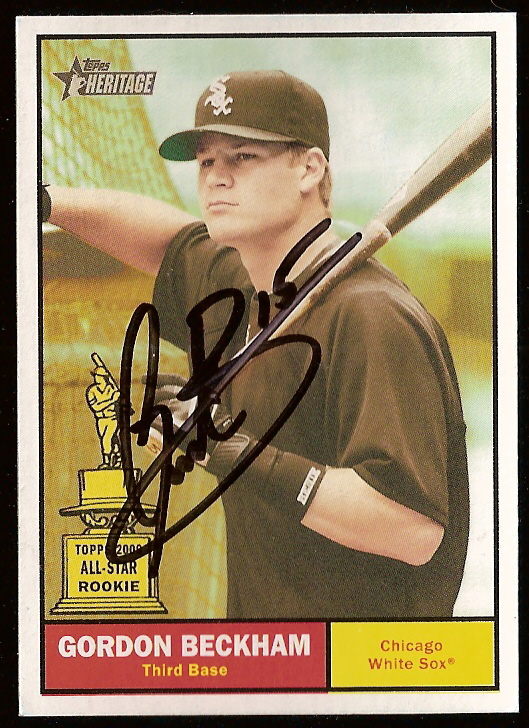
White Sox X-Factor: Gordon Beckham

By The Common Man

We're doing a few of these little "X Factor" posts in conjunction with ESPN's season previews, which will run on the big site tomorrow. Keep an eye out.


Batting order doesn't matter all that much, but it would surely be a slight boon to the White Sox to have a resurgent Gordon Beckham hitting in front of Adam Dunn and Paul Konerko. Beckham lost the #2 slot in the lineup last year thanks to a disasterous first half that saw him hit just .206/.271/.280, but much of that was due to a .246 BABIP. His second half (.316/.380/.513), fueled by a .371 BABIP, was much better before a hand contusion curtailed his playing time in September. The true Gordon Beckham lies somewhere between these two extremes, but probably closer to the second-half Beckham that we saw last year given his history and that he's still only 24.


Aside from Konerko and Dunn, the rest of the Sox lineup is very OBP-challenged, but has good power. No other player with more than 100 plate appearances had an OBP of over .342 last year. And new 3B Brent Morel is a slick-fielding 24 year old with absolutely no plate discipline. And Beckham isn't exactly a walk-machine himself. But by evening out his luck and developing his skills a little more, he can improve that OBP back into the .340-.350 range. If he can't, the Sox are going to have to win with a lot of solo homers.

The White Sox are slight favorites to win the AL Central as they are currently constructed. But they'll improve those odds significantly if they can just get Beckham on track.

Wednesday, December 15, 2010

3 Questions: Chicago White Sox

By Bill

I was a bit surprised to note that, going backwards by 2010 win total, the White Sox (at 88) are the next team on the list.  They just didn't seem nearly that good.  And in fact, part of that is because, after losing eight in a row and ten out of twelve at the end of September and ending their season, they won nine of their last eleven, meaningless games.  Still, they were a good team, and have gotten even better in the last couple weeks.  Here are your questions:

1. Will Jake Peavy...anything?
The former Cy Young winner was already injured when the Sox acquired him in 2009, and had been relatively ineffective with the Padres when he was healthy enough to pitch, so the team had to know that they didn't really know what they were getting.  And he finally did put together three very effective starts to end 2009, then started out just OK in 2010 (though he was better than he looked, with a 4.01 FIP compared to his 4.63 ERA) before shutting down with another injury.  In a year and a couple months, Peavy's logged 127 innings with a 4.11 ERA, though he's continued striking out around eight batters per nine innings and keeping his walks down, essentially maintaining the same fastball velocity he had in his peak years.

At this writing, Peavy's status for the start of 2011 is very much up in the air.  The shoulder injury Peavy suffered is quite serious and quite rare, and there aren't a lot of pitchers (if any) who have ever had to try to come back from it.  Peavy has been told that he should be able to "go full-bore" in February, but the team won't really know what (if anything) they can expect from him until then, and even if he's completely healthy then, you have to figure they'll be holding their breath every time he takes the mound.

A rotation of Mark Buehrle, John Danks, Gavin Floyd and Edwin Jackson is really good.  That same rotation with vintage Peavy at the top might rival the Red Sox' for the best in the AL.

Thursday, February 18, 2010

Random Thursday: 1964 Chicago White Sox

Thanks to Brew Crew Ball, The Common Man desperately wanted to fill out Mad Libs for the first time in a long time this morning. However, it has been far too long since we let random chance dictate our content, so he fired up the random function at BaseballReference.com and it spat out the Defensive Lineup for the 1964 Chicago White Sox. Frankly, aside from their big pennant run in 1959, when Nellie Fox won the AL MVP, The Common Man knew almost nothing about the ChiSox from this era, and was surprised by how competitive they were. The Sox of the late ‘50s and early ‘60s were led by Al Lopez, a Hall of Fame manager who never finished below .500 in any full season he managed (from 1951-1965) and an excellent tactician. The Sox of ’64 were also blessed with a talented pitching staff that had a team ERA of 2.72. The Sox allowed just 501 runs over the course of the season, fifty fewer than its closest competitor. Alas, the offense was nowhere near as successful. In a 10 team league, the Sox finished 7th in runs scored. On the strength of its pitching, however, the Sox won 98 games and finished just one game shy of the Yankees for the AL crown.

It’s not hard to see where the Sox went wrong in ’64. The pitching obviously wasn’t the problem. Gary Peters went 20-8 with a 2.50 ERA in 273 innings to lead the staff. But Juan Pizarro also contributed 19 wins and a 2.56 ERA in 239 innings (in his last big year). Joe Horlen threw 210 innings with a 1.88 ERA. And relief ace Hoyt Wilhelm, then 41 years old, threw 131 innings in relief, garnered 12 wins, 27 saves, and posted a 1.99 ERA. (Fun fact, TCM favorite Don Mossi also pitched 40 innings with a 2.92.) And the offense was actually above average at a number of positions. In particular, RF Floyd Robinson (.301/.388/.408, 125 OPS+), 3B Pete Ward (.282/.348/.473, 129 OPS+), and SS Ron Hansen (.261/.347/.419, 115 OPS+) led the offense, and each played more than 140 games. Utility players Don Buford (.262/.337/.348) also put up decent numbers in more than 500 PAs.

Unfortunately, the Sox were hamstrung by historically poor performances at a number of other spots. The Catcher position never worked itself out for the Sox, as JC Martin (.197/.241/.279, 47 OPS+ in 318 PAs) and Jerry McNertney (.215/.290/.290, 65 OPS+ in 217 PAs) made for a horribly unproductive platoon behind the plate. 2B also proved a difficult problematic. Opening day 2B Buford was shifted to 3B two games in when Pete Ward seems to have suffered a back injury, and was limited to pinch hitting for the next 15 games (Ward had had back problems in ’63 and sat out the last week of the season, and was sidelined during Spring Training in ‘64 with an unspecified back injury that was deemed “not serious” but resulted in Ward being “placed in traction in order to stretch the affected muscle”). While Ward sat out and Buford shifted over, Al Weis (of ‘69 Mets fame) took over at the keystone and managed to get almost half of the starting assignments despite hitting just .247/.299/.302 (70 OPS+). Finally, CF Jim Landis, who was still considered one of the great defensive outfielders in baseball, suffered through his worst season. Through 1963, Landis was an above average hitter, especially for a CF, but in ’64 the bottom dropped out, and he hit just .208/.305/.272 for a 65 OPS+. Landis was actually benched for a good part of 1964. In an interview, he claims that GM Ed Short ordered him benched after an argument related to Landis’ activities as the players’ temporary union representative. While that’s possible, it’s also very possible that Landis was sat down because of his struggles at the plate. Unfortunately, his replacement was no better. Mike Hershberger, normally a good 4th OFer, would get more than 500 PAs subbing for Landis in CF and Dave Nicholson in LF, and hit just .230/.308/.290, an OPS+ of 70. Essentailly, because of a lack of depth, the Sox punted three lineup spots in ’64, trusting them to players who performed at or below replacement level. It was too big an obstacle for the Sox to overcome, and is the central reason why the Yankees were able to clinch on the second to last day of the season. If even one of these positions had been stabilized by a 2 win player, the Sox would have won the AL pennant.

Frankly, the legacy of the 1960s White Sox should not be as also-rans to the New York Yankee juggernaut. Rather, the tragedy here is that general manager Ed Short was unable to address any of these needs and upgrade his team midseason, and give them a better chance to win in a tight pennant race. That Short did not leverage his pitching strength into some additional support for his offense is inexcusable. The best he could come up with that summer was an exchange of 1B, where Joe Cunningham was sent to the Senators for Moose Skowron, who managed just a 107 OPS+ in 73 games. If Short had done his job, rather than feud with his centerfielder, perhaps the Sox fans wouldn’t have had to wait until 2005 to know what a World Series win feels like.

Photo of Al Lopez used from here.

Thursday, September 10, 2009

Random Thursday: June 11, 1960, Chicago vs. Boston

When baseball’s elder statesmen square off, doesn’t it seem like something special always happens? Fortune smiles again on The Common Man, as his browser, with eyes closed, leapt from Scott Sullivan’s page to this June 11, 1960 contest between the Chicago White Sox and Boston Red Sox. The game was the first of two that day between the Soxes, and was certainly the more memorable.

The Sox lineup featured Hall of Famers Nellie Fox (in his final decent year; raise your hand if you knew he was basically done at age 32) and Luis Aparicio, and was bolstered by Hall of Very Good members Minnie Minoso and Roy Sievers. The Sox in 1960 were a good club, in the middle of a good run. For 17 straight seasons, the Sox finished above .500 (1951-1967), though they managed just one pennant (1959, when they lost in the World Series to the Dodgers). In 1960, they finished in the 8-team American League, with an 87-67 record. They couldn’t get close to the Yankees, however, who (as usual) finished 10 games better thanks to Mantle, Maris, and Big Bill Skowron.


Minoso, Jim Landis, Aparicio, and Fox receive their Gold Gloves from 1959.

The Red Sox were on the opposite end of the spectrum. In 1960, they would finish in 7th place, losing 89 games. Poor personnel decisions, including the team’s famous refusal to pursue and sign African-American talent, had caught up with Boston, and they were unable to compensate for an aging core and bad pitching staff. The Sox’s starter that day was Ike Delock, a former swingman pressed into the rotation who would finish the year with a 4.73 ERA (84 ERA+) in 23 starts. The lineup featured Hall of Very Good hitters Pete Runnels and Vic Wertz (whose greatest historical comp is Roy Sievers, actually).

But what made the game stand out was the battle between two legends near the end of their respective careers. 40-year old Early Wynn started for Chicago, sitting on 273 career victories, a year removed from going 22-10 and winning the ML Cy Young Award (the Cy Young award was only given to one pitcher a year through 1966). Though pitching well, Gus had lost four straight in which his team had scored just seven runs behind him. For the Red Sox, Ted Williams started and played in LF. Williams, had missed most of April and May, totaling just 27 plate appearances. But in June, Williams was on fire. In 96 PAs, The Splinter would hit 11 homeruns, bat .329/.458/.803), and drive in 24 runs. He had hit a solo homerun the day before and was just starting to round into playing shape.

Wynn allowed a leadoff homerun to Don Buddin, but settled down to retire the next 8 and keeping the Sox off the board through five. On the strength of a Gene Freese homer and a Nellie Fox double in the 2nd, the Sox scored two. Wynn himself had gone 2-2 with two singles, one of which moved Jim Landis into scoring position for Fox’s double, and the other of which drove in Freese in the 4th. At the end of the 5th, Chicago led the Red Sox 3-1. Williams had underwhelmed in two at bats, fouling out once to third base and once to catcher. In the bottom of the 5th, Wynn allowed a leadoff single to Pete Runnels to bring up The Kid. Williams hit a long fly to right field that cleared the fence for his 5th homer of the year, and 497th of his career.


Wynn got out of the 6th without allowing another run, and in the top of the 7th Delock ran into more trouble for Boston. Chicago loaded the bases on two singles and an error, bringing up Sievers, who struck out. But when Delock hit Sherm Lollar, he forced in Nellie Fox, giving the White Sox a 4-3 lead.

Wynn was removed from the game with one-out in the 7th after giving up a single to Bobby Thomson. He was relieved by Gerry Staley, the Sox’s relief ace, who escaped with no damage. Delock got into trouble in the top of the 9In the bottom of the 8th, however, Williams led off. The Kid worked out a walk and was replaced by a pinch runner. Vic Wertz hit a big opposite field home run that gave the Red Sox the 5-4 lead, which they would hold on to. Staley was hung with the loss, and Mike Fornieles, Boston’s relief ace, ended up with the win after pitching the last two frames.

Williams would have an excellent season (.316/.451/.645, 29 homers) despite getting just 390 PAs, and would, of course, retire at the end of the season after hitting a home run (#521) in his final at bat. Wynn would make the All Star team that year, and go 13-12 with a 3.49 ERA, and lead the league in shutouts. He hung on for three more years after that. Gus pitched well in the first half of 1961 before injuries forced him to the shelf for the rest of the year. He struggled in 1962, and finished with an even 300 wins as a pitcher-coach for the ’63 Indians.